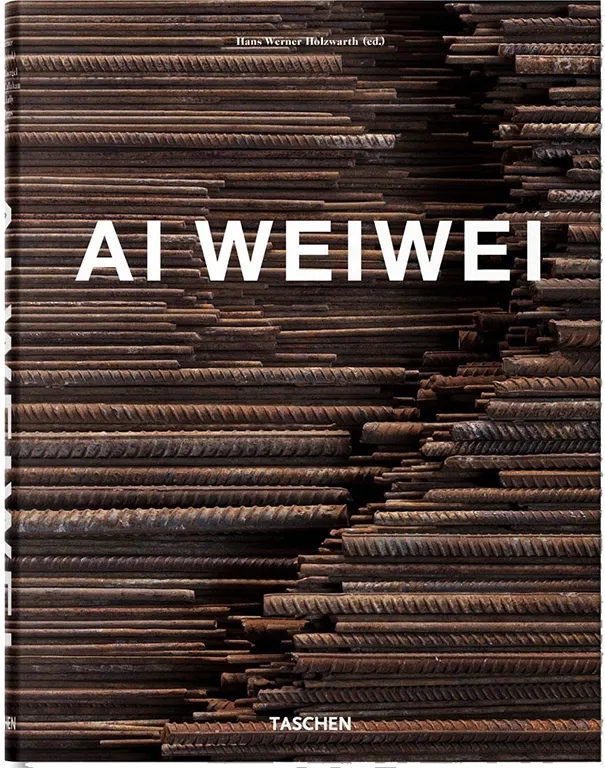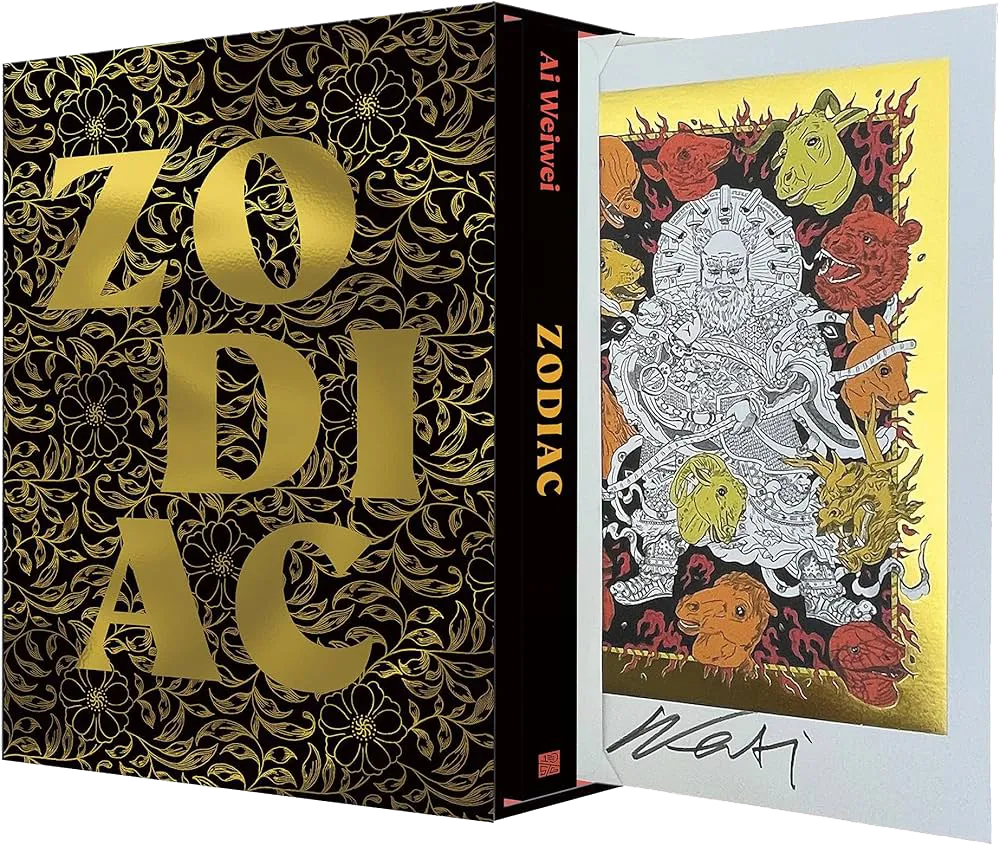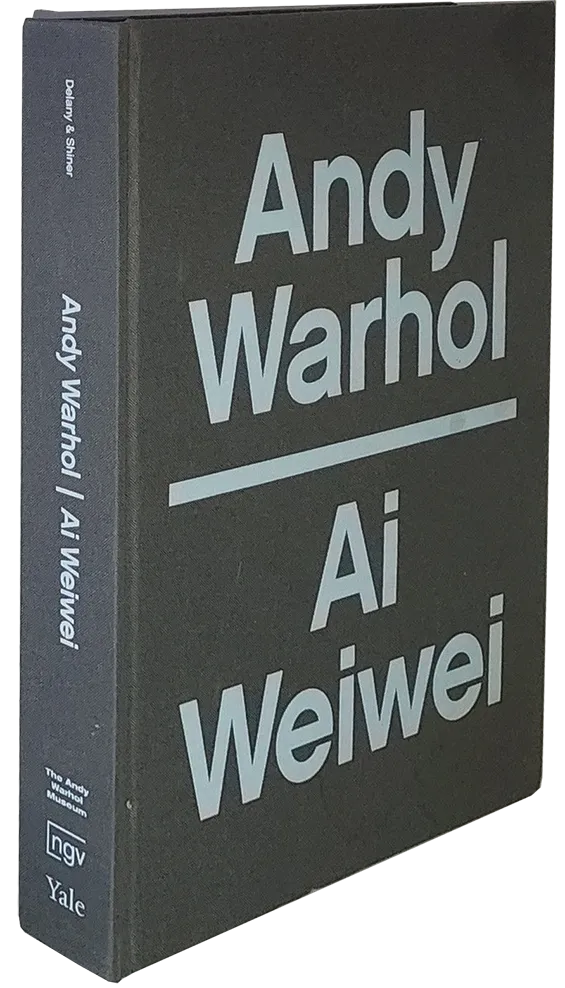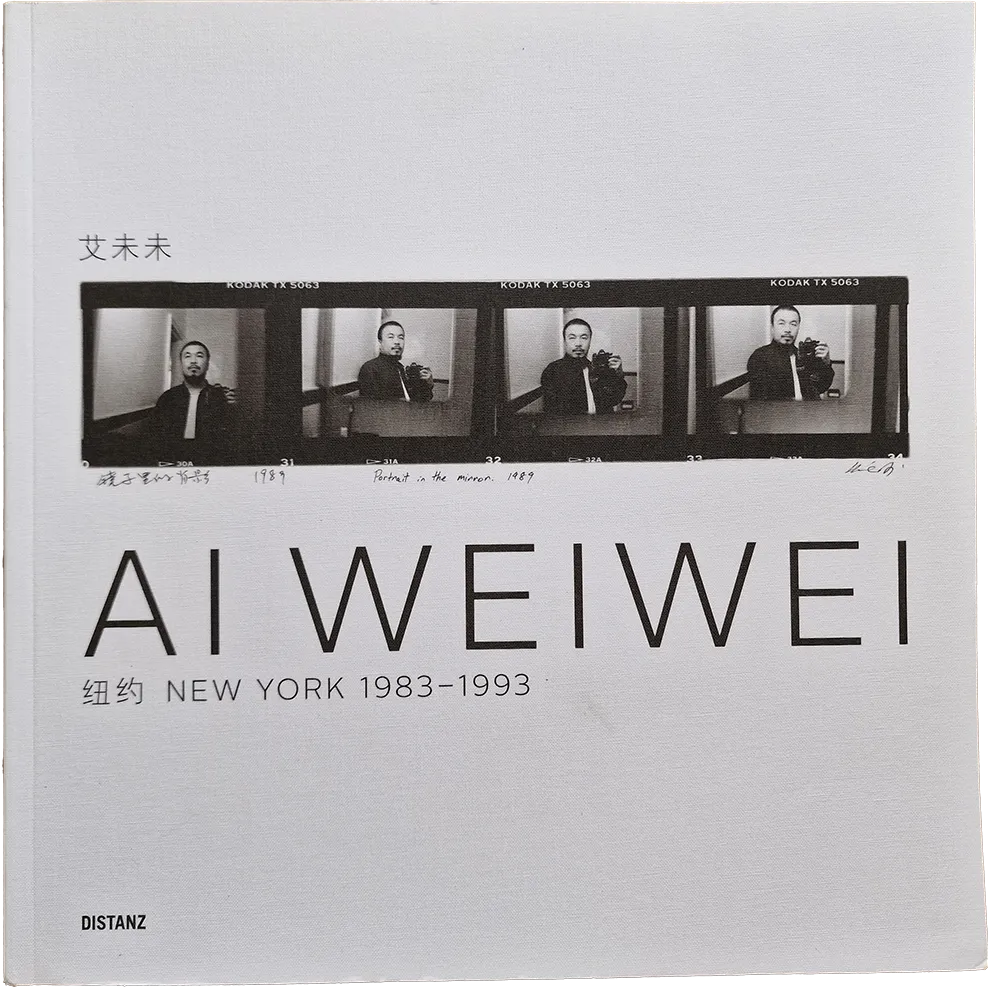
Which art books, prints and posters are available by and about this artist? Here is a sample of items of interest to a typical collector:
Ten Speed Graphic
Co-published with NGV.

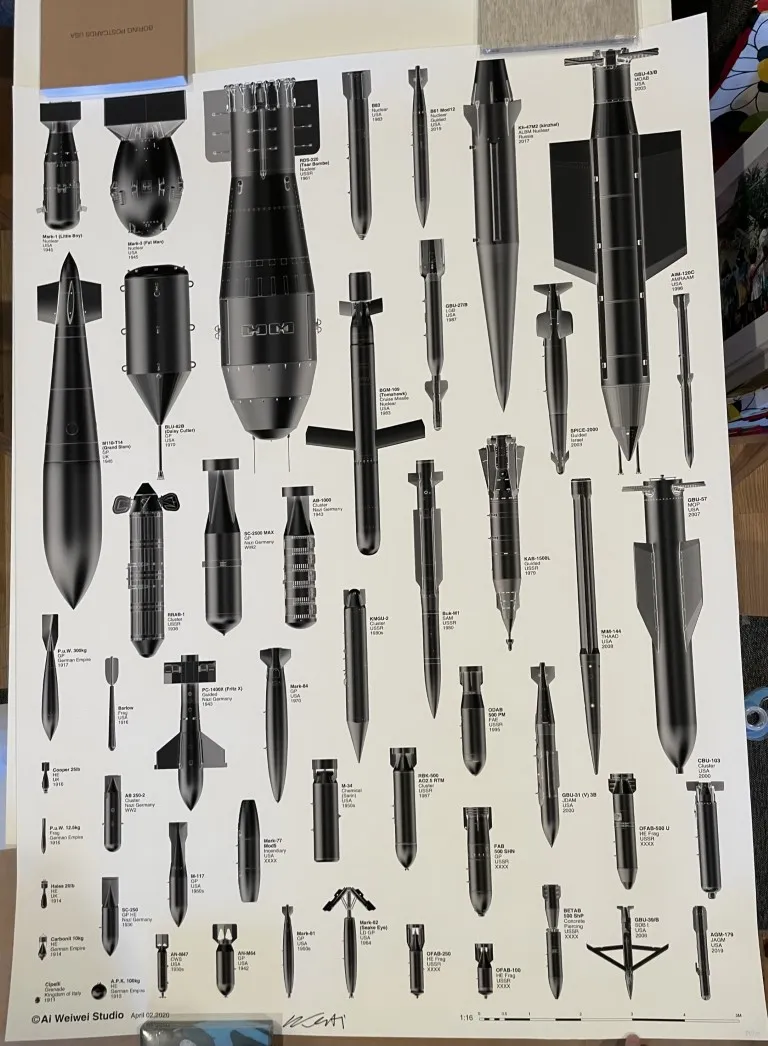
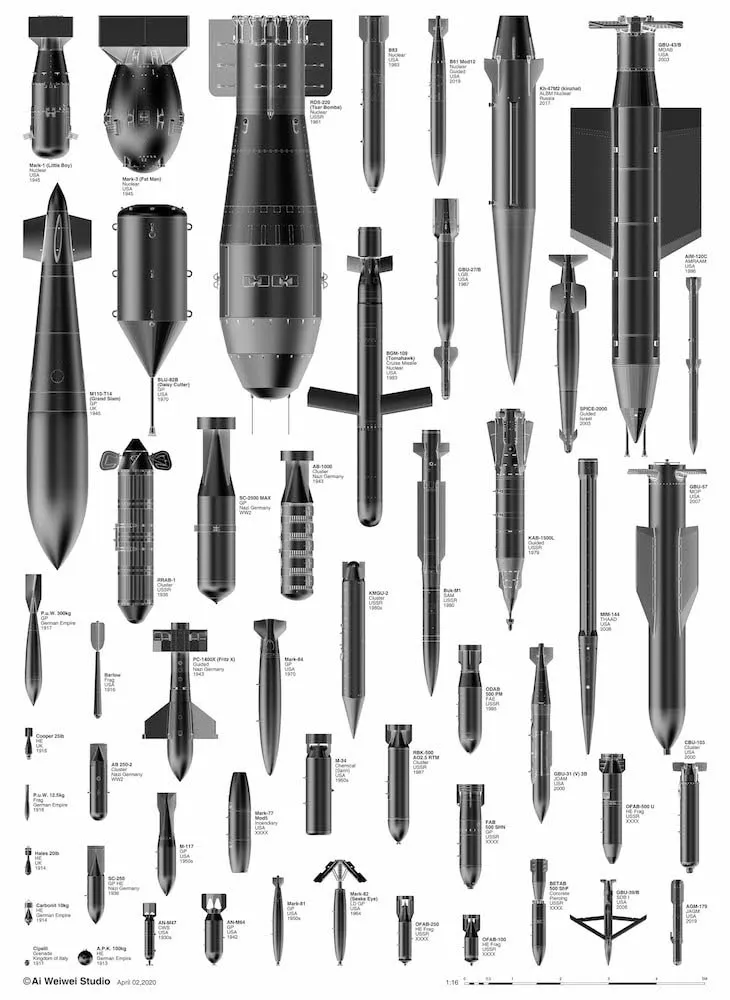
Stemming from Ai Weiwei’s broader research project and floor installation History of Bombs (2019–2020), the composition acts as a stark, graphic catalog of modern weaponry and ballistic missiles.
Rather than arranging the munitions chronologically, Ai structures the layout primarily by size. The rendered missiles crescendo as they rise across the sheet, confronting the viewer with the relentless scale, technological advancement, and normalization of weapons of mass destruction that fuel modern warfare and global displacement crises.
By isolating military hardware against a stark background and stripping away context, the print draws a disturbing parallel between industrial product design and human devastation.


Man Ray’s exploration of solarization in 1930s Paris stands as one of Surrealism’s most significant disruptions of traditional photographic realism. Accidental in origin yet meticulously refined alongside Lee Miller, the technique allowed Man Ray to transform the camera from a passive recording instrument into a tool of psychological and formal transformation. His studies of the female nude, compiled in retrospective editions such as the Femmes portfolio, moved beyond conventional figurative portraiture, reframing the body as an enigmatic interplay of light and dark. Positioned within his broader oeuvre, these works encapsulate his Dadaist desire to subvert the literalness of the lens, merging bodily form with conceptual abstraction.
Aesthetically, the work relies on the darkroom mechanics of the Sabattier effect, where a brief exposure to light during chemical development induces a partial tonal inversion. Dense, pitch-black outlines trace the contours of the figure, creating a dark, graphic halo that severs the body from its surrounding environment. This edge reversal strips away illusionistic depth, flattening anatomical curves into a stark, two-dimensional composition. The contrast between luminous, alabaster tones and dense, inverted shadows emphasizes sharp lines and structural geometry over naturalistic detail, converting organic flesh into a graphic, sculptural motif.
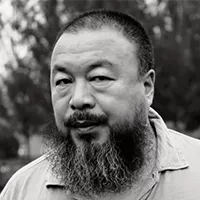
Ai Weiwei, Chinese, b. 28 August 1957
Weiwei is a Chinese contemporary artist, documentarian and activist. Ai grew up in the far northwest of China, where he lived under harsh conditions due to his father's exile. As an activist, he has been openly critical of the Chinese government and its stance on democracy and human rights. He investigated government corruption and cover-ups, in particular the Sichuan schools corruption scandal following the collapse of "tofu-dreg schools" in the 2008 Sichuan earthquake. In April 2011, Ai Weiwei was arrested at Beijing Capital International Airport for "economic crimes", and detained for 81 days without charge.
Ai Weiwei emerged as a figure in Chinese cultural development, an architect of Chinese modernism, and a prominent political commentator.
Ai Weiwei has created political sculptures, photographs, and public works. Since being allowed to leave China in 2015, he has lived in Portugal, Germany, and the United Kingdom.