



 Look Inside
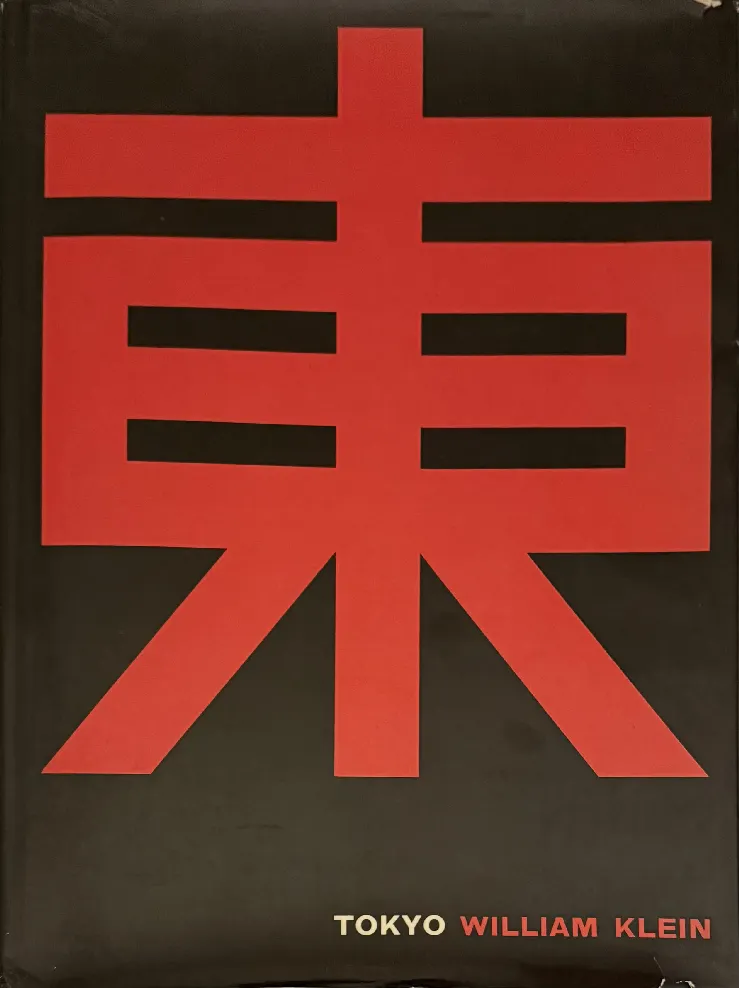
First published in 1964 by Zokeisha in Tokyo and Delpire in Paris, Tokyo is the final chapter in William Klein’s celebrated series of major city-portrait photobooks (following Life is Good & Good for You in New York [1956], Rome [1959], and Moscow [1964]). Klein spent three months in Tokyo in 1961 capturing the metropolis at a historical turning point, a time when post-war Japan was undergoing rapid economic transformation while preparing to host the 1964 Summer Olympic Games.
Klein arrived in Japan with official hosts and sponsors who initially steered him toward institutional centers of power. He took unconventional, highly intimate shots of places like the Tokyo Stock Exchange, sumo tournaments, and even an imperial couple portrait of Emperor Hirohito and Empress Nagako.
However, Klein soon broke away from his guides to wander the streets. Assisted by legendary Japanese photographer Eikoh Hosoe, he connected with Tokyo’s radical artistic avant-garde. He photographed Kazuo Ohno, co-founder of the avant-garde Butoh dance movement, performing outdoors in the city streets. and he captured Neo-Dada artist Ushio Shinohara during one of his famous "boxing-painting" performance pieces.
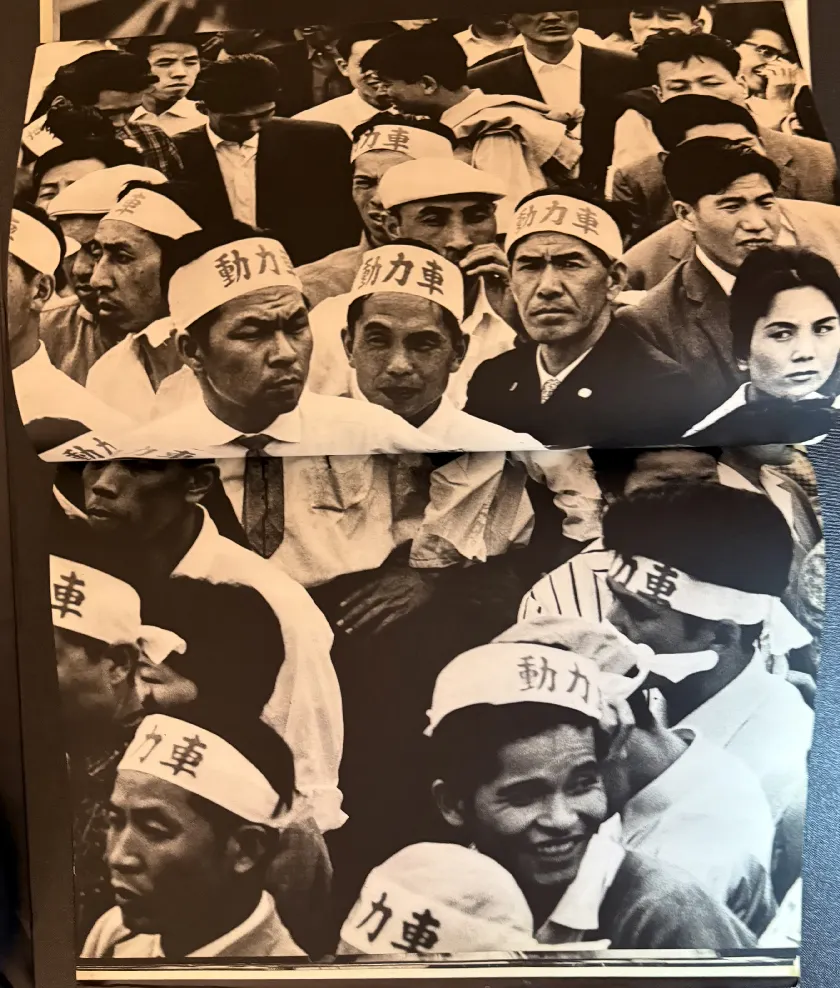
He also documented ordinary street life, crowds, pachinko parlors, nightlife, and political anti-American street demonstrations.
Reinventing the Photobook Layout: Klein scaled up the physical page size for Tokyo compared to his earlier books. Using wide double-page, full-bleed layouts, the images feel like massive, immersive murals filled with dense, graphic energy, urban signage, and harsh contrasts.
Influence on Japanese Photography: Tokyo broke radically from the softer, traditional style of 1950s Japanese photography. Its raw, chaotic, and aggressive aesthetic deeply influenced an entire generation of Japanese street photographers, most notably Daidō Moriyama, who famously referred to Klein’s city photography as his visual "bible".
