


Which art books, prints and posters are available by and about this artist? Here is a sample of items of interest to a typical collector:

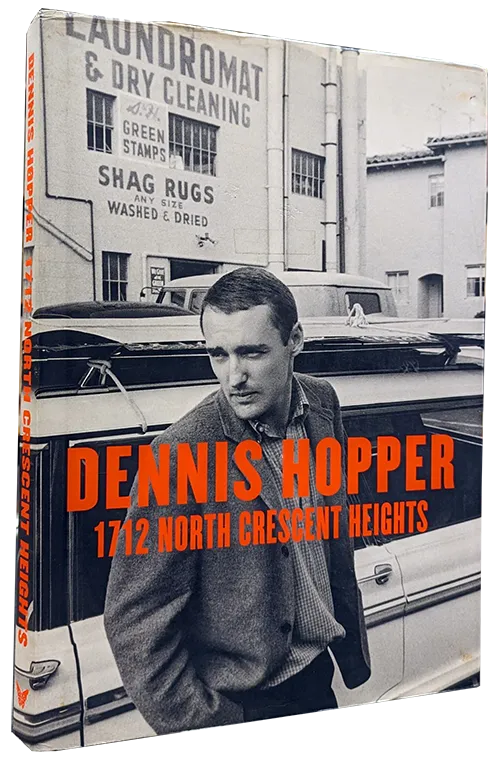
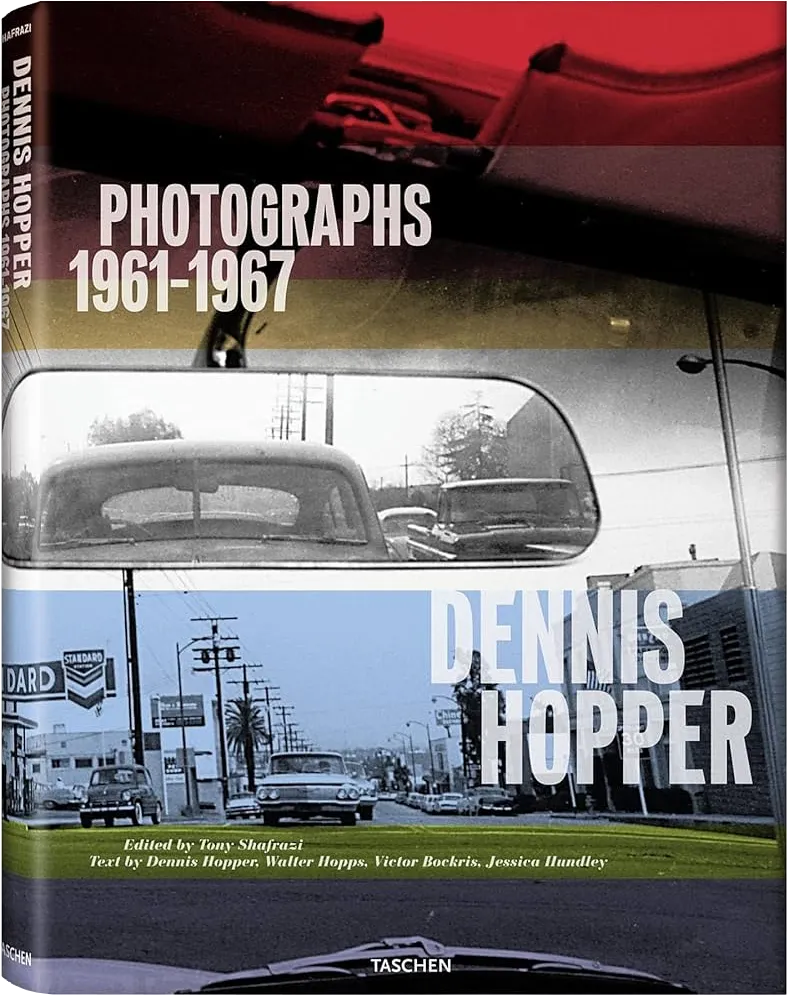

Dennis Hopper’s The Lost Album - Vintage Prints From the Sixties serves as an archaeological recovery of his prolific photographic output from 1961 to 1967. Originally printed as small vintage proofs for a 1970 exhibition at the Fort Worth Art Center, these hundreds of images were subsequently packed away in boxes and forgotten for decades until their rediscovery. The resulting publication operates as a comprehensive, unfiltered visual diary of the American cultural revolution. From the front lines of the civil rights marches in Selma to the intimate, chaotic centers of the emerging Pop Art scene and the Los Angeles counterculture, Hopper positioned himself not as a detached observer, but as an embedded participant capturing a society in radical transition.

Dennis Hopper’s photographic output between 1962 and 1968 operates as a vital, insider document of the American counterculture and the seismic shifts of the 1960s. Operating frequently from his Los Angeles home, a nexus for artists, musicians, and cinematic pioneers, Hopper wielded his camera as an extension of his restless eye. Rather than observing from the periphery, he occupied the center of the cultural zeitgeist, photographing the civil rights movement, the emergence of Pop Art, and the gritty realities of biker culture. This era of his work bridges the gap between the polished veneer of Hollywood and the raw energy of underground rebellion, establishing him as a crucial chronicler of a society in radical transition.
Aesthetically, Hopper’s images from this period are characterized by a raw, immediate graphic clarity that eschews formal studio constraints in favor of spontaneous, available-light observation. His compositions frequently utilize deep contrast, aggressive cropping, and the unfiltered Californian sun to carve out striking forms from the chaotic environments he traversed. Whether isolating the bold geometries of a civil rights placard, the sleek chrome of a motorcycle, or the unguarded expressions of cultural icons, he maintained a rigorous structural order. The resulting black-and-white frames possess a cinematic fluidity, yet they freeze the frantic motion of the decade into meticulous, highly structured visual planes.