

Which art books, prints and posters are available by and about this artist? Here is a sample of items of interest to a typical collector:

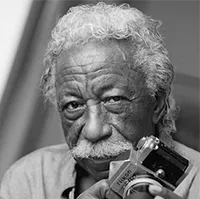
Gordon Parks was born in Fort Scott, Kansas, in 1912. A pioneering American photographer, filmmaker, journalist, and author, his origins are rooted in the Jim Crow-era American Midwest, where he experienced systemic segregation and poverty firsthand before forging a historic career that reshaped visual culture.
His artistic practice spanned documentary photojournalism, fashion photography, and narrative filmmaking, most notably capturing landmark assignments for Life magazine. As the magazine's first Black staff photographer, he used his camera as an instrument for social change, producing powerful essays on poverty, civil rights, and urban life while also breaking cinematic ground as the director of Shaft. His work is held in major international collections, including the National Gallery of Art, the Museum of Modern Art, and The J. Paul Getty Museum.
Among his defining contributions, his photo essays such as "Harlem Gang Leader" (1948) and "The Fontenelle Family" (1967) stand out as monumental achievements in empathetic, long-form documentary storytelling that exposed systemic inequalities to a mass national audience. His extensive bibliography includes influential monographs and autobiographical works such as A Choice of Weapons (1966), Gordon Parks: Whispers of Harlem (1968), Flashing My Eyes (1985), and The Making of an American (1992). These publications solidify his enduring legacy as an artist who bridged fine art aesthetics with urgent social commentary.

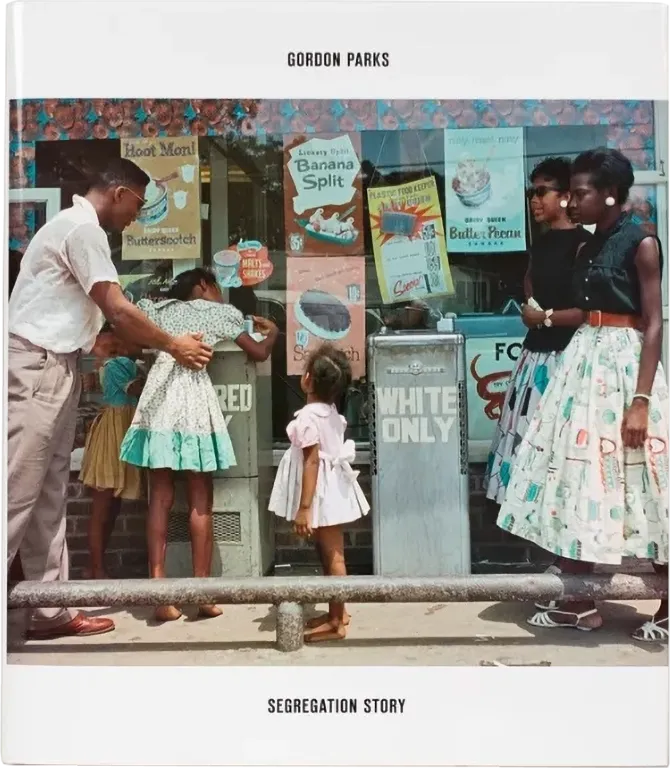
Gordon Parks’s Segregation Story traces its origins to a landmark 1956 Life magazine photo essay titled "The Restraints: Open and Hidden," which documented the daily lives of an extended Black family, Mr. and Mrs. Albert Thornton Sr., living under Jim Crow laws in Shady Grove and Mobile, Alabama.
For decades, the color transparencies from this assignment were presumed lost. In 2011, the Gordon Parks Foundation rediscovered more than 70 original color slides tucked away in an unopened storage box marked "Segregation Series".
This discovery led to the publication of the first edition monograph, Gordon Parks: Segregation Story, released by Steidl in 2014 in collaboration with the Gordon Parks Foundation. The first edition brought these vibrant, rare color images into print for the very first time, rescuing a vital piece of civil rights history from obscurity and offering an intimate look at dignity, resilience, and systemic oppression in the mid-century American South. This volume is the second expanded edition published in 2022.