

Copyright ©
Hiroshi Sugimoto
or applicable right holders.


Which art books, prints and posters are available by and about this artist? Here is a sample of items of interest to a typical collector:


The Long Never is a unique special edition book containing sixty-five artworks by Hiroshi Sugimoto. Composed of photographs from five series ' 'Meteorites', 'Dioramas', 'Pre Photographic Time Recording Devices', 'Lightning Fields', and 'Seascapes' ' the sequence of images in this book conjures a natural history of the planet, perhaps even one untouched by humans. The black-and-white photographs are hand-tipped onto the pages of the book, which is wrapped in silk cloth. Celebrated author Jonathan Safran Foer has written an original story for this book. Foer's text sits on the page underneath each artwork, so the reader must lift up each photograph in order to read the story.


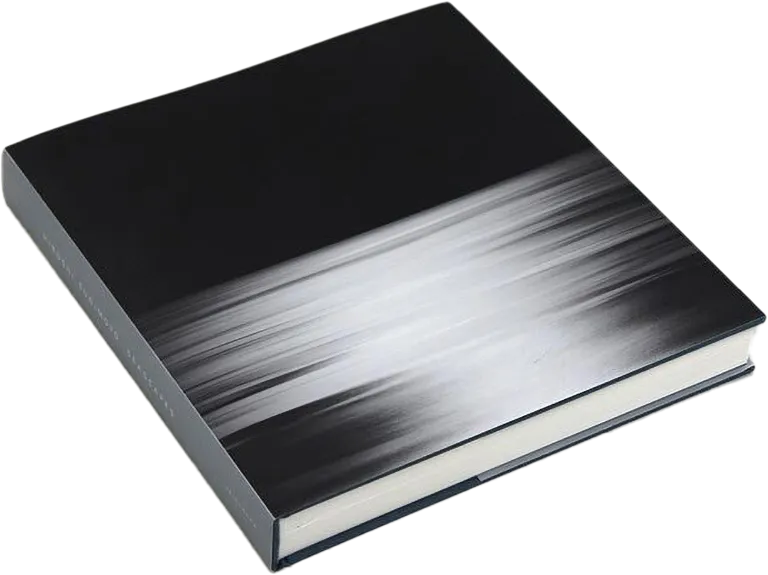


Expanded version of the 2000 Sonnabend edition.


There is a 2nd signed copy damaged with bumps on edges.


This is not the 2011 reprint.


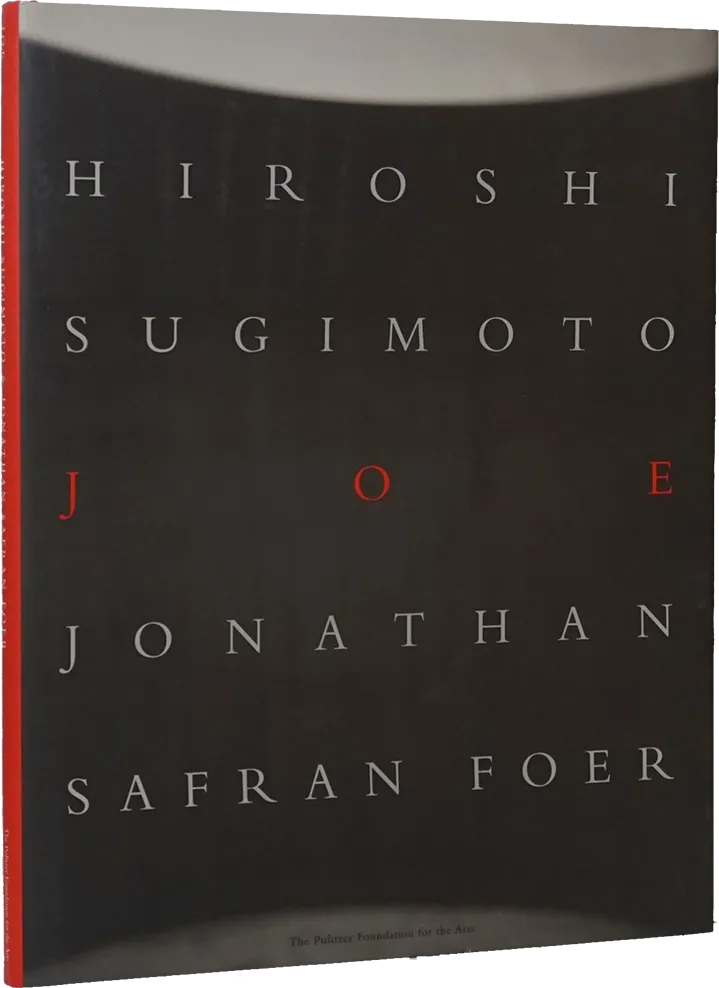
When renowned Hiroshi Sugimoto was invited to photograph the Pulitzer Foundation for the Arts, St. Louis, his attention immediately focused on an immense steel sculpture, Richard Serra's Joe, one of the artist's torqued spirals, which occupies a small courtyard of the museum. Joe allows viewers to walk in through a narrow passage between towering, sloping walls. The path leads to a surprising central space from which only the curving steel walls and the sky are visible. Combining extremely soft light and blurred darkness, Sugimoto's pictures in this book capture the elliptical nature of Serra's piece. His images are complemented by the words of Jonathan Safran Foer, whose affecting prose poem about an "average Joe" experiencing the circular passage of time's echoes, without directly referencing, Serra's sculpture.
Designed by Takaaki Matsumoto, this large-format book features tritone reproductions printed on luxurious uncoated stock. The result is an eloquent and visually arresting commentary on time, impermanence, and memory.

This is the 1000 run of the hardcover edition, not the 3000 run of the softcover version.


Hiroshi Sugimoto’s extensive architectural series, spanning iconic structures from the mid-1920s through the late 20th century, investigates the physical manifestation of time, memory, and modernism through a deliberate blurring of focus. Initiated in 1997, the project features landmark modernist buildings, ranging from the Empire State Building and Le Corbusier's architecture to Eero Saarinen’s TWA Flight Center and Philip Johnson's Glass House, photographed deliberately and completely out of focus using an 8x10 view camera. By extending the exposure and intentionally doubling the focal length, Sugimoto collapses historical detail into pure, luminous architectural silhouettes, reducing each structure to its foundational geometric essence.
The series is structured as a sweeping typological and chronological survey that bridges historical eras, capturing how utopian architectural ambitions dissolve or endure across time. By rendering the buildings as glowing, ghostly apparitions against atmospheric skies or dark voids, Sugimoto strips away the noise of contemporary urban existence to reveal the structural skeleton and conceptual purity of each design.
This specific photograph emerged from a special commission with the famous architectural site.

U.A. Walker, New York, 1978 is part of Sugimoto's celebrated Theaters series, capturing the luminous architecture of historic American picture palaces. By positioning his large-format camera at the center of the auditorium with the shutter left open for the entire duration of the feature film, Sugimoto collapses temporal duration into a single luminous rectangle. The glowing movie screen acts as a radiant light source, burning away the moving images into a brilliant white void while casting ghostly, theatrical illumination across ornate neo-baroque moldings, proscenium arches, and vacant seats.
This long-exposure technique transforms commercial cinema spaces into haunting, sacred cathedrals of light and shadow, exploring themes of memory, ephemerality, and the passage of time. The glowing screen functions metaphorically as a repository of collective cinematic dreams, accumulating hours of projected light into a monolithic blank slate that questions the physical reality of the moving image.
Hiroshi Sugimoto, Japanese-born American, b. 1948
Sugimoto’s lifelong photographic practice investigates the slippery mechanics of time, memory, and perception, positioning the camera not merely as an instrument of rapid documentation, but as a conceptual apparatus capable of freezing history and eternity into a single frame.
Born in Tokyo in 1948 and later relocating to New York in the 1970s, Sugimoto absorbed the minimalist and conceptual currents of the American art scene while remaining deeply anchored in traditional Japanese aesthetic philosophies of void, scale, and materiality. Working exclusively with large-format 8x10 cameras and meticulous darkroom execution, he constructs rigorous, long-running typological series, including his luminous Seascapes, ghost-like Theaters, out-of-focus Architecture studies, and taxidermic Dioramas, that strip away contemporary noise to reveal the primordial bones of human culture and natural phenomena.

In original packing publisher's box