


Copyright ©
Man Ray
or applicable right holders.


Which art books, prints and posters are available by and about this artist? Here is a sample of items of interest to a typical collector:

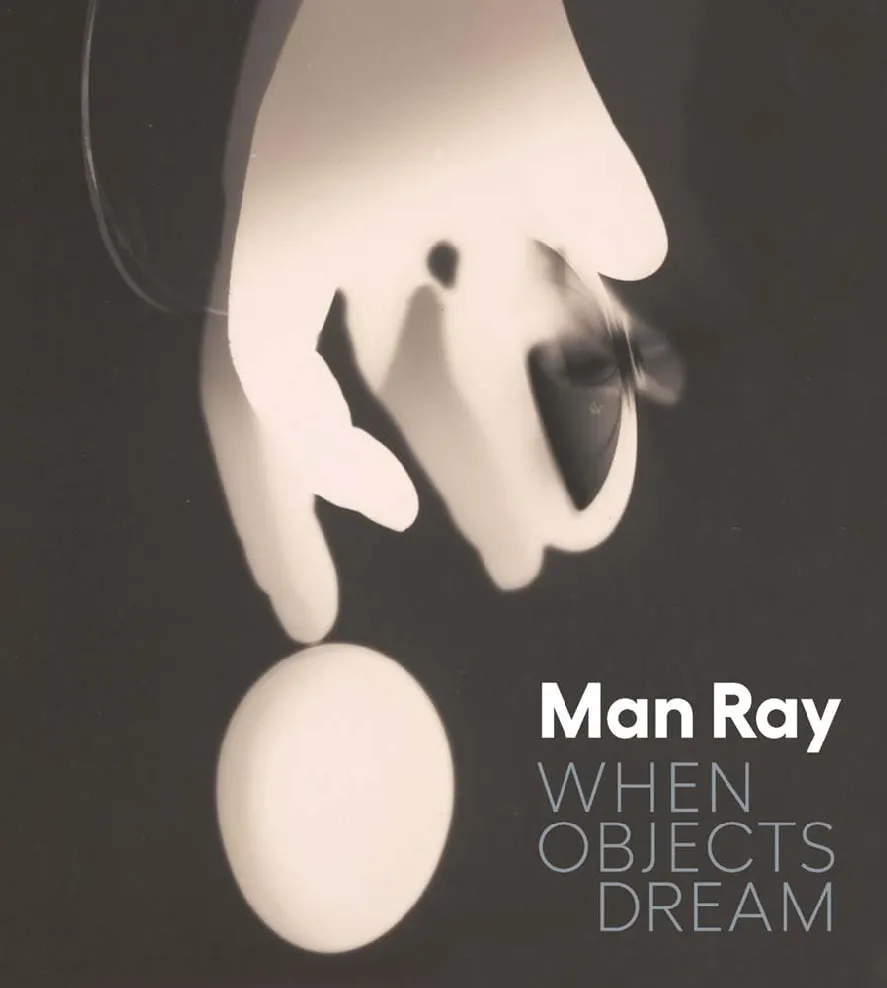

Man Ray, American, 1890–1976, was a seminal visual artist and leading figure in both Dada and Surrealism who fundamentally transformed the scope of modern photography, painting, film, and object-making. Born Emmanuel Radnitzky in Philadelphia and raised in Brooklyn, he adopted the name Man Ray in 1912 while studying art and draftsmanship in New York. Exposure to European avant-garde art at Alfred Stieglitz’s 291 gallery, combined with an intense creative friendship with Marcel Duchamp, led him to abandon traditional painting in favor of conceptual experimentation, co-founding the New York Dada group in 1915 before moving to Paris in 1921.
In Paris, Man Ray integrated into the Surrealist movement and established a celebrated commercial studio, where he developed breakthrough photographic techniques. He championed camera-less photograms, which he called "Rayographs", by exposing object arrangements directly onto photographic paper, and refined solarization alongside Lee Miller to turn human figures into dramatic, dark-contoured abstractions.
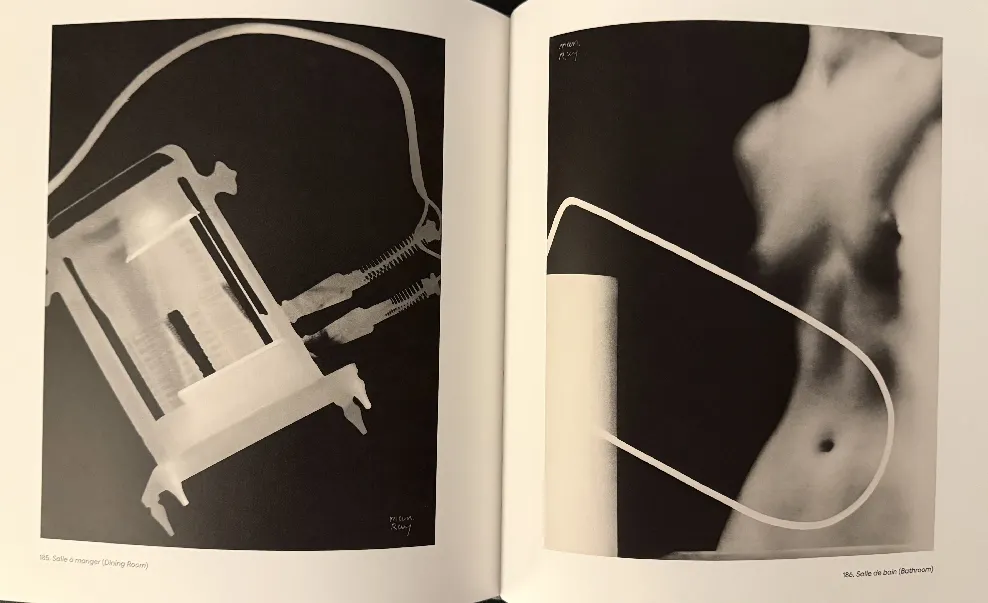
Man Ray’s Rayographs, developed shortly after his arrival in Paris in 1921, represented a foundational breakthrough in twentieth-century avant-garde art. By completely eliminating the camera lens, Man Ray bypassed traditional optical representation to explore direct physical contact between light, objects, and photographic emulsion. Sourcing mundane studio items such as combs, light bulbs, wire coils, and glass instruments, he transformed the darkroom into a laboratory of Dadaist chance and Surrealist association. This body of work fundamentally redefined photography, proving that the medium could generate autonomous visual forms rather than simply recording external reality.
Aesthetically, the Rayographs depend on the subtle interplay of opacity, translucency, and light fall-off to construct phantom-like, multi-dimensional spaces on a single sheet of paper. By arranging three-dimensional items directly onto the sensitive surface and altering the angle or distance of his light source during exposure, Man Ray produced soft, radiant gradients alongside razor-sharp inverted silhouettes. Utilitarian objects lose their everyday identities, dissolving into floating graphic rhythms and overlapping planes. The resulting compositions balance stark negative space with delicate tonal modulations, creating a weightless atmosphere suspended between physical matter and pure abstraction.
His Femmes series, conceived across the 1930s during his Paris studio era, represents one of the most radical Surrealist reconceptualizations of the female nude in twentieth-century photography. Created during a fertile decade alongside artistic collaborators and muses such as Lee Miller and Meret Oppenheim, the series moves away from traditional figurative portraiture and anatomical romanticism. Instead, Man Ray treats the human form as an elastic, conceptual landscape, a vehicle for exploring the boundaries of optical perception, unconscious desire, and darkroom intervention. Positioned at the peak of his Parisian period, Femmes anchors his Dadaist and Surrealist imperative to strip the camera of its merely documentary function, elevating studio experimentation into a formalist methodology.
Aesthetically, the Femmes suite operates through a dual mastery of studio illumination and laboratory technique. Across the series, Man Ray alternates between pure optical modeling, using harsh directional lighting and extreme cropping to reduce anatomical volume into flat, geometric planes and chemical disruption via the Sabattier effect (solarization). In the solarized works, brief exposures during development invert tones to draw dense, pitch-black contours around the body, creating graphic halos that sever the figure from background space. Whether through solarization or severe framing, the compositions systematically dismantle traditional depth, prioritizing dark, architectural lines, high-contrast tonal shifts, and rhythmic spatial organization over naturalistic representation.
In tandem with his experimental work, his distinct studio portraiture captured prominent cultural figures including Gertrude Stein, James Joyce, and Pablo Picasso, while his fashion assignments for magazines like Vogue and Harper's Bazaar reshaped commercial imagery. Uprooted by the Second World War, he spent a decade in Los Angeles focusing on painting and assemblage sculpture before returning to Paris in 1951, where he continued his multidisciplinary practice for the remainder of his life.
