

Copyright ©
Thomas Struth
or applicable right holders.


Which art books, prints and posters are available by and about this artist? Here is a sample of items of interest to a typical collector:

Walther König / Quadrat Bottrop Museum

Thomas Struth’s Strangers and Friends captures the profound psychological and sociological dimensions of human interaction across diverse global cultures, standing as a defining monograph in the artist’s exploration of portraiture. Expanding beyond his early, clinical typologies of empty urban streets, Struth turned his large-format camera toward individuals, couples, and families in their homes and communities from Berlin and Edinburgh to Beijing and Peru.
The composition relies on a meticulous, detailed frontal perspective that honors the autonomy and complex inner lives of his sitters. Rather than imposing a fleeting snapshot, Struth collaborates with his subjects to determine their placement and posture, allowing natural light and domestic or urban environments to frame their social reality. The resulting images balance formal rigor with deep empathy, capturing the subtle tensions between public presentation and private vulnerability.

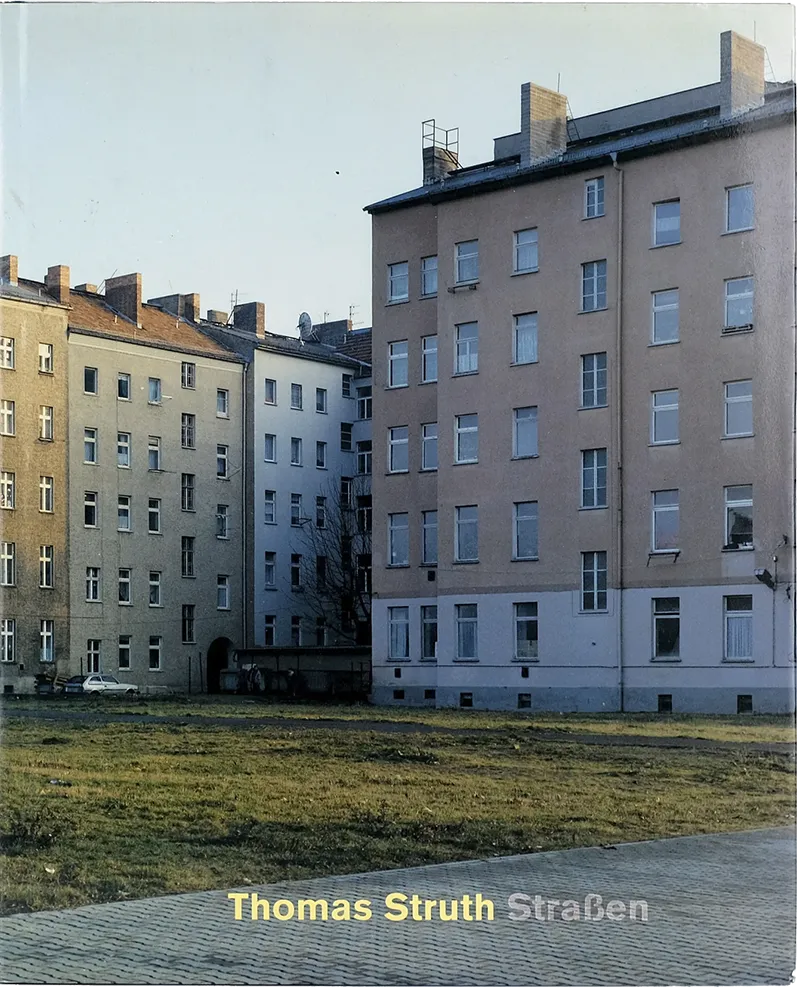
Thomas Struth’s Strassen: Photographie 1976 bis 1995, published by Schirmer/Mosel, is a retrospective of the artist’s systematic documentation of urban thoroughfares across Europe, America, and Asia. Bringing together his foundational street views captured with a large-format camera, the monograph presents an uncompromising, frontal examination of the built environment devoid of human presence.
The compositions utilize a rigorous, non-hierarchical perspective that places the viewer at street level, treating ordinary residential blocks, commercial facades, and historic urban corridors with an extraordinary depth of detail. The neutral daylight and objective framing strip away romanticism, transforming the architecture of everyday streets into silent, structural diagrams that reveal the complex layers of social history, urban planning, and collective memory embedded in modern cities.

This is not the later reprint.


Thomas Struth: Still offers a focused examination of the artist’s large-format photographs capturing quiet, unpeopled landscapes, dense jungles, and intricate technological environments. Moving beyond his early architectural streetscapes and human portraits, this body of work investigates the complex, overgrown textures of nature and the austere precision of high-tech industrial settings.
Whether framing the dense, entangled canopies of the Daintree Rainforest or the sterile, clinical machinery of research laboratories, Struth eliminates human presence to focus entirely on the architectural or organic structures of the modern world. The neutral, ambient lighting and monumental scale invite prolonged, contemplative observation, encouraging the viewer to confront the sublime complexity hidden within both nature and human innovation.

This is not the smaller-size 2017 expanded edition.


Family Life, published as a monograph, presents an intimate yet clinically detached exploration of domestic relationships and the psychological undercurrents of the modern nuclear family. Expanding upon Struth's rigorous, frontal perspective from his urban street series, this body of work shifts his analytical gaze from empty thoroughfares to the carefully curated private interiors of the home.
The compositions rely on a deliberate, eye-level vantage point using a large-format camera, achieving an extraordinary level of descriptive clarity across every detail of the subjects and their domestic environment. The sitters are arranged in a carefully composed group within their living space, yet the overall atmosphere is marked by a palpable emotional distance and guarded reserve. The neutral, ambient daylight and unembellished interior background strip away sentimentality, turning the domestic sphere into a stage for subtle negotiations of identity, authority, and belonging.


Thomas Struth was born 1954 in Geldern, Germany and currently lives and works in Berlin.
He is best known for his genre-defying photographs, though he began originally with painting before he enrolled at the Kunstakademie, Düsseldorf in 1973. Struth has developed his individual photographic practice, often penetrating places of the human imagination in order to scrutinize the landscape of invention, technology, and beyond (as in his recent CERN and Animal images). Celebrated for his diverse body of work—Unconscious Places, Familienleben (Family Life), Museum Photographs, New Pictures from Paradise and Nature & Politics—Struth continues to advance his vocabulary with each new series, while maintaining the same principles core to his practice.

→
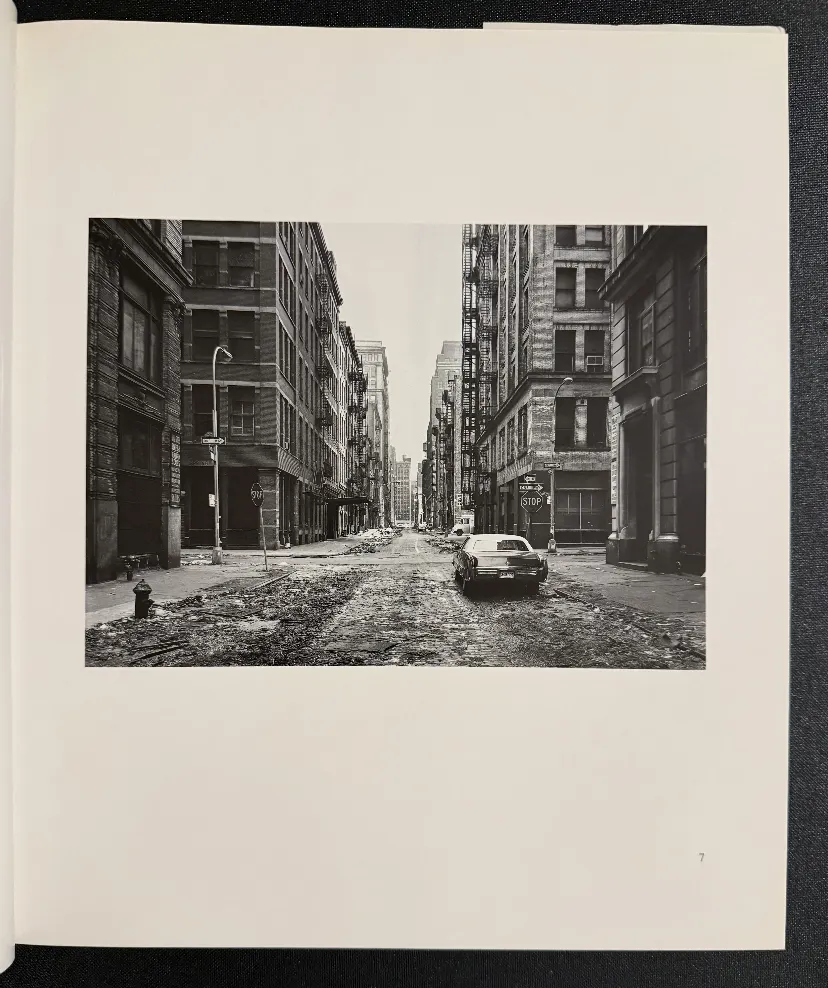
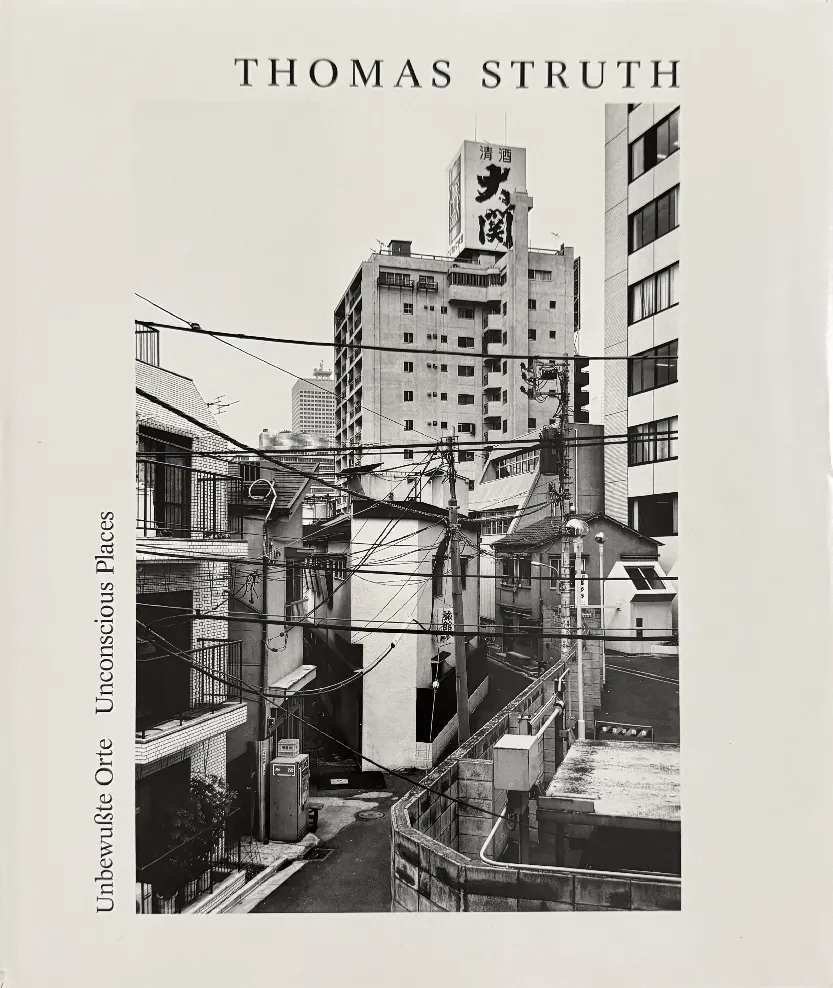
Thomas Struth’s Unconscious Places, first published in 1987, stands as a foundational milestone in the Düsseldorf School of Photography, capturing the quiet, unpeopled architecture of urban streets across Europe, America, and Asia. Emerging from his studies under Bernd and Hilla Becher at the Kunstakademie Düsseldorf, Struth applied a rigorous, frontal typological perspective to the mundane built environment, treating ordinary buildings, storefronts, and thoroughfares as silent witnesses to social history, urban planning, and human psychology.
The composition relies on a deliberate, objective vantage point, utilizing a large-format camera to achieve an extraordinary depth of detail across a flat, non-hierarchical plane. Devoid of human presence, the framing transforms city streets into austere architectural diagrams where light, asphalt, and concrete structures reveal the unconscious layers of urban development. The neutral tonality and precise rectilinear perspective emphasize a clinical yet contemplative distance, stripping away romanticism to expose the underlying structural DNA of modern cities.
Within Struth’s broader oeuvre, Unconscious Places established his signature methodology of observing how civic spaces mirror societal structures and historical memory. It remains to date one of his most important book and body of work. For Bushwick sur Seine, this seminal monograph resonates with the collection's formalist commitment to spatial typology.