
William Eggleston

William Eggleston
To artist biography

William Eggleston

Which art books, prints and posters are available by and about this artist? Here is a sample of items of interest to a typical collector:

2011
with:
Edition:
True first edition (It was later reprinted in 2022 with a different slipcase)
Edition size:
Out of Print
Other edition(s):
3 boards in slipcase
ISBN:
9783869303116
Condition: Near Fine
2011
Out of Print
Signed
Edition:
True first edition (It was later reprinted in 2022 with a different slipcase)
Prior edition(s):
3 boards in slipcase
Condition: Near Fine

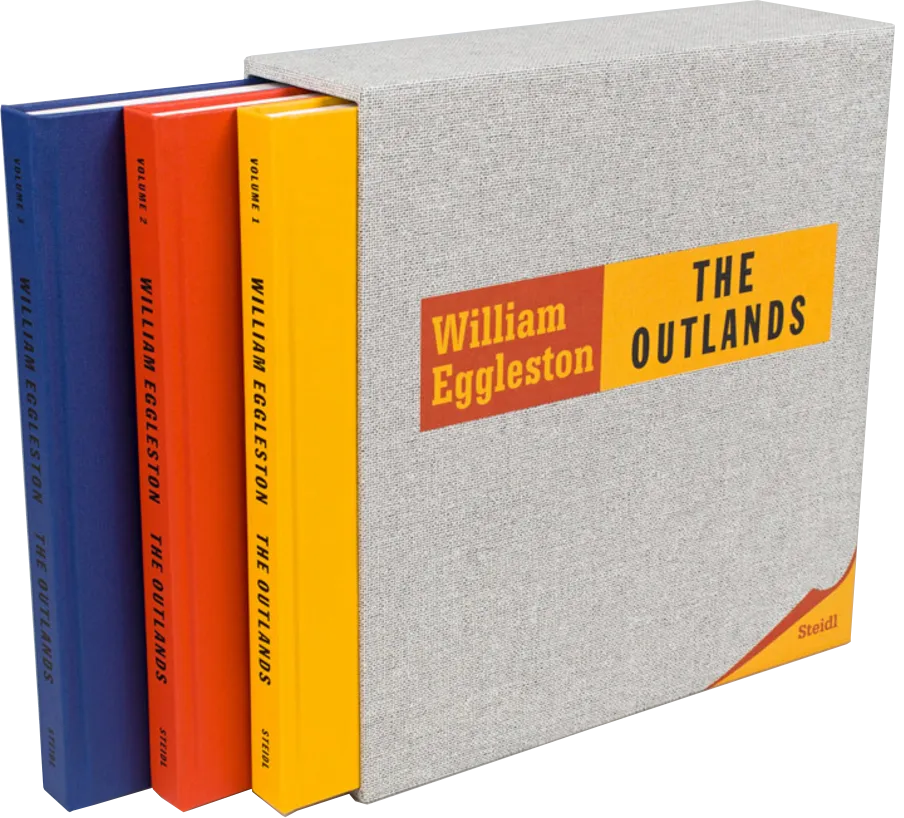
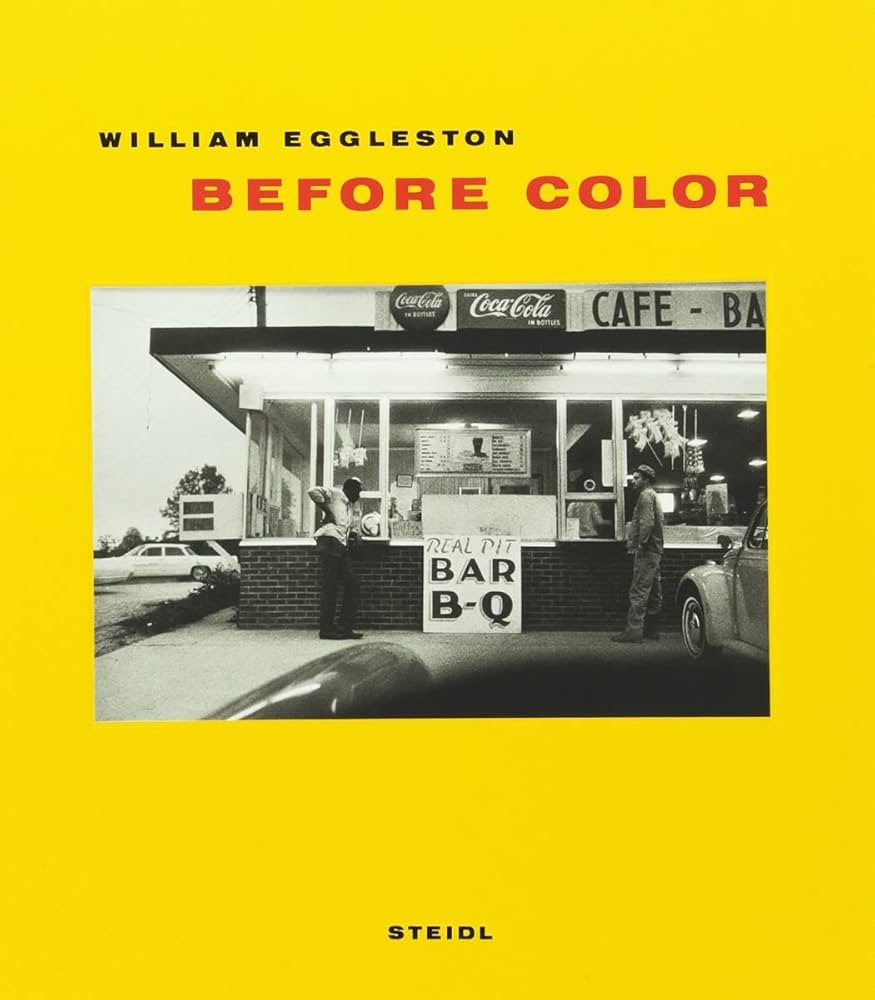
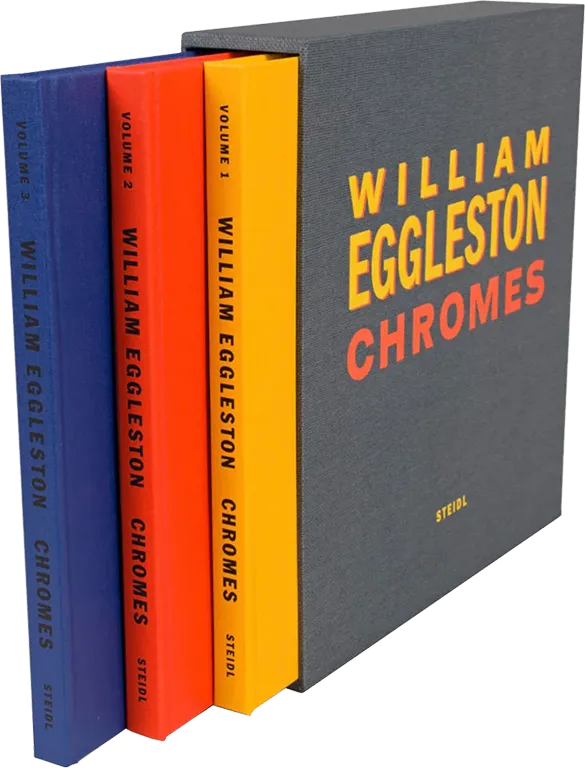
William Eggleston’s standing as one of the masters of color photography is widely acknowledged. But the gradual steps by which he transformed from an unknown into a leading artist are less well known. Steidl undertook to trace these steps in an ambitious series of publications. Before Color (2010) explored Eggleston’s revelatory early black-and-white images, while Chromes is an edit of more than 5,000 Kodachromes and Ektachromes taken from 10 chronologically ordered binders found in a safe in the Eggleston Artistic Trust. This archive had once been used by John Szarkowski, who selected the 48 images printed in Eggleston’s seminal book William Eggleston’s Guide, while the rest of the archive has remained almost entirely unpublished. This three-volume publication presents Eggleston’s early Memphis imagery, his testing of color and compositional strategies, and the development toward the “poetic snapshot.” In short, Chromes shows a master in the making.

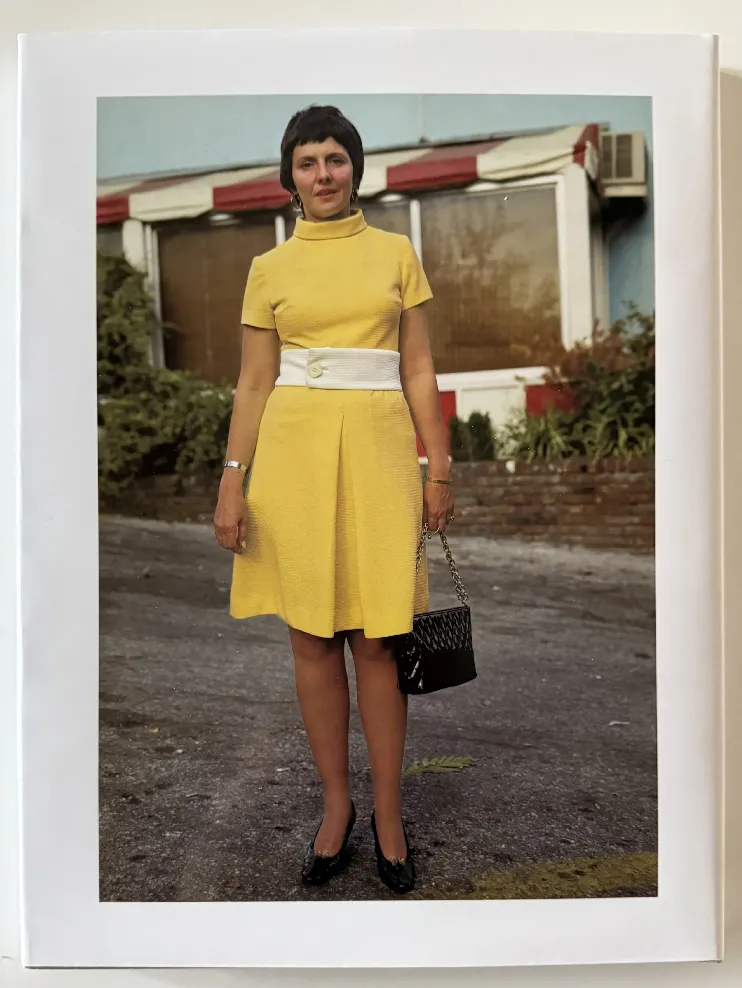
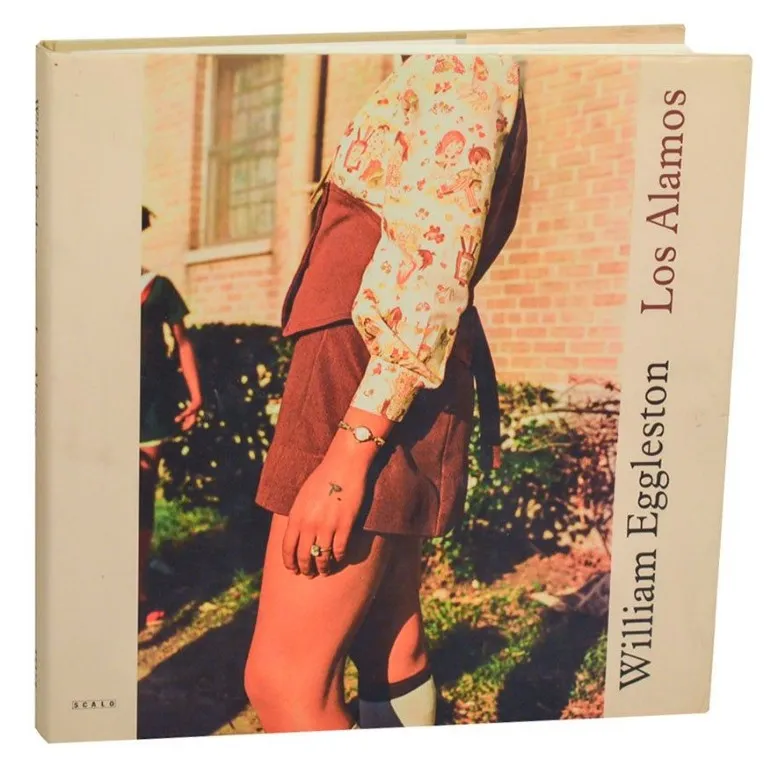
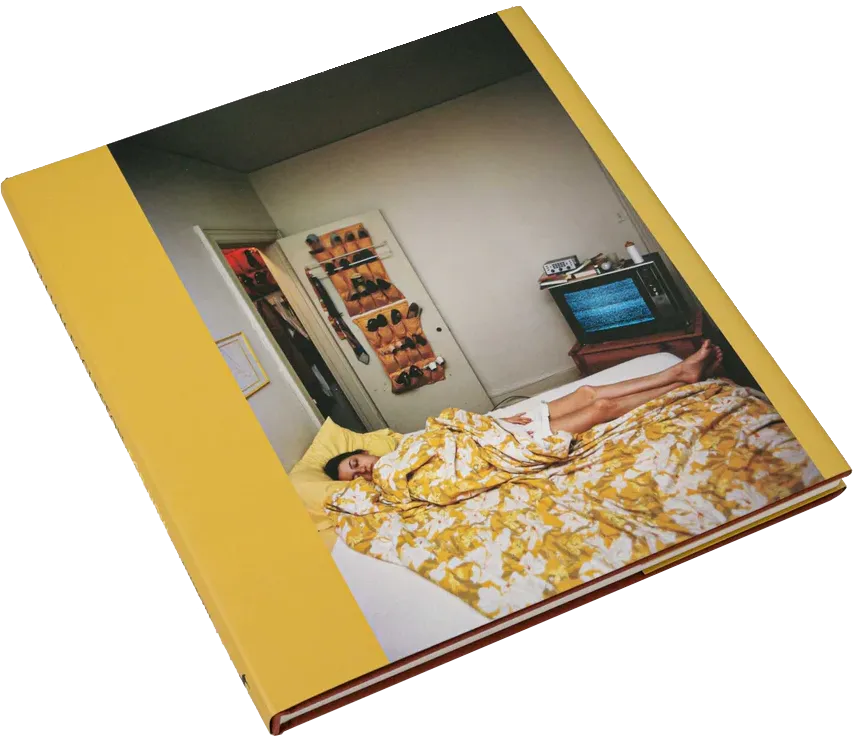
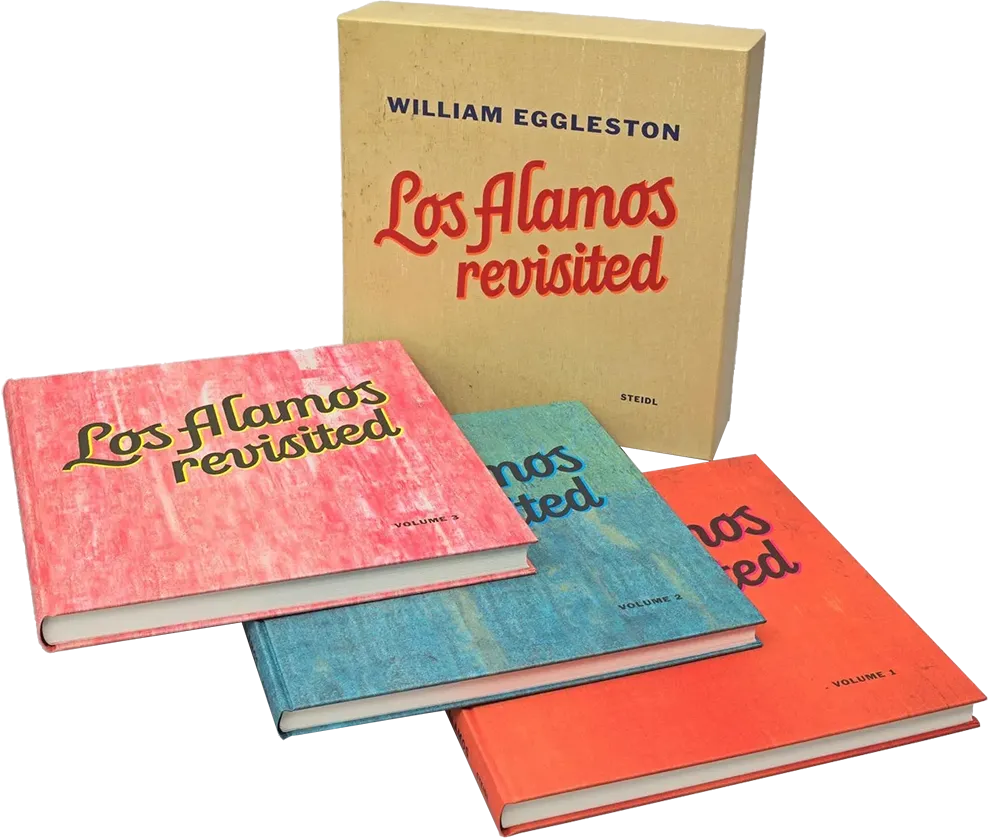
Los Alamos Revisited contains the definitive edit of William Eggleston's celebrated Los Alamos series, and closes a fascinating photographic story that began in the mid-1960s. Between 1965 and 1974, William Eggleston and Walter Hopps drove together through the USA, Eggleston taking photographs, Hopps at the wheel. During these travels the title Los Alamos was born. More than 30 years later Eggleston, Hopps, Caldecot Chubb and the photographer's son Winston Eggleston edited the photographs into a set of five portfolio boxes of dye-transfer prints. Hopps' original vision was to create a vast Los Alamos exhibition, but the negatives became separated, with Hopps retaining only about half. He later returned what was thought to be the remaining negatives to the Eggleston Artistic Trust in Memphis where they were catalogued as Box #17. After Hopps' death in 2005, another long-lost box of negatives was discovered. These were catalogued as Box #83 and documented in a handmade reference book called Lost and Found Los Alamos. In 2011, the photographer's son William Eggleston III and Mark Holborn reviewed the now complete set of negatives, finalizing the sequence with Winston Eggleston at Steidl in 2012. Los Alamos Revisited presents this sequence in its entirety, and updates the 2003 Scalo book Los Alamos.

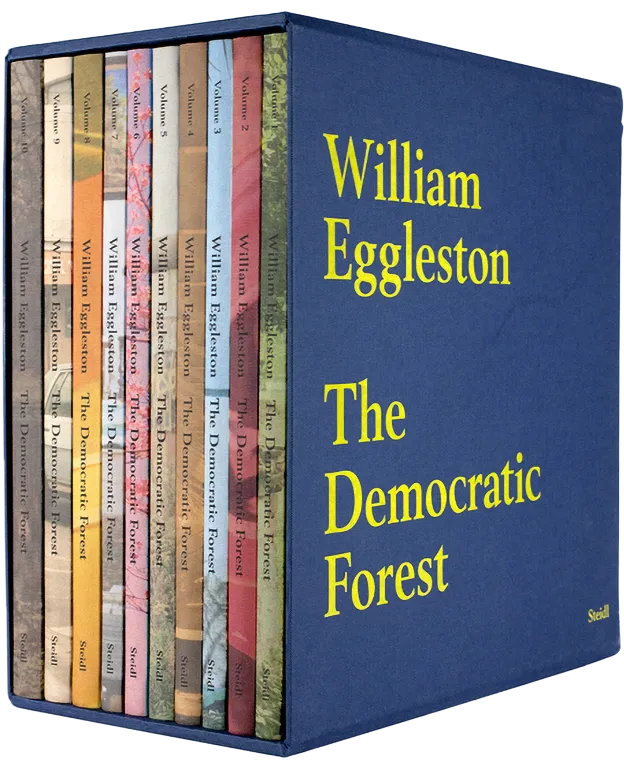
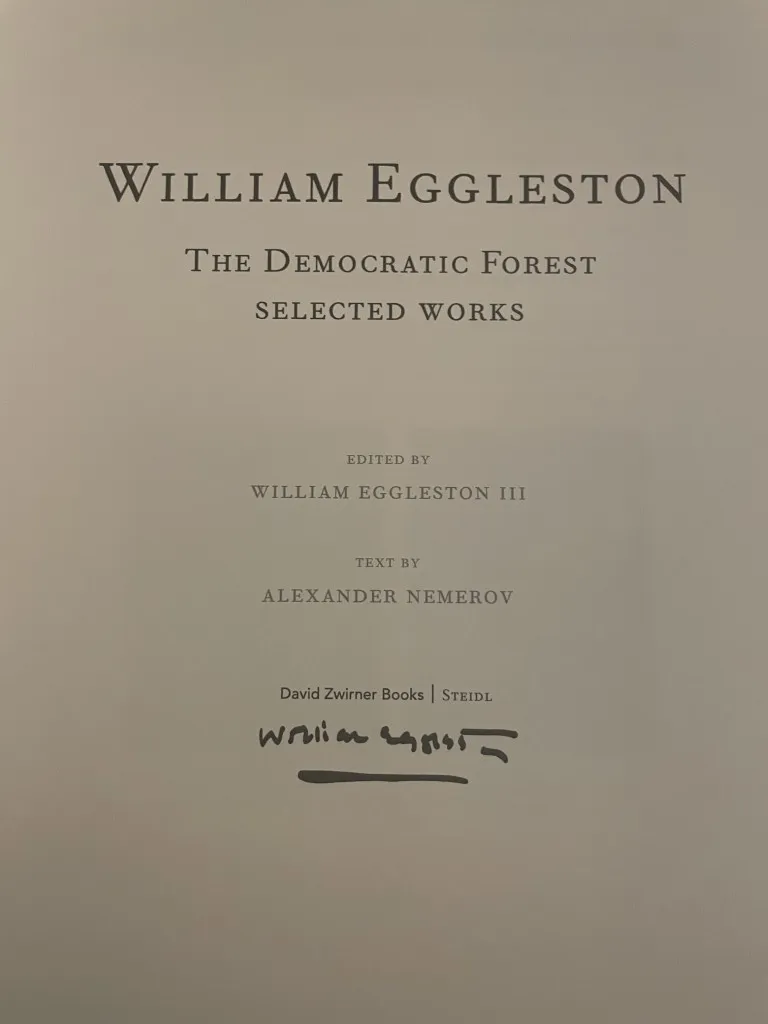
Following the publication of Chromes in 2011 and Los Alamos Revisited in 2012, Steidl's reassessment of Eggleston's career continued with the publication of The Democratic Forest, his most ambitious project. This ten-volume set containing more than 1,000 photographs is drawn from a body of 12,000 pictures made by Eggleston in the 1980s.

Following an opening volume of work in Louisiana, the ensuing volumes cover Eggleston's travels from his familiar ground in Memphis and Tennessee out to Dallas, Pittsburgh, Miami and Boston, the pastures of Kentucky and as far as the Berlin Wall. The final volume leads the viewer back to the South of small towns, cotton fields, the Civil War battlefield of Shiloh and the home of Andrew Jackson in Tennessee.

The "democratic" in Eggleston's title refers to a democracy of vision, through which the most mundane subjects are represented with the same complexity and significance as the most elevated. This work has rarely been shown and only a fraction of the entire oeuvre has ever been published; the exhaustive editing process has taken over three years. This gorgeous set includes a new introduction by Mark Holborn and the republication of Eudora Welty's original essay on the work.

This is not the second edition.

"I had this notion of what I called a democratic way of looking around, that nothing was more or less important," William Eggleston once said. This radical attitude guided his ground-breaking work in color photography, work that has prefigured many recent developments in art and photography. Los Alamos presents a series of photographs that has never before been shown, yet it contains a blueprint of Eggleston's aesthetics, his subtle use of subdued color hues, the casual elegance of his trenchant observations of the mysteries of the mundane. The photographs in Los Alamos were shot in Eggleston's native Memphis and on countless road trips across the American South from 1964 to 1968 and from 1972 to 1974. Initially, Eggleston wanted to create a vast compendium of more than 2000 photographs to be contained in 20 volumes; he wanted the viewer to look at the photographs the way one looks at the world. He eventually abandoned this project--and hardly any of the negatives were ever printed. 30 years later, we finally got to see a selection of this encyclopedia of Southern everyday life and vernacular culture. It's a stunning discovery that makes the so-called snapshot photography of recent years pale in comparison. Eggleston's astonishingly timeless portraits, still lives, landscapes, and photographs of buildings add up to a profound investigation of the world and our way of looking at it, a poetics of pleasures hidden in full view. They transcend the merely descriptive and uncover the universal encapsulated in the details and the detritus of life in a consumer culture. Published in collaboration with Museum Ludwig, Cologne.

This book was followed by a more comprehensive selection of Eggleston's Los Alamos photographs published in 2012 by Steidl under the title Los Alamos Revisited.

This is the 1st edition, NOT one of the 7 other reprint editions.

National Portrait Gallery

2016
with:
Edition:
1st
Edition size:
Signed and numbered 129/250
Out of Print
Other edition(s):
Boards slipcased in original publishers packaging box
ISBN:
9781855147201
Condition: Near Fine
2016

National Portrait Gallery

Out of Print
Signed
Edition:
1st
Prior edition(s):
Boards slipcased in original publishers packaging box
Condition: Near Fine

This is not the 3rd edition reprint.

2018
with:
Edition:
1st facsimile edition (1978)
Edition size:
Out of Print
Other edition(s):
Hardcover without dust jacket, as issued
ISBN:
9783958293892
Condition: Near Fine
2018
Out of Print
Signed
Edition:
1st facsimile edition (1978)
Prior edition(s):
Hardcover without dust jacket, as issued
Condition: Near Fine
Book images
2025
with:
Edition:
1st
Edition size:
Out of Print
Other edition(s):
Hardcover without a DJ as issued
ISBN:
9781644231678
Condition: Fine

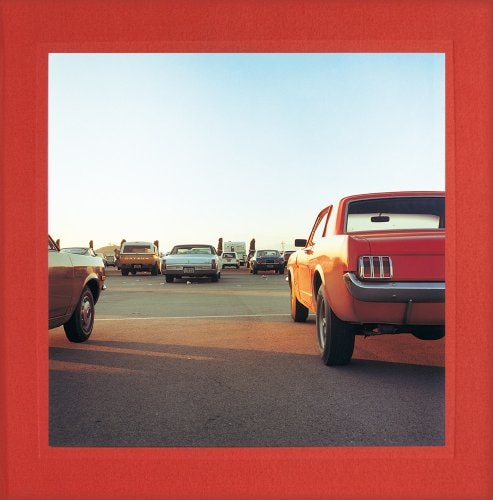
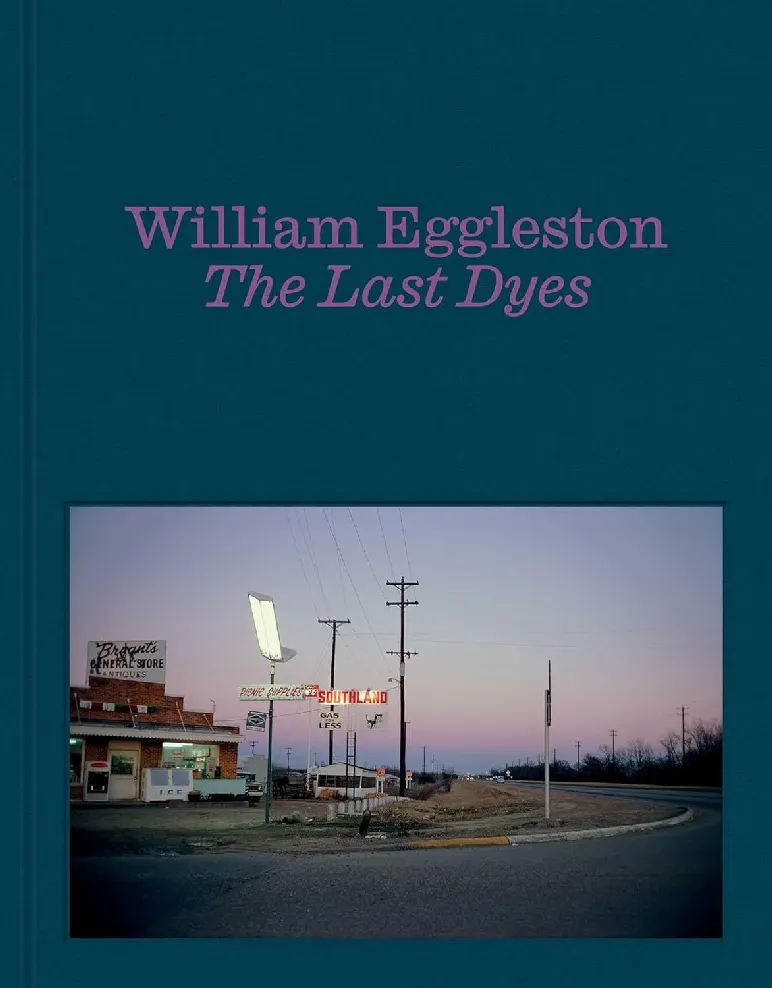
Eggleston pioneered the use of dye-transfer printing for art photography in the 1970s. The technically advanced process, first developed by Kodak in the 1940s, allowed him to achieve the richness of tonal depth and color saturation that he had been searching for. In the early 1990s, Kodak stopped producing the dyes, paper, and film used in the process. With the necessary materials now discontinued, and the bulk of what remained being used for this exhibition, The Last Dyes marks the final presentation of new works completed in this medium.

Edition:
7/10
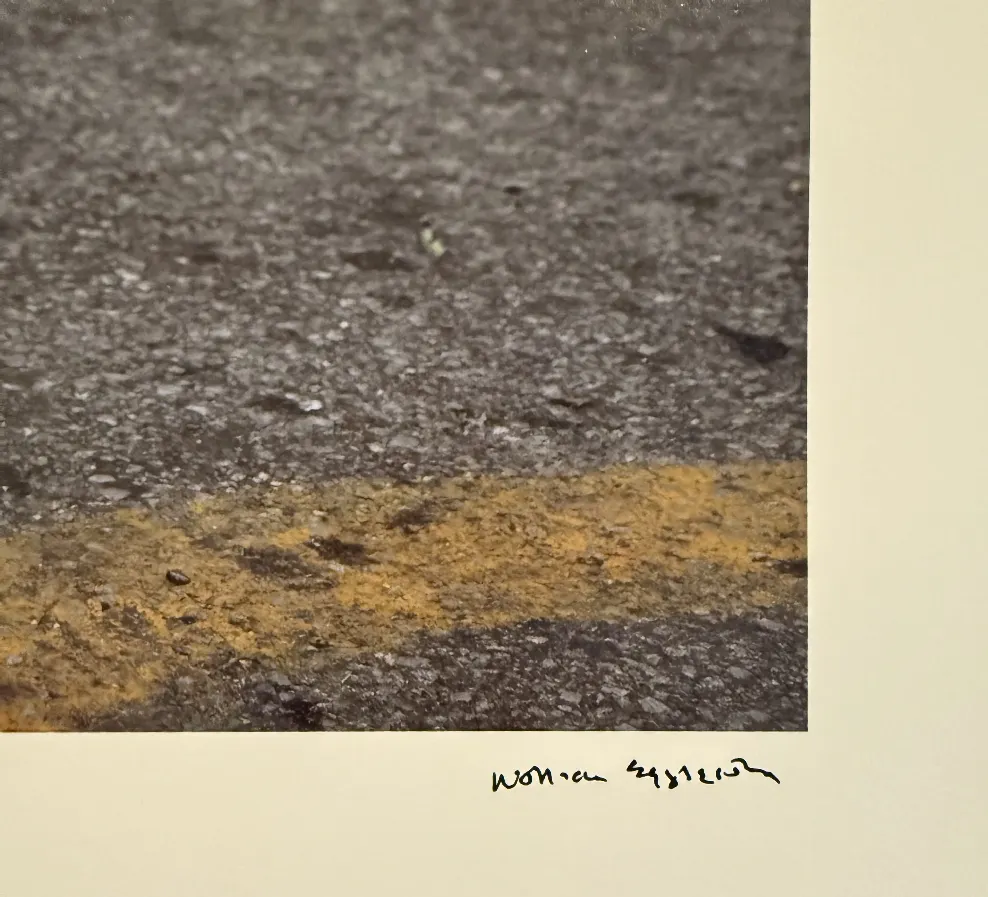
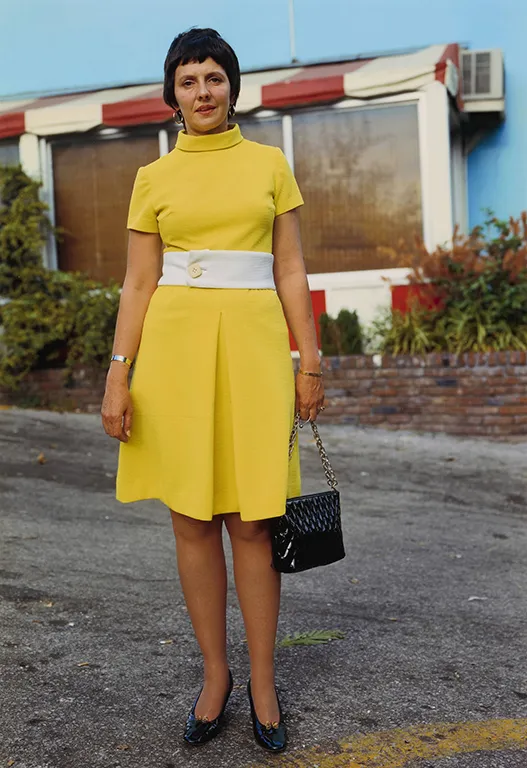
Signed on the print's recto's lower edge. Stamped & numbered 7/10 by the Eggleston studio on the print's recto.
Year of work:
1973
Image size:
69 x 48 cm
Print size:
764 x 586 mm
Printed in
2007
Framed size:
unframed
Provenance:
Cheim & Read, New York
Pigment print
Condition:
Excellent

Printed in 2007 under the artist's supervision, by David Adamson, Washington, D.C. in an edition of 10 numbered and 3 lettered examples.

Literature and Collections:

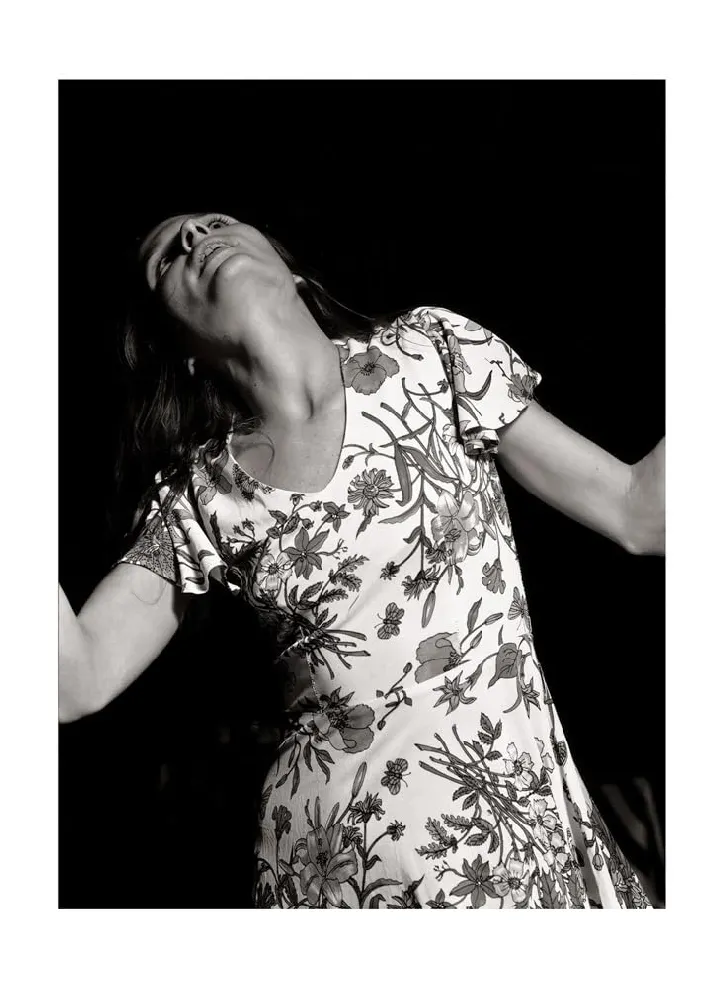
William Eggleston: Portraits, Prodger, pg. 96, pl. 52

William Eggleston, 5X7, Twin Palm, 2006, Back cover and plate inside.

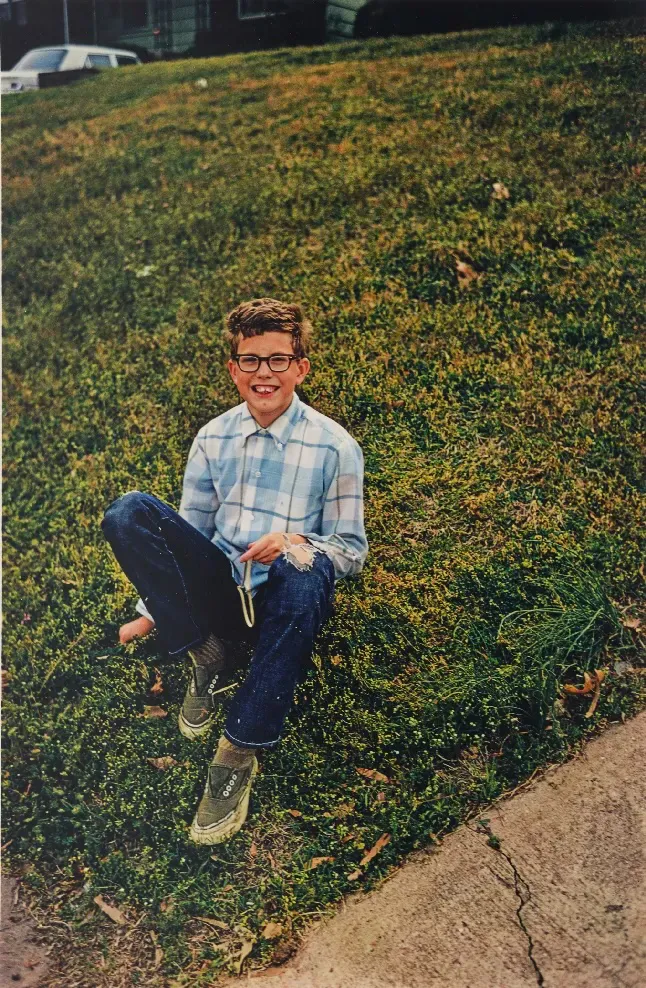
The photograph was also exhibited in several shows including those held at LACMA in 2011 and the National Portrait Gallery, London in 2016.

edition:
7/10
Sold Out
Signed on the print's recto's lower edge. Stamped & numbered 7/10 by the Eggleston studio on the print's recto.
Image size:
69 x 48 cm
Year of work:
1973
Edition:
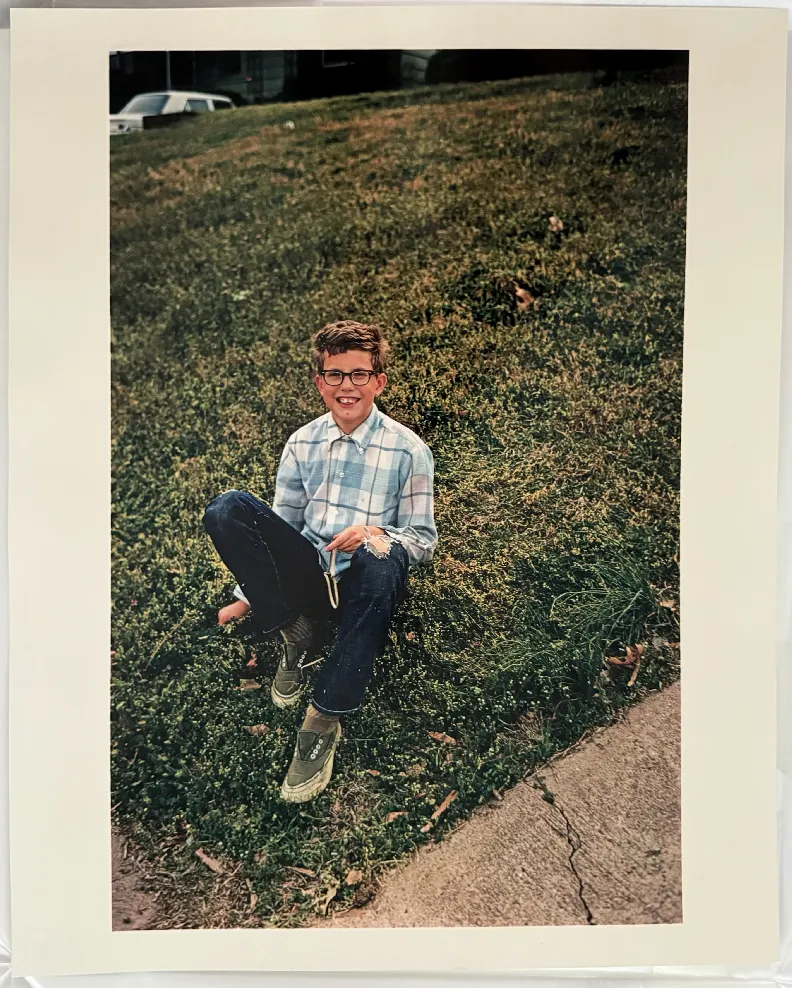
Printer's proof from an edition of 10 + 3 APs.
Sold out
Signed in pencil with the Eggleston Artistic Trust copyright credit reproduction limitation stamp on the verso
Year of work:
Circa 1970-74
Image size:
463 x 302 mm
Print size:
506 x 406 mm
Printed in
2012
Framed size:
unframed
Provenance:
Artist
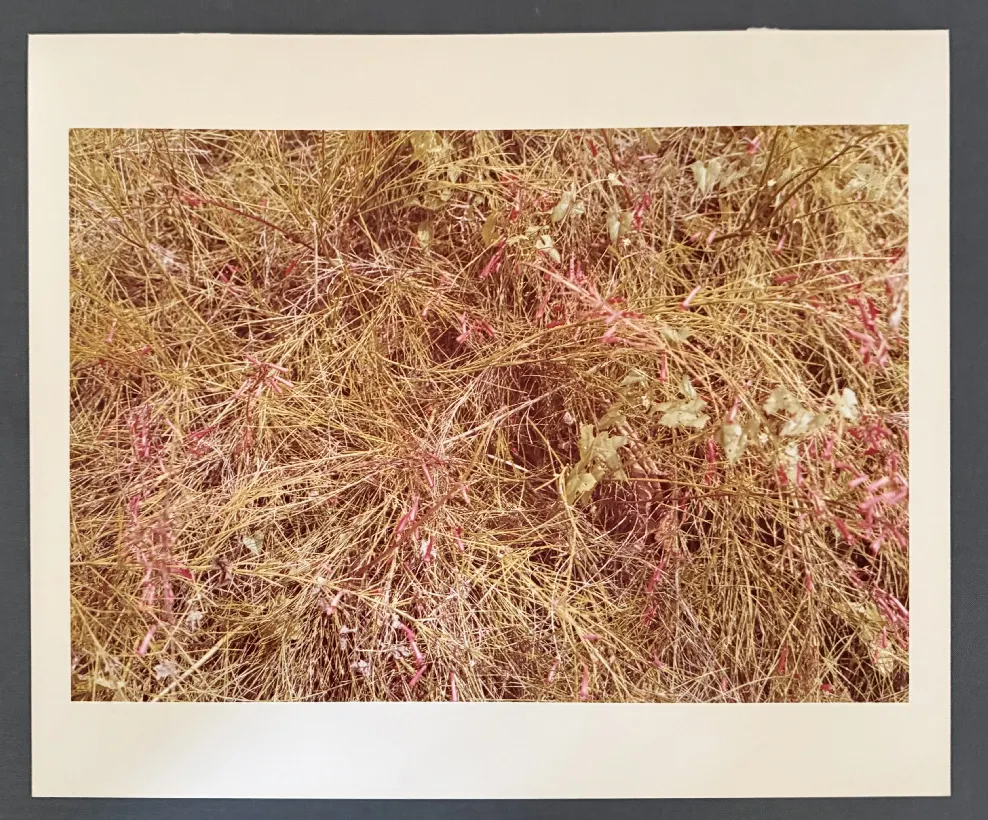
Dye transfer print.
Condition:
Excellent (Light ink mark in the upper left quadrant, outside the image. No other marks or defects).
Literature and Collections:

Steidl, William Eggleston: Chromes, vol. 2, p. 116.

Another impression of this photograph is included in the Tate Modern, London (Ref. P15164).

edition:
Printer's proof from an edition of 10 + 3 APs.
Sold Out
Signed in pencil with the Eggleston Artistic Trust copyright credit reproduction limitation stamp on the verso
Image size:
463 x 302 mm
Year of work:
Circa 1970-74
Edition:
Numbered 7/35
Sold-out from the gallery/publisher.
Signed and editioned 7/35 in ink, verso.
Year of work:
1978
Image size:
26.4 x 39 cm
Print size:
35.5 x 43.2 cm
Printed in
Framed size:
Unframed
Provenance:
Caldecot Chubb
Dye coupler print on Kodak paper
Condition:
Very good with very light wear not affecting the emulsion.
Literature and Collections:
edition:
Numbered 7/35
Sold Out
Signed and editioned 7/35 in ink, verso.
Image size:
26.4 x 39 cm
Year of work:
1978
Image(s) of signature and/or rectos
Edition:
open
Signature on front right below image
Sold out.
Offset
Image size:
508X762mm
Print size:
508X762mm
Framed size:
Not framed with book
Provenance:
National Portrait Gallery, London
Year of work:
Printed in:
2016

Signed

Literature:
by
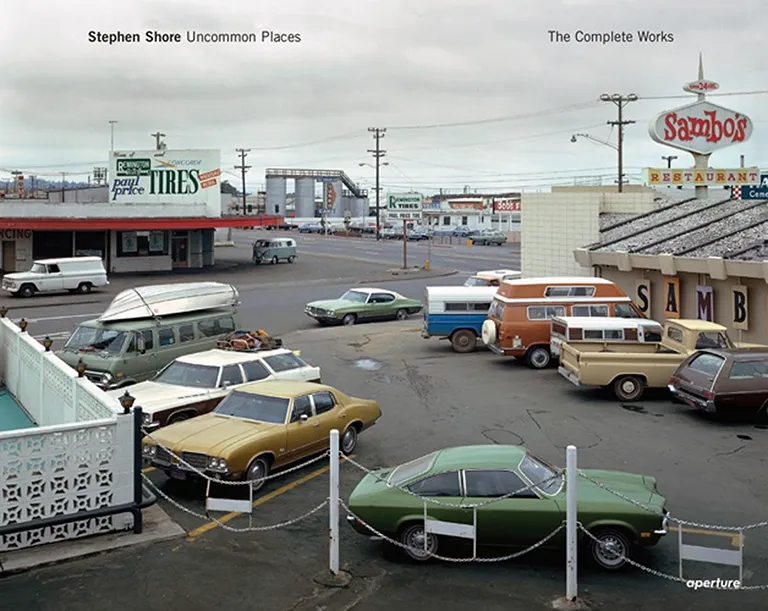
Stephen Shore

Stephen Shore

2004
with:
Edition:
Revised (1982)
Edition size:
Out of Print
Prior edition(s):
Hardcover with dust jacket
ISBN:
Condition: Near Fine

This is not the 2015 re-edition.

by
Philip Lorca diCorcia

Philip Lorca diCorcia

2013
with:
Edition:
First edition of the entire series.
Edition size:
Out of Print
Prior edition(s):
First MOMA catalog released in 1995.
Oversized Boards
ISBN:
9783869306179
Condition: Near Fine
2013
Out of Print
Signed
Edition:
First edition of the entire series.
Prior edition(s):
First MOMA catalog released in 1995.
Oversized Boards
Condition:
Condition: Near Fine

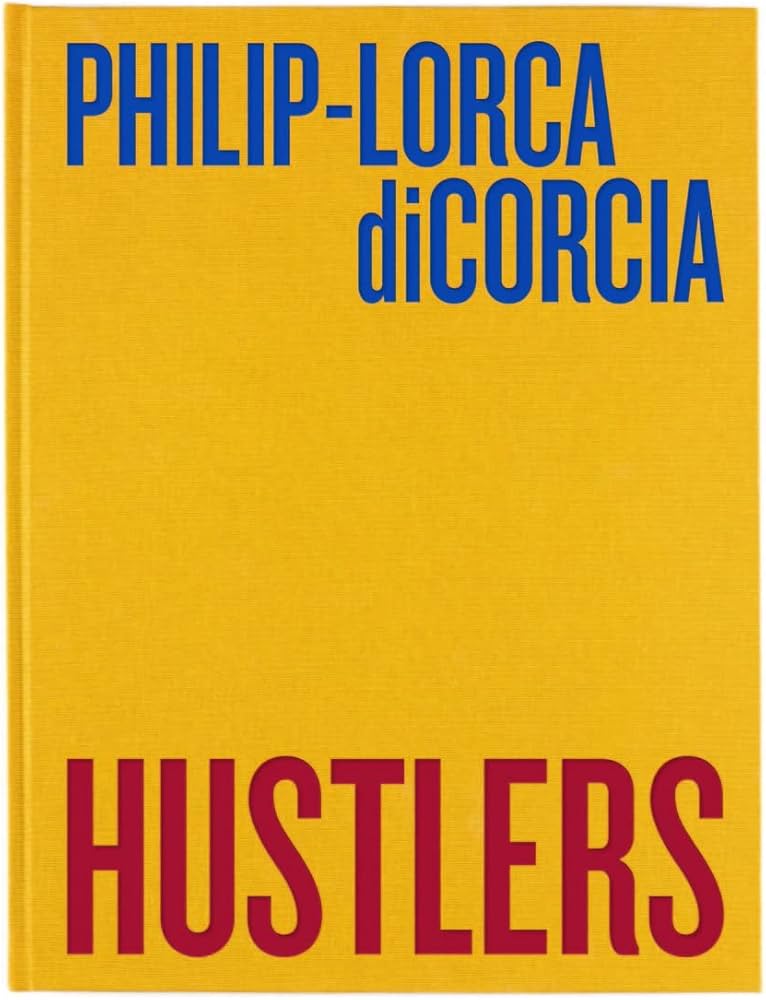
Between 1990 and 1992, Philip-Lorca diCorcia, funded by a National Endowment for the Arts fellowship, made multiple trips to Los Angeles to scout locations, invent scenarios and to find male prostitutes that would agree to pose for his camera. The last task proved to be the easiest: diCorcia simply used his fellowship money to pay the men whatever price they charged for their most typical service and ultimately prompted a complaint of misuse of government funds. In 1993, 21 selected images were initially exhibited at The Museum of Modern Art, marking Philip-Lorca diCorcia's first solo exhibition. The show, entitled Strangers was accompanied by a museum catalog. Twenty years later, steidldangin publishes the series in its entirety. Hustlers is an empathetic yet melancholic poem of the Hollywood dream gone wrong, prescribing to the heavily-staged pictorialism and happenstance of street casting for which diCorcia is most widely recognized. Knowing precisely what he wanted from each photograph, and fearful of police involvement, diCorcia would prearrange all settings: this motel room, that vacant lot, in between cars, in a fast-food restaurant--the narrative was always deliberate. From the moment diCorcia approached a potential subject (usually around Santa Monica Boulevard in Hollywood), to the completion of the shoot, seldom more than one hour had passed. The titles of these encounters amplify the facts--for example: "Ralph Smith, 21 years old, Ft. Lauderdale, Florida, and $25."

by
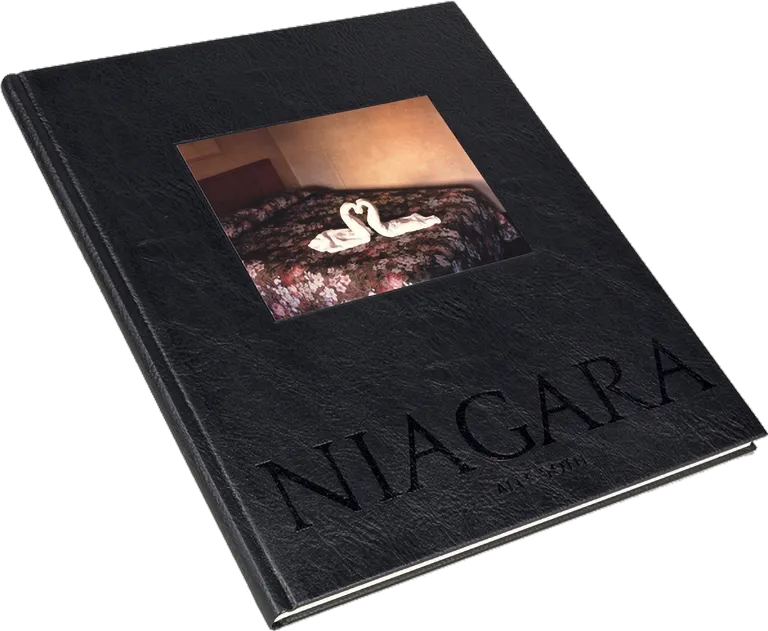
Alec Soth

Alec Soth

2006
with:
Edition:
1st
Edition size:
Out of Print
Prior edition(s):
Hardcover without dust jacket, as issued
ISBN:
Condition: Near Fine

This is not the 2018 reprint.

William Eggleston (American, b. 1939)

Eggleston is a trailblazing American photographer credited with transforming color photography into a respected art form. Born in Memphis, Tennessee, and raised in the Mississippi Delta, Eggleston began photographing in black and white but turned to color in the mid-1960s—at a time when color was mostly reserved for advertising and amateur snapshots.

Early Life

Eggleston was not a typical product of the 1960s counterculture or the standard New York art school track.

Raised on his family’s former cotton plantation in Sumner, Mississippi, Eggleston grew up in affluent, aristocratic Southern surroundings. As a teenager, he was introverted, deeply interested in media, audio electronics, and classical piano—a passion he maintains to this day. He spent several years drifting through various institutions, including Vanderbilt University, Delta State University, and the University of Mississippi (Ole Miss), famously leaving them all behind without ever earning a degree. Around 1962, a friend noticed his fascination with visual composition and mechanics and urged him to buy a camera. Eggleston taught himself the medium entirely by studying the stark black-and-white photobooks of Walker Evans, Robert Frank, and Henri Cartier-Bresson.

When Eggleston began experimenting with color film in Memphis around 1965, he did so in complete isolation from the mainstream art world. At the time, serious photography was defined by the high-contrast, black-and-white lyricism of his heroes. Color was universally derided as "vulgar"—the exclusive domain of cheap holiday snapshots, amateur slide shows, and slick corporate advertising.

Even his photographic icons rejected it. Cartier-Bresson, who later became a personal friend, once bluntly told Eggleston at a dinner party: "You know, William, color is bullshit." Undeterred, Eggleston realized that if he photographed everyday life in color without sentimentality or irony, he could capture the American landscape in a way that felt entirely accurate to how humans actually see.

The Dye Transfer Breakthrough

In the early 1970s, Eggleston discovered a commercial printing technique that would become his aesthetic signature: the dye-transfer process.

Mainly used in high-end fashion magazines and advertising (such as cigarette or soda ads), the process was incredibly expensive and labor-intensive, requiring the photographic image to be separated into three distinct cyan, magenta, and yellow printing matrices. It allowed Eggleston to manually control and saturate individual tones to an unnatural, luminous intensity.

His most famous image, Greenwood, Mississippi (1973)—better known as "The Red Ceiling"—owes its unsettling, Hitchcockian brilliance entirely to this process. Eggleston later remarked that the red ink was so rich, "it looks like blood wet on the wall."

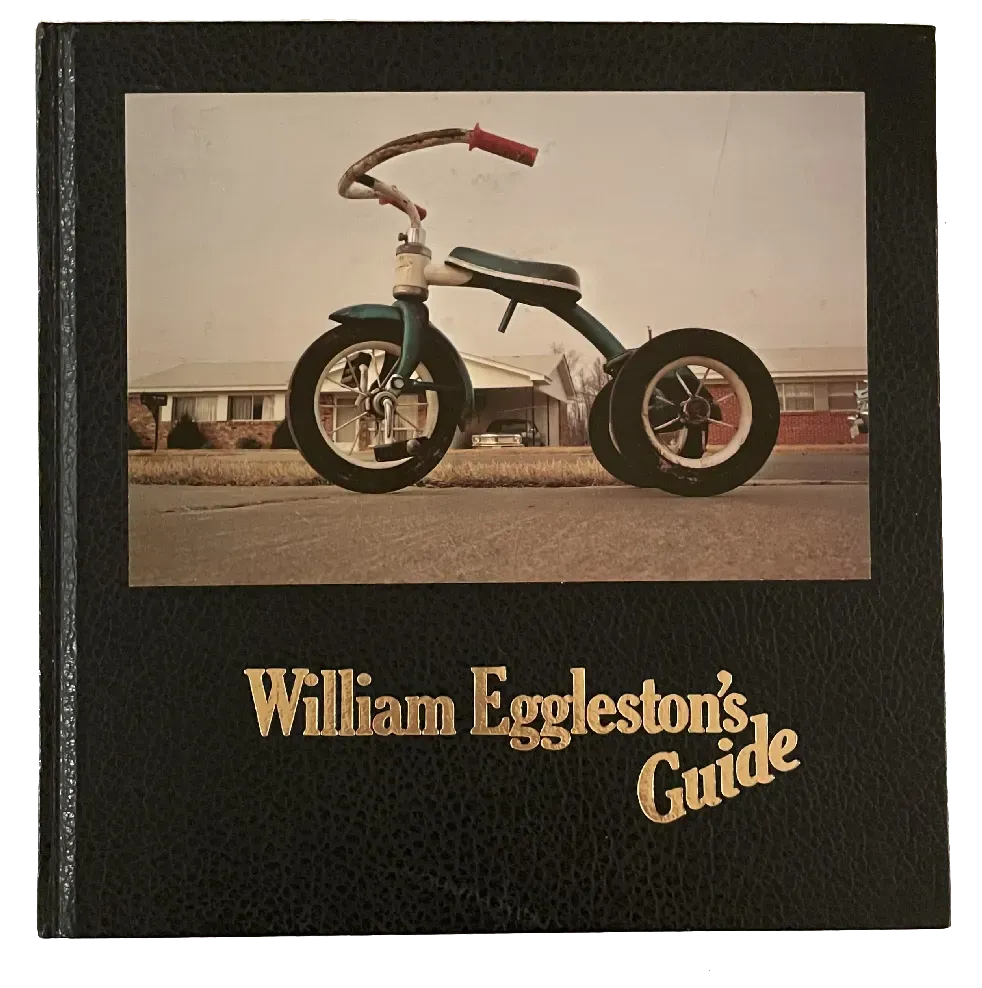
His defining moment came with the publication of William Eggleston’s Guide (1976), released in conjunction with his groundbreaking solo exhibition at the Museum of Modern Art (MoMA), the museum’s first show devoted to color photography. The book, which has since become a seminal photobook, introduced his "democratic camera" philosophy: treating all subjects with equal aesthetic weight, from roadside signs and light bulbs to anonymous interiors and Southern streetscapes.

While widely celebrated today, the 1976 exhibition was a massive gamble for MoMA and John Szarkowski, who boldly labeled Eggleston's work "perfect." The art establishment reacted swiftly, unleashing a wave of vitriolic criticism.

  • Hilton Kramer, the chief art critic for The New York Times, panned the exhibition as "perfectly banal, perhaps... perfectly boring, certainly." * Other critics labeled it the most hated show of the year, dismissing his prints of tricycles, open refrigerators, and local Southern characters as formless and lacking artistic intent.

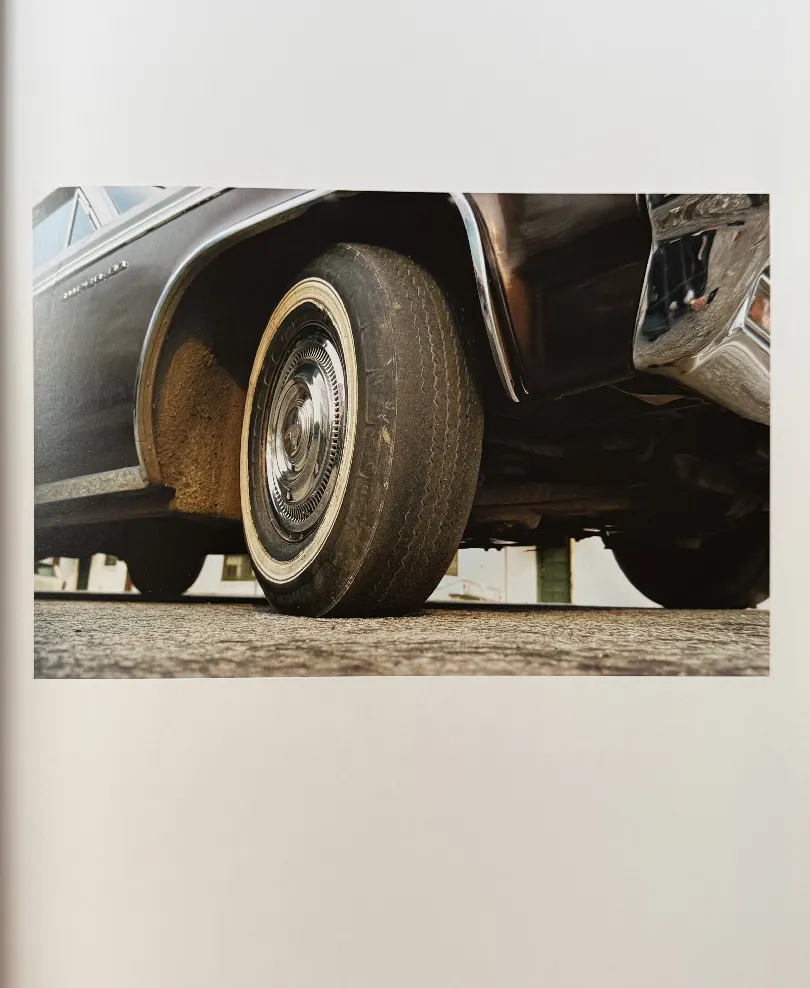
What the critics missed was the precise, formal rigor hiding beneath the casual "snapshot" surface. Eggleston wasn't just shooting random scenes; he was composing with the eye of an abstract painter, using a "democratic camera" where a rusty pipe or a trash pile held the exact same visual weight as a human portrait.

The controversy didn't bother Eggleston in the slightest. Decades later, he reflected on the uproar with characteristic detachment: "Those few critics who wrote about it were shocked that the photographs were in color, which seems insane now and did so then... To me, it just seemed absurd."

Eggleston’s work will be remembered for:

  • Rich, saturated colors, often made with the dye-transfer printing process, which gave his images a luminous intensity.
  • Casual yet precise composition, blending snapshot spontaneity with formal rigor.
  • A deep engagement with the ordinary and overlooked, finding the poetic in the mundane.

His images convey a stillness and ambiguity that challenge viewers to look more closely, imbuing the everyday with a sense of strangeness and reverence. Eggleston’s influence can be felt across contemporary photography, cinema, and visual culture.

His work is held in major museum collections including the MoMA, New York, the Metropolitan Museum of Art, New York, the J. Paul Getty Museum, Los Angeles, the Whitney Museum of American Art, Centre Pompidou, Paris, SFMOMA and the Tate Modern, London.

Through his pioneering use of color and his unflinching gaze, William Eggleston has forever changed how we see the world through a lens.