
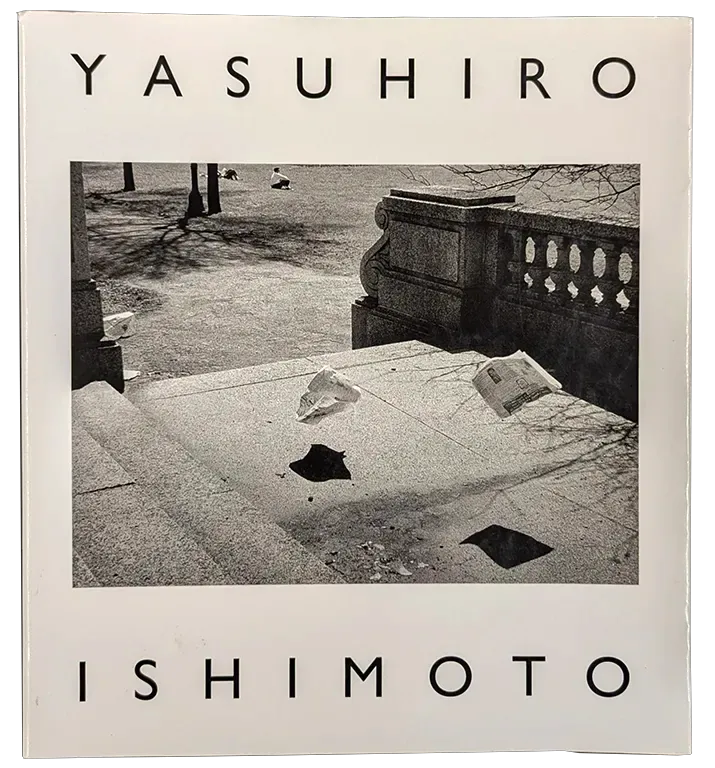


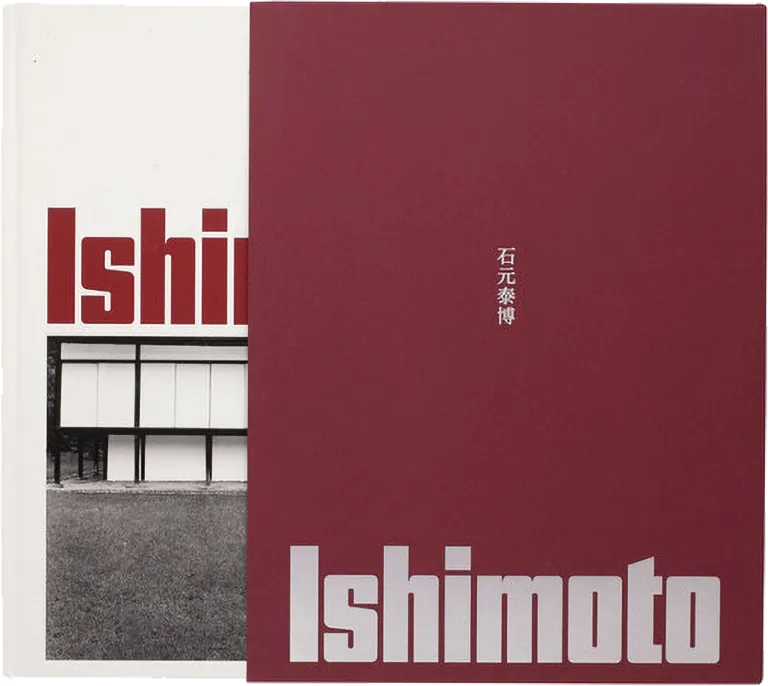
Which art books, prints and posters are available by and about this artist? Here is a sample of items of interest to a typical collector:

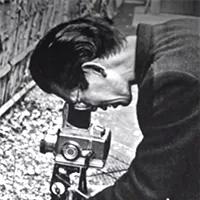
Yasuhiro Ishimoto (June 14, 1921 – February 6, 2012) was a renowned Japanese-American photographer celebrated for bridging Eastern and Western modernist photography traditions. Often described by critic Minor White as a visual bilingualist, his work seamlessly integrated the graphic, geometric abstraction of Western modernism with traditional Japanese spatial sensibilities.
Born in San Francisco, California, Ishimoto was raised in the Kochi Prefecture of Japan before returning to the United States in 1939. Following the outbreak of World War II, he and his family were forcibly detained at the Amache Internment Camp in Colorado, where he first learned the fundamentals of photography from fellow detainees. After his release, Ishimoto moved to Chicago and enrolled in 1948 in the photography department at the Institute of Design, often referred to as the New Bauhaus, studying under influential modernists Harry Callahan and Aaron Siskind.
His work frequently investigated the human relationship to the built environment, capturing dynamic lines, bold geometric shadows, and the candid realities of urban life. His deep ties to both Chicago and Tokyo resulted in iconic street photography and photobooks, most notably Chicago, Chicago in 1969. After returning to Japan in the 1950s, Ishimoto gained international acclaim for his radical, highly structured documentation of the 17th-century Katsura Imperial Villa in Kyoto. By emphasizing textures, framing beams, and stepping stones rather than strictly documenting the buildings, his photographs transformed architectural photography into a contemporary artistic medium.
Early in his career, his work was championed by Edward Steichen, who included Ishimoto's photographs in the Museum of Modern Art's legendary 1955 global exhibition, The Family of Man. Throughout his career, he received numerous accolades, including being named a Person of Cultural Merit by the Japanese government in 1996. His photographs are held in major permanent collections worldwide, including the Museum of Modern Art in New York, the Art Institute of Chicago, and the National Museum of Modern Art in Tokyo.
