
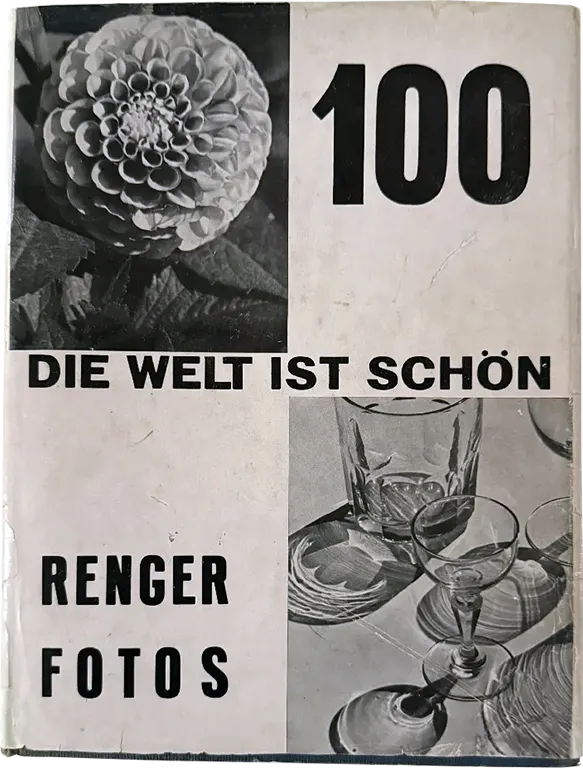
Hardcover with DJ
ISBN:


Albert Renger-Patzsch’s Die Welt ist schön (The World is Beautiful), published in 1928, stands as a foundational masterpiece of the New Objectivity (Neue Sachlichkeit) movement in photography.
The publication presents a striking visual catalog of one hundred plates juxtaposing natural forms, plants, minerals, and landscapes, with industrial machinery, architecture, and manufactured objects. By rendering each subject with uncompromising sharpness, neutral lighting, and precise framing, Renger-Patzsch stripped away romanticism and pictorial flourish, elevating the ordinary and industrial to the same level of visual significance as nature.
The thematic core of the work asserts that the inherent beauty of the world is revealed not through subjective artistic manipulation, but through an objective, highly detailed engagement with reality and material form.
Within the BSS archive, Die Welt ist schön serves as an essential historical anchor, embodying the formalist rigor and structural clarity that is key to the archive's core philosophy.