
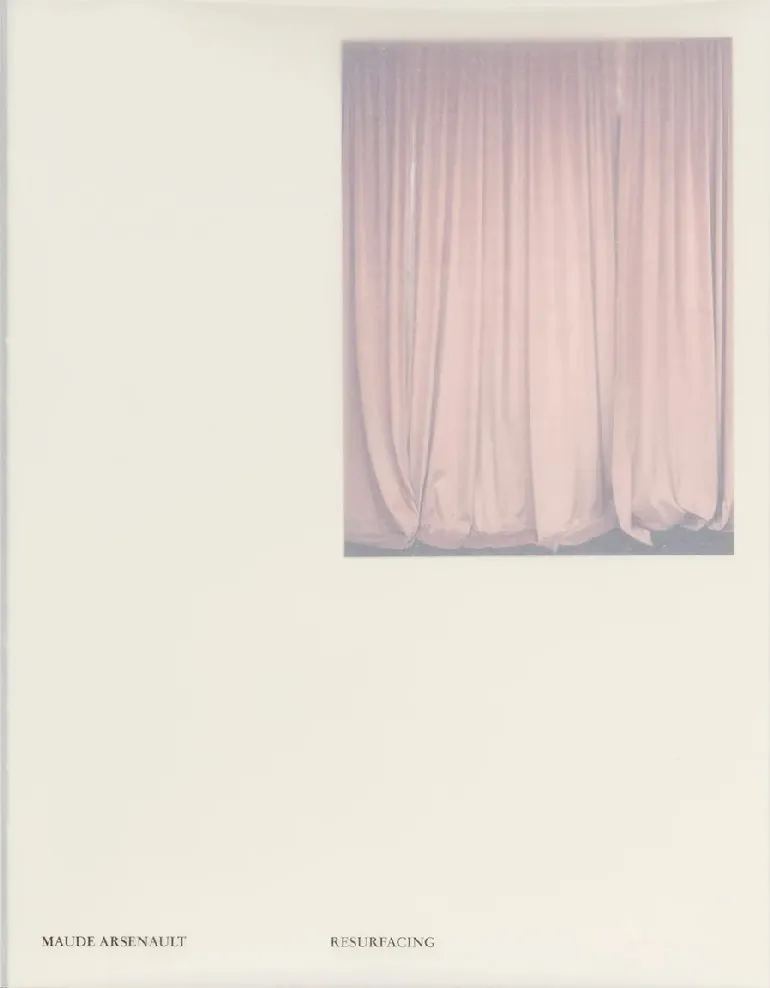
Softcover with translucent DJ issued in a slipcase with Entangled.
ISBN:
9781952523151


Maude Arsenault’s Resurfacing (Deadbeat Club, 2023) functions as a deeply intimate interrogation of female autonomy, domesticity, and the physical body within contemporary visual culture. Situated at the intersection of portraiture, landscape, and performance, the work examines how identity is constructed and reclaimed against historical legacies of the male gaze and gendered spatial constraints. Within Arsenault’s broader practice, the project marks a crucial transition from her commercial fashion origins toward a self-reflexive, formalist exploration of vulnerability, agency, and matrilineal identity.
Aesthetically, the work relies on a nuanced, tactile visual vocabulary defined by soft natural light, muted palettes, and subtle spatial tension. Arsenault employs deliberate framing and gestural compositions, often depicting figures partially obscured, merging with surrounding environments, or in states of quiet pause, to convey interiority rather than spectacle. The interplay between interior domestic spaces and expansive natural landscapes establishes a structural rhythm that underscores the physical and psychological act of "resurfacing", emerging into