
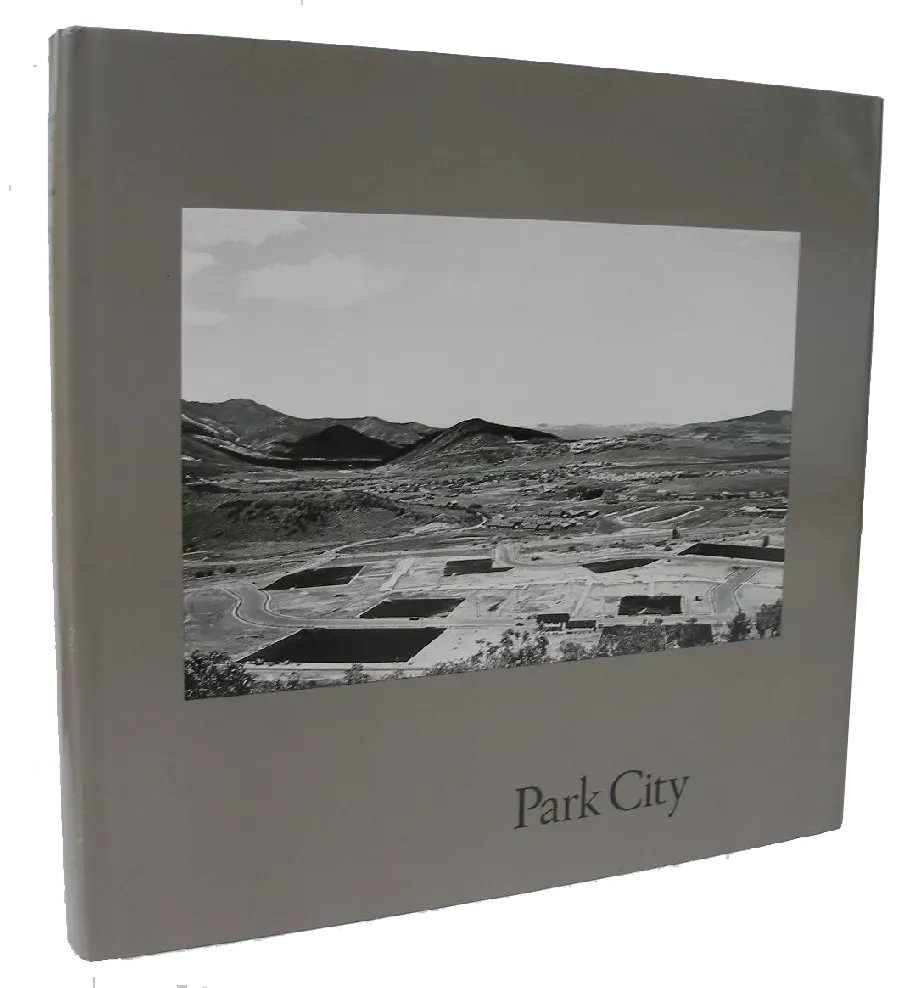



Taken from 1978 to 1979 in a then-developing section of Park City, Utah, this series has long been celebrated as one of the central portfolios in Baltz's groundbreaking career, and the final, rueful embellishment upon his seminal works of the 1970s. The complete Park City portfolio, consisting of 102 elements, will be on display in the exhibition.
Park City is today one of America's prime resort destination, well-known for its multiple world-class ski parks as well as being the home of the Sundance Film Festival. With a full-time population under 8,000 people, Park City has an estimated 4,000,000 tourists visiting annually, driven to the area through power of conspicuous enterprise. Like Baltz's earlier series, The new Industrial Parks near Irvine, California, Park City is at once a deadpan reportage of a housing development under states of construction as it is a diary of the seemingly inexorable march of commerce that drove the rush. In clarified, Spartan detail, Baltz captured the then-changing land as a premonition, taken at maximum depth of field; even the most barren and unearthly ground can be a place for financial definition in the boom generation of America.
Nature as a source of aesthetic pleasure is rendered out in these photographs. Taken in its entirety, the images combined become more a narrative proscribing something else altogether. Baltz's purview of these distinctly uninteresting structures insinuates nature within the uncomfortable company of a social contract, in the sense of Hobbes' treatise on the lone benefit of moving from the wilderness of the State of Nature into Society: inclusion into the civilization means the right to sue one another at will. This series is in its own way a remark on the postindustrial age's way of manufacturing nature into a functional product: a profit-ready landscape. In the quintessentially American proposition of manifest destiny -of absorption, of turning anything into an alluring specter for the appetite- Park City intimates the afterglow of the new dystopia: The World is ugly,/And the people are sad.

Taken from 1978 to 1979 in a then-developing section of Park City, Utah, this series has long been celebrated as one of the central portfolios in Baltz's groundbreaking career, and the final, rueful embellishment upon his seminal works of the 1970s. The complete Park City portfolio, consisting of 102 elements, will be on display in the exhibition.
Park City is today one of America's prime resort destination, well-known for its multiple world-class ski parks as well as being the home of the Sundance Film Festival. With a full-time population under 8,000 people, Park City has an estimated 4,000,000 tourists visiting annually, driven to the area through power of conspicuous enterprise. Like Baltz's earlier series, The new Industrial Parks near Irvine, California, Park City is at once a deadpan reportage of a housing development under states of construction as it is a diary of the seemingly inexorable march of commerce that drove the rush. In clarified, Spartan detail, Baltz captured the then-changing land as a premonition, taken at maximum depth of field; even the most barren and unearthly ground can be a place for financial definition in the boom generation of America.
Nature as a source of aesthetic pleasure is rendered out in these photographs. Taken in its entirety, the images combined become more a narrative proscribing something else altogether. Baltz's purview of these distinctly uninteresting structures insinuates nature within the uncomfortable company of a social contract, in the sense of Hobbes' treatise on the lone benefit of moving from the wilderness of the State of Nature into Society: inclusion into the civilization means the right to sue one another at will. This series is in its own way a remark on the postindustrial age's way of manufacturing nature into a functional product: a profit-ready landscape. In the quintessentially American proposition of manifest destiny -of absorption, of turning anything into an alluring specter for the appetite- Park City intimates the afterglow of the new dystopia: The World is ugly,/And the people are sad.