
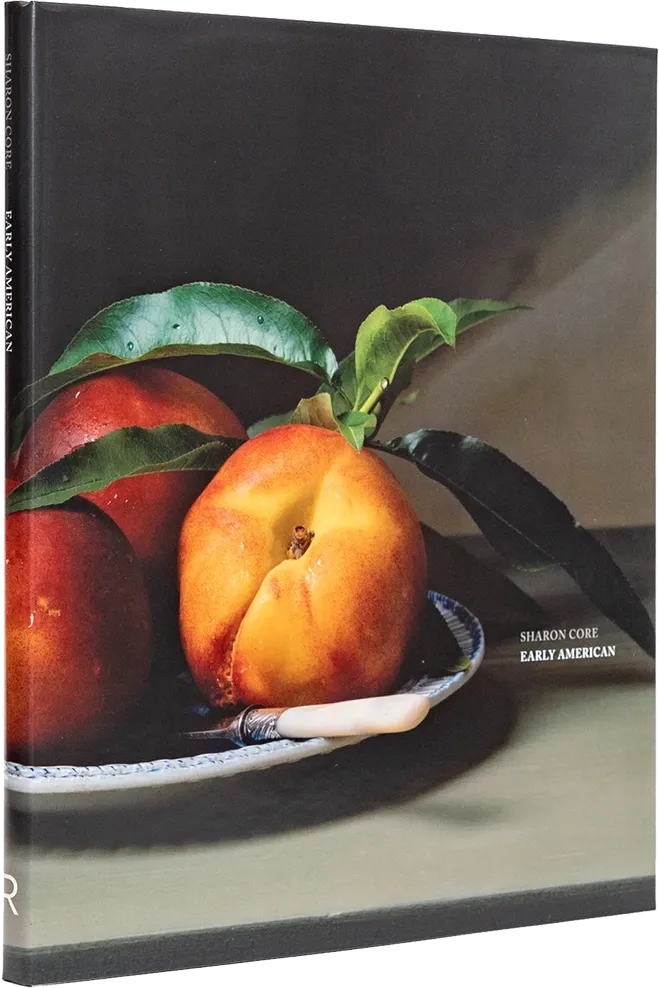
Hardcover with dust jacket
ISBN:
9781934435465


Early American investigates the slippery boundaries between historical painting, botanical documentation, and contemporary photographic illusion, transforming nineteenth-century still-life traditions into meticulous, highly constructed visual studies. Grounded in rigorous archival research, the project is inspired by the pioneering trompe l'œil paintings of Raphaelle Peale, alongside historical seed catalogs and horticultural specimens. Rather than capturing spontaneous arrangements, Core constructs each composition physically, often baking historic recipes, cultivating rare heirloom fruits and vegetables, and arranging them with exact botanical precision before recording them on large-format film under natural light.
The publication is structured as a quiet, methodical catalog of visual replication, sequencing lush plates of tiered berries, dew-kissed peaches, and dramatic still-lifes against dark, atmospheric backgrounds. By meticulously mimicking the exact lighting, compositional structure, and color palette of early American masters, the book collapses the temporal distance between nineteenth-century studio painting and modern color photography.