
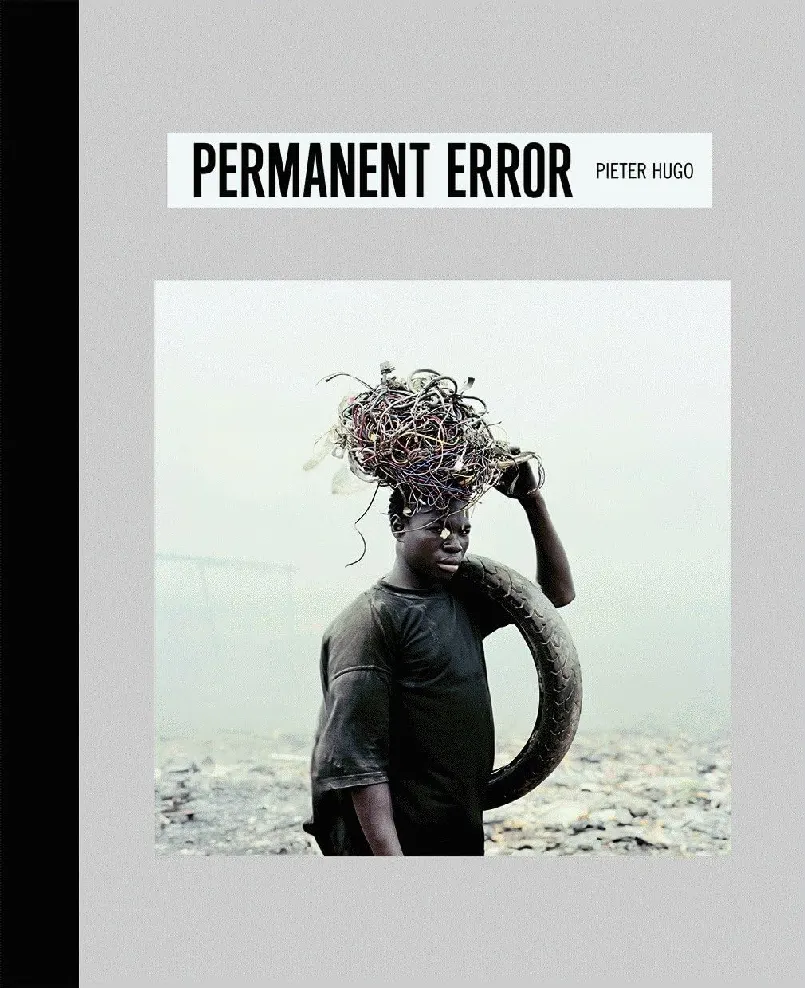
Hardcover without dust jacket, as issued
ISBN:
9783791345208


In Permanent Error, Pieter Hugo documents the apocalyptic landscape of the Agbogbloshie dump in Accra, Ghana, a vast wasteland where the developed world’s obsolete electronic waste is discarded and burned. The project serves as a stark indictment of the global flow of e-waste, capturing the marginalized communities of young men and boys who live and work amidst the toxic ruins, burning plastic casings to extract trace amounts of copper and other metals. Following his acclaimed series The Hyena & Other Men, this body of work cements Hugo’s career-long exploration of populations existing on the extreme peripheries of global capitalism and environmental degradation.
Visually, the book presents a dystopian, almost alien world shrouded in thick plumes of toxic black smoke and scorched earth. Using a large-format camera, Hugo contrasts the sprawling, chaotic landscapes of shattered monitors, tangled wires, and burning debris with highly formalized, statuesque portraits of the workers. The resulting aesthetic is both classically composed and profoundly unsettling, relying on the muted, ash-covered tones of the environment to heighten the spatial tension between the human subjects and the overwhelming scale of technological decay.
Within Hugo's broader oeuvre, this 2011 publication remains a pivotal documentary achievement, shifting the focus from localized African subcultures to a devastating critique of globalized consumption.