
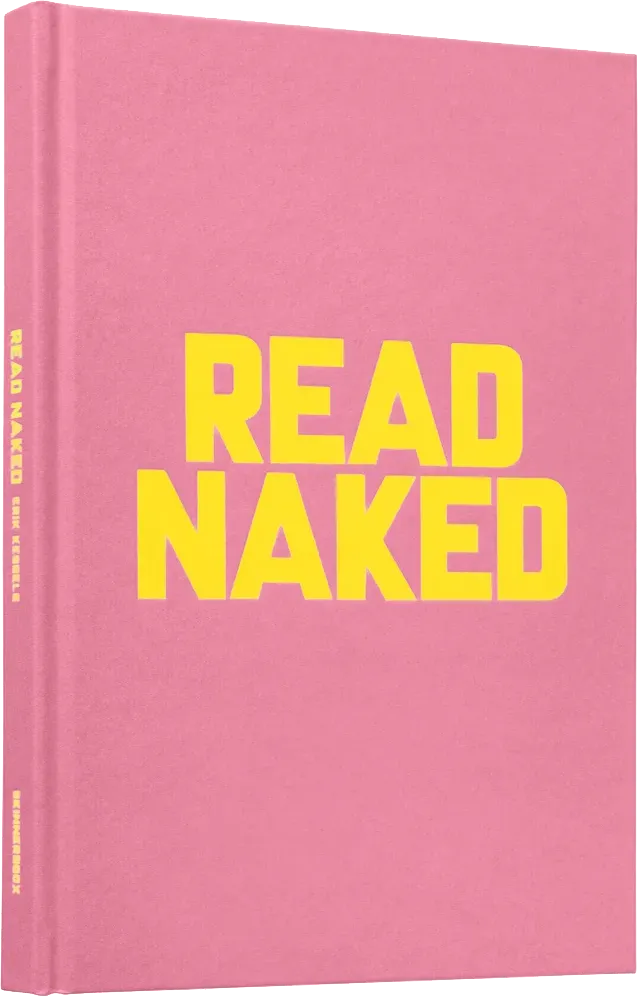
Hardcover without dust jacket, as issued
ISBN:
9788894895254


Erik Kessels’ Read Naked functions as a playful yet profound anthropological study of a highly specific, private domestic ritual: the act of reading a book while entirely unclothed. Continuing his career-long excavation of discarded vernacular photography, the Dutch artist and curator aggregates decades of anonymous, found amateur snapshots to explore a bygone era of unapologetic leisure. By isolating this bizarre and deeply intimate phenomenon, Kessels highlights a moment in time when the naked body was associated with absolute comfort and intellectual immersion, entirely divorced from the hyper-scrutinized, performative exposure of the contemporary digital age.
Aesthetically, the monograph subverts the traditional expectations of the nude in photography by treating the body as secondary to the act of reading itself. The black-and-white found images, varying wildly in exposure, focus, and amateur framing, are unified through their deliberate printing on soft, tactile pink paper. This design choice introduces a fleshy, monochromatic warmth to the volume, bridging the disparate snapshot aesthetics into a cohesive graphic object. The subjects, men and women of all ages, are captured sprawled across beds, armchairs, and living room floors, completely absorbed in their texts, creating a compelling visual friction between their physical vulnerability and their psychological detachment from the camera's gaze.