





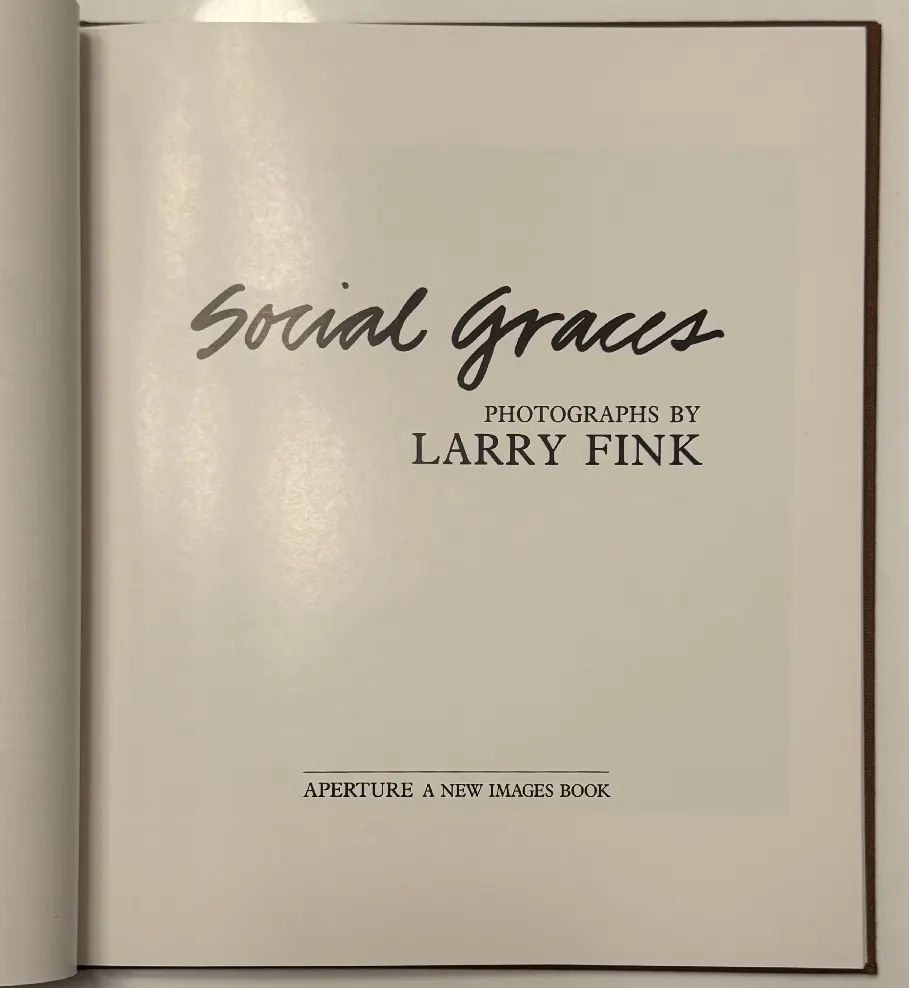
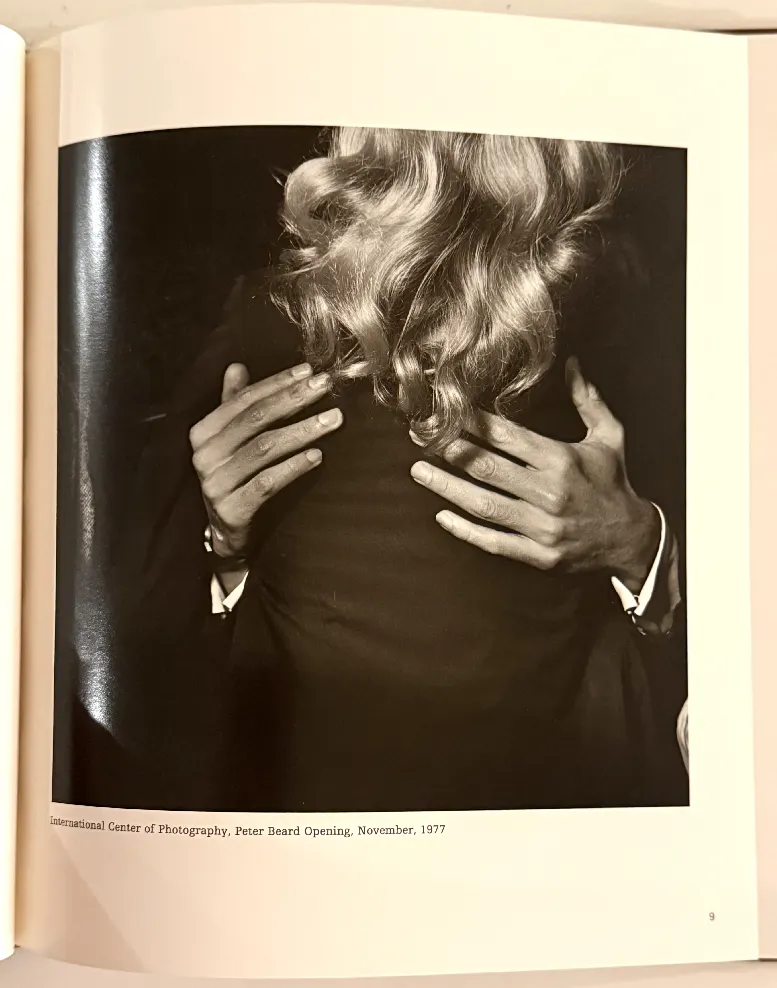
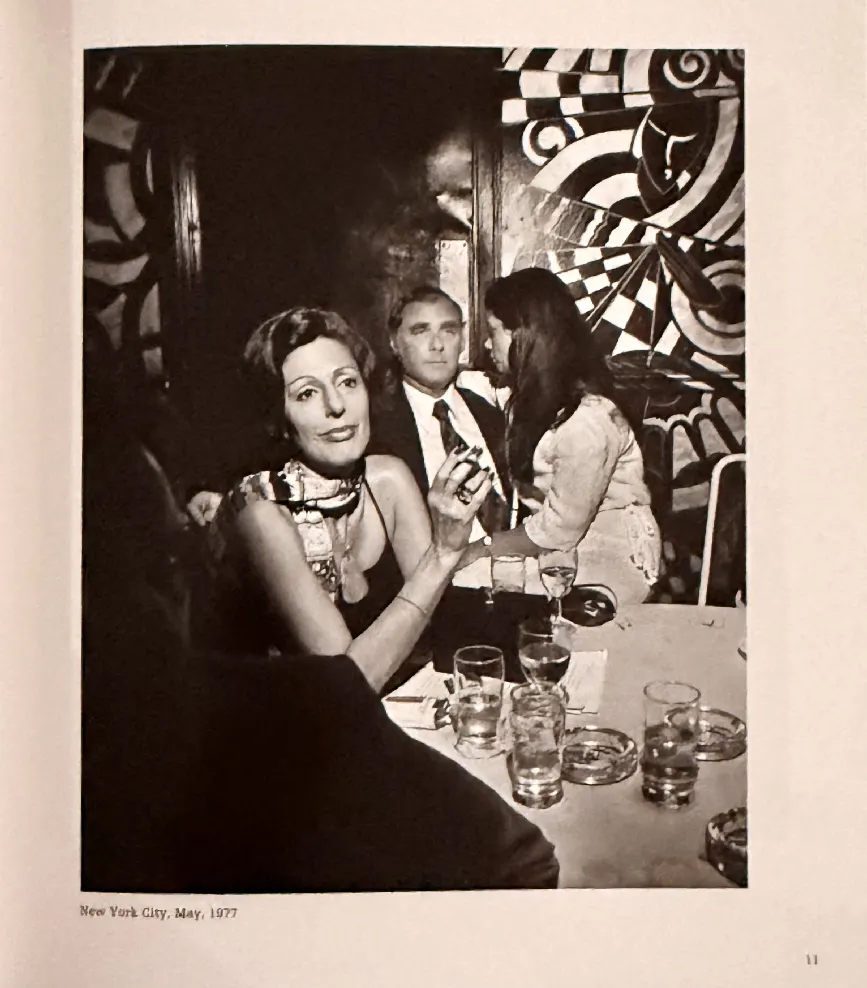
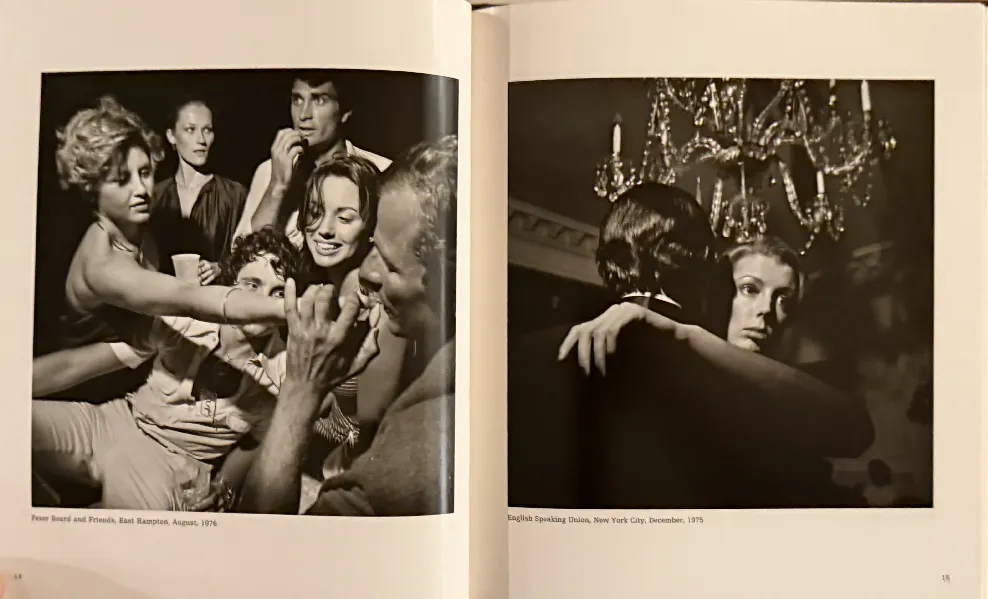
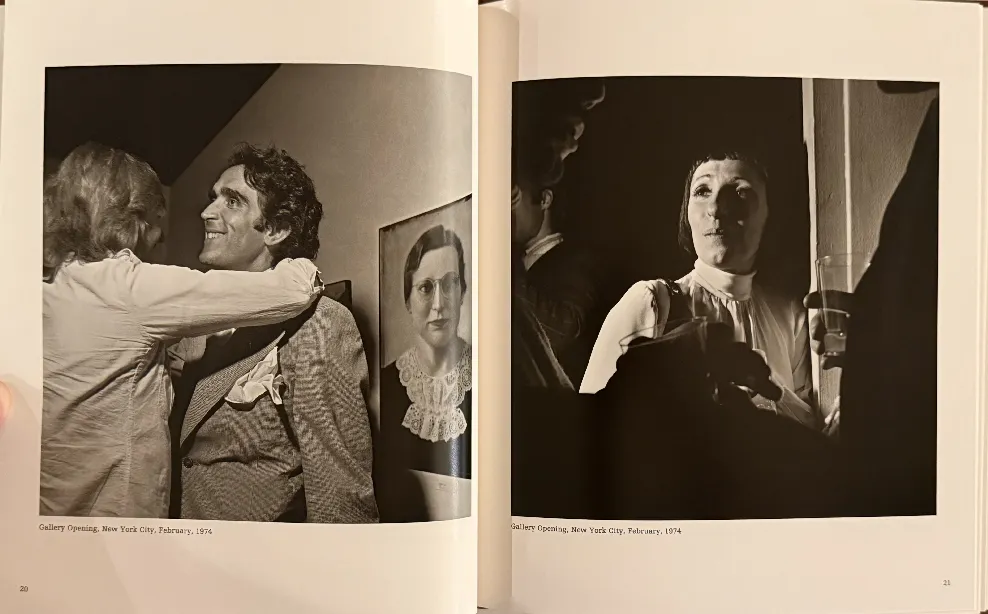
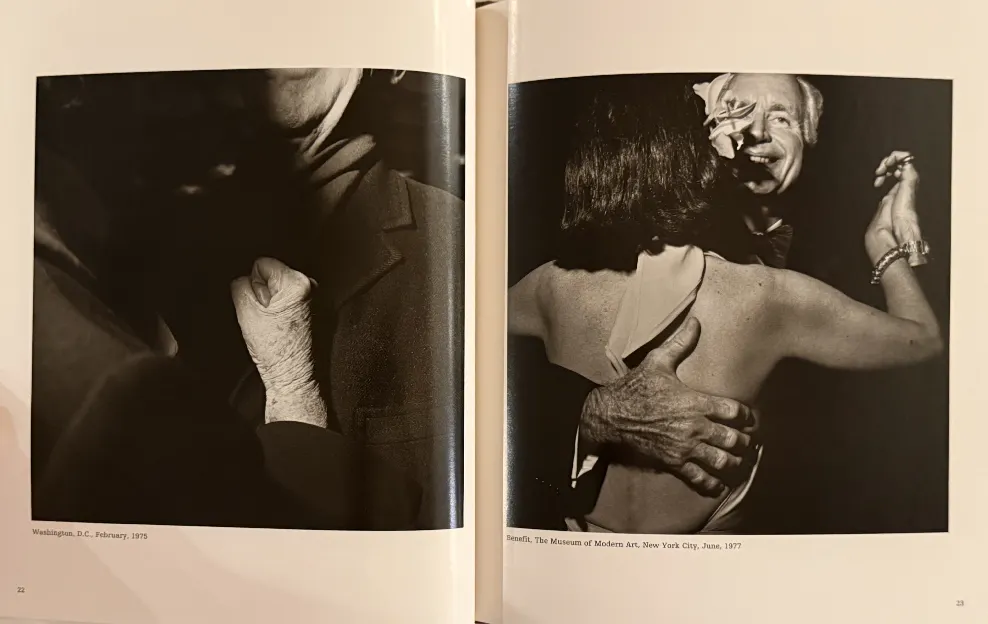
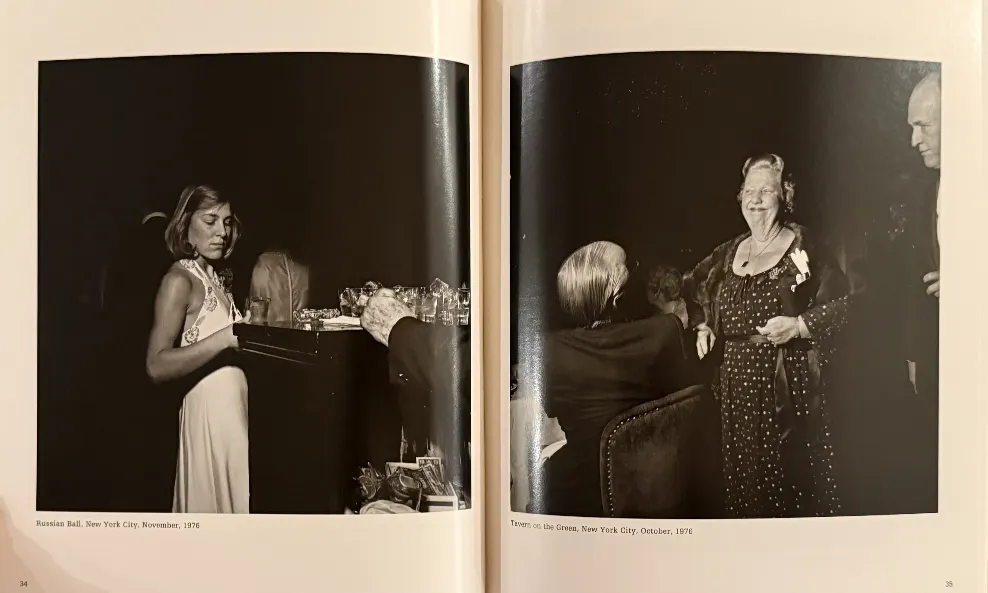
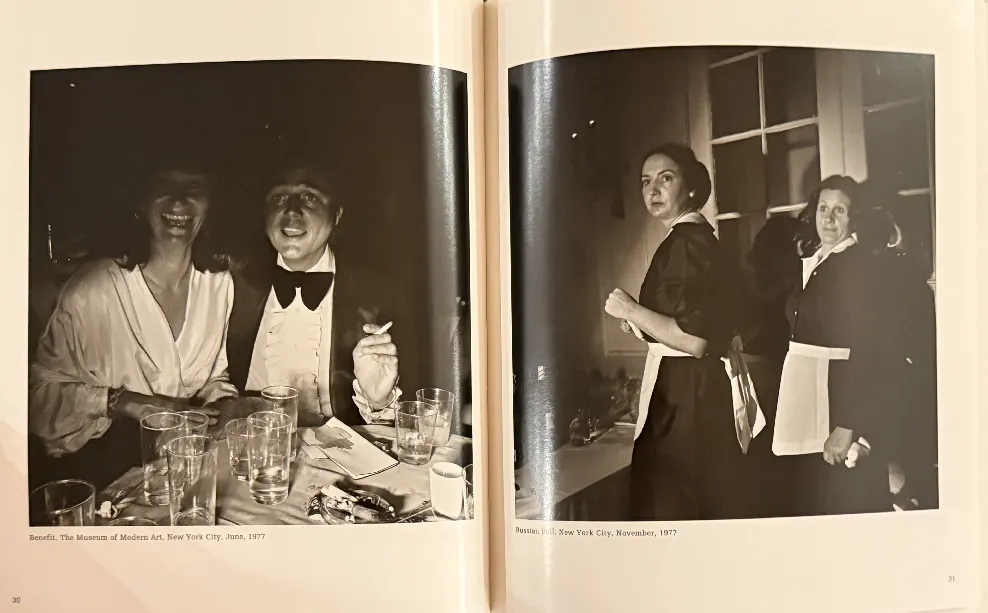
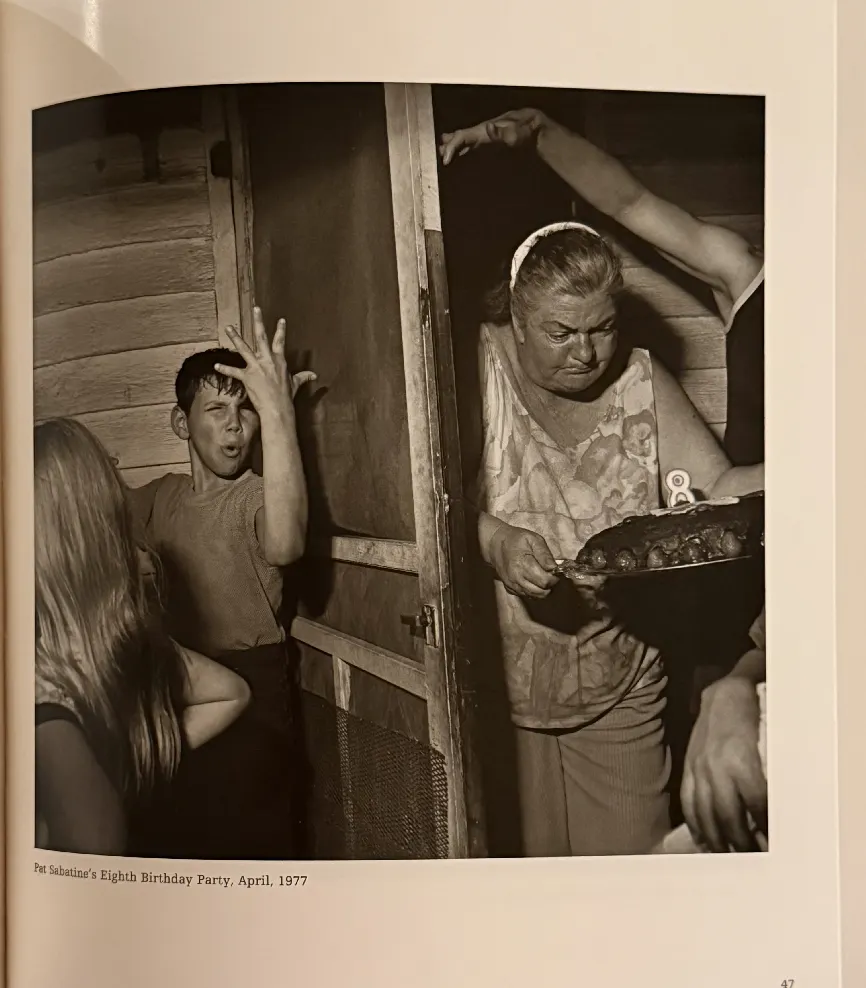
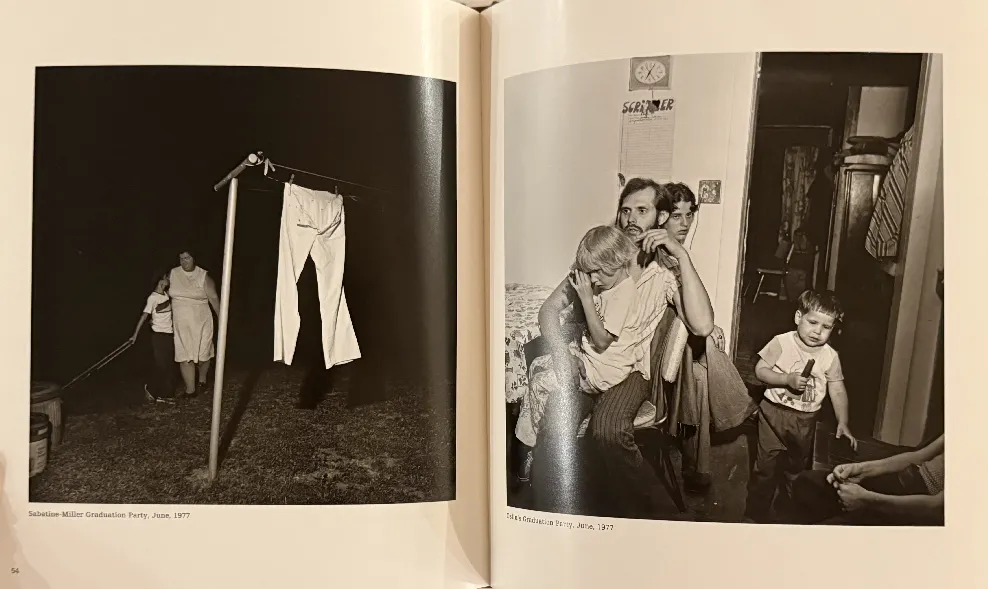
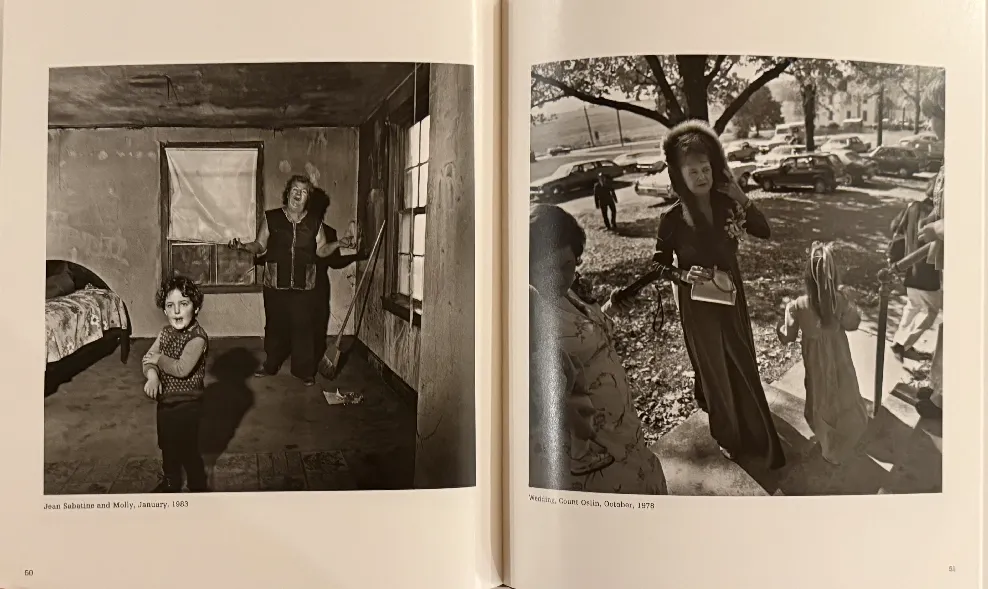
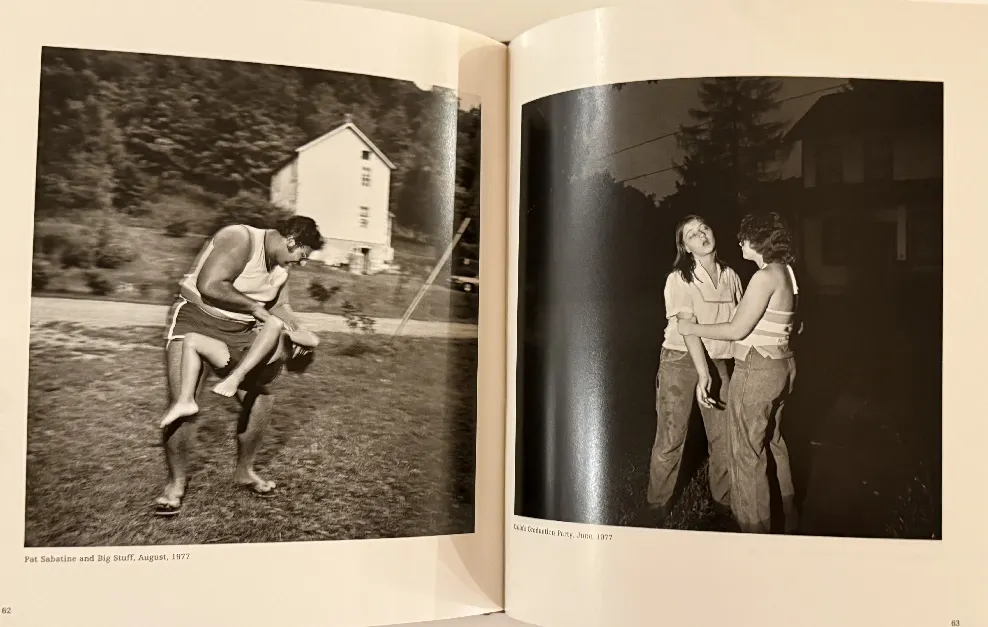
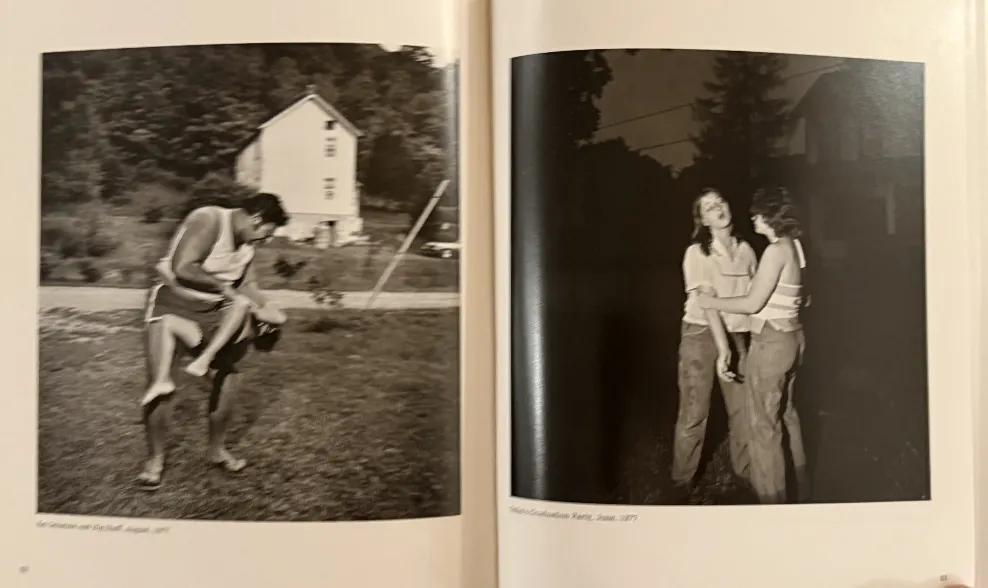
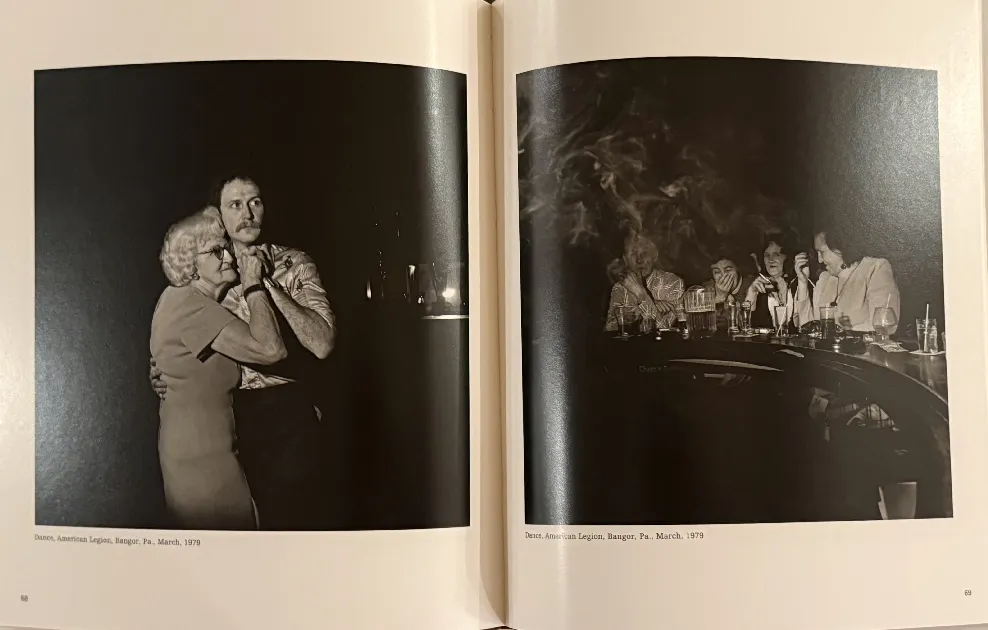
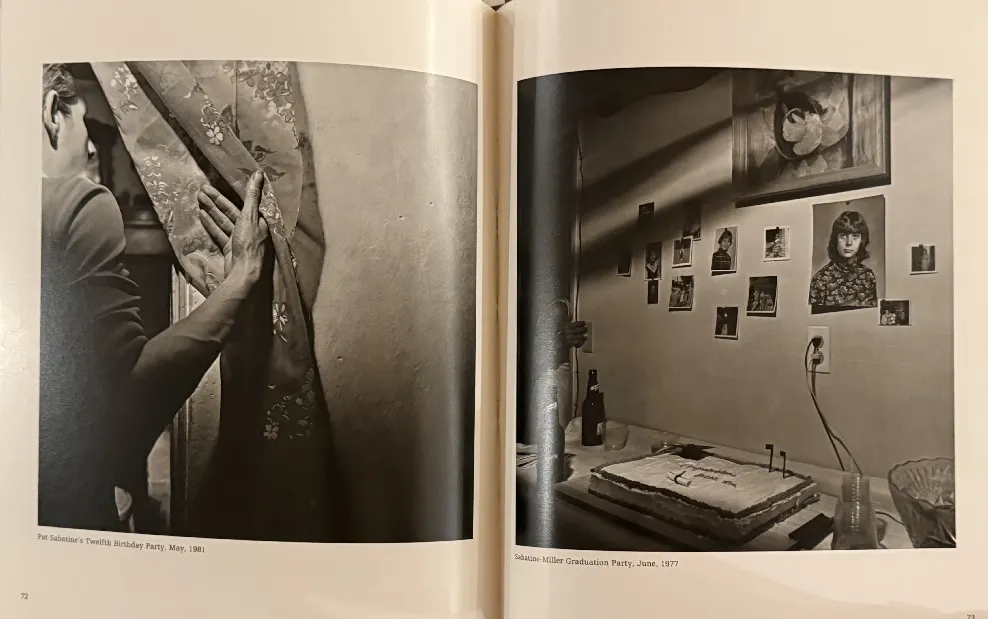
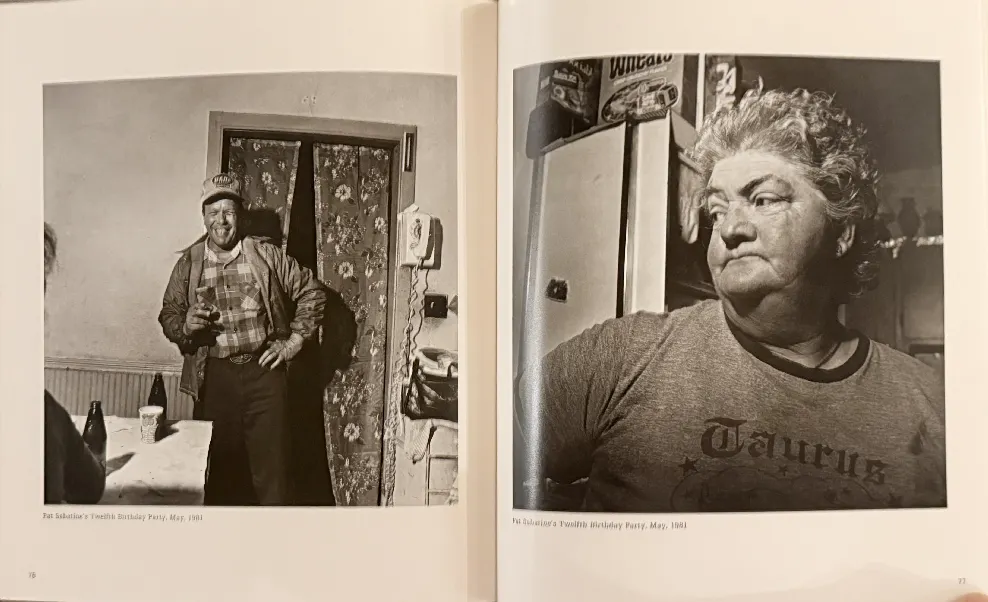
Social Graces (Aperture, 1984) is a photobook built on a deliberate contrast: black-and-white images of formal, black-tie society events in Manhattan, galas, Studio 54 parties, the ICP opening, cut against pictures of rural, working-class life in Martins Creek, Pennsylvania, where Fink lived and photographed his neighbors, the Sabatine family, at birthdays, graduations, and everyday gatherings.
Fink shot both worlds with the same aggressive, close-flash, off-kilter style, treating the wealthy elite and his rural neighbors as equally worthy subjects, refusing to romanticize either. The pairing was personal: he described himself as both "a fancy dude" in a tuxedo and "a rolling country belly" back home. Beneath the surface conviviality of both settings, the book finds what Aperture's own description calls "small dramas where a smile belies anxiety", humor shot through with doubt and unease.
Published as Fink's debut monograph, it became one of the landmark American photobooks of the 1980s for the way it used class and social ritual as a lens on human vulnerability, and for cementing his signature visual approach (harsh flash, tight cropping, bodies caught mid-gesture).
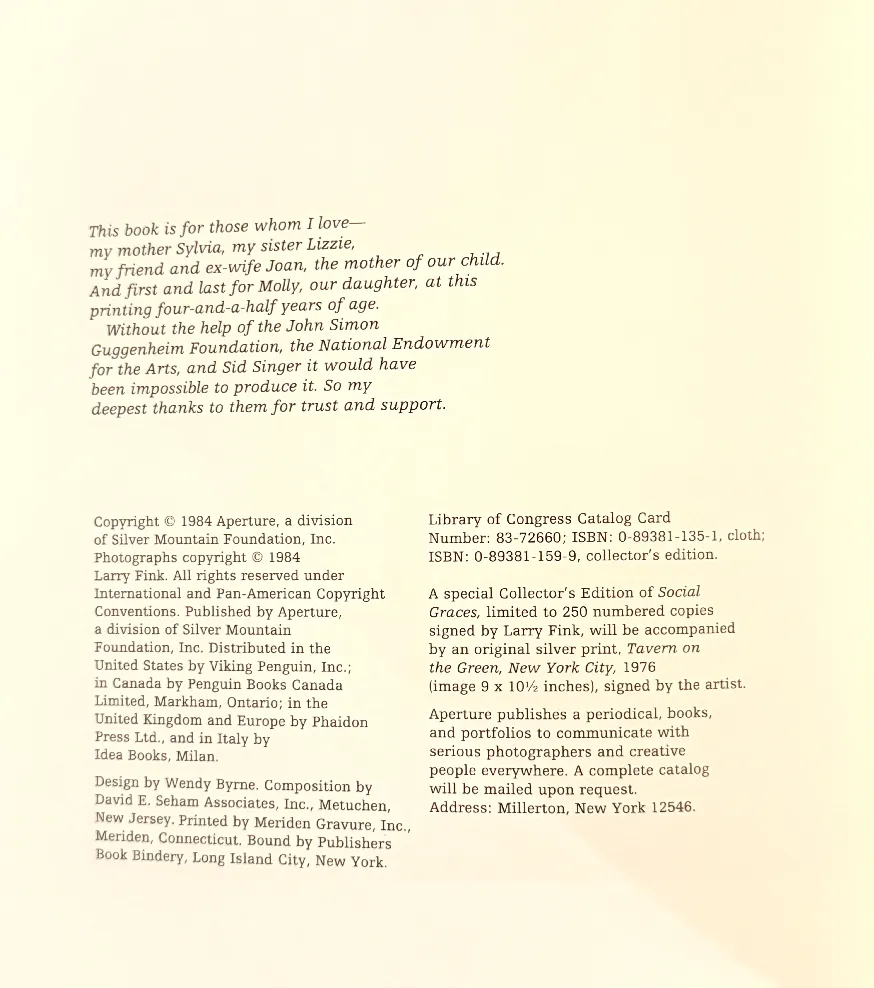
This copy is the limited edition of the book, which was released with a signed photograph of Tavern on the Green.

Social Graces (Aperture, 1984) is a photobook built on a deliberate contrast: black-and-white images of formal, black-tie society events in Manhattan, galas, Studio 54 parties, the ICP opening, cut against pictures of rural, working-class life in Martins Creek, Pennsylvania, where Fink lived and photographed his neighbors, the Sabatine family, at birthdays, graduations, and everyday gatherings.
Fink shot both worlds with the same aggressive, close-flash, off-kilter style, treating the wealthy elite and his rural neighbors as equally worthy subjects, refusing to romanticize either. The pairing was personal: he described himself as both "a fancy dude" in a tuxedo and "a rolling country belly" back home. Beneath the surface conviviality of both settings, the book finds what Aperture's own description calls "small dramas where a smile belies anxiety", humor shot through with doubt and unease.
Published as Fink's debut monograph, it became one of the landmark American photobooks of the 1980s for the way it used class and social ritual as a lens on human vulnerability, and for cementing his signature visual approach (harsh flash, tight cropping, bodies caught mid-gesture).
This copy is the limited edition of the book, which was released with a signed photograph of Tavern on the Green.