
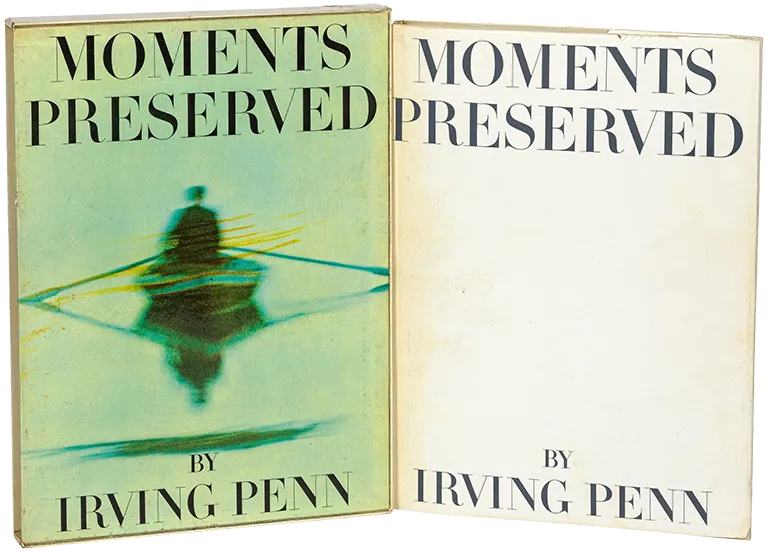
Slipcase
ISBN:


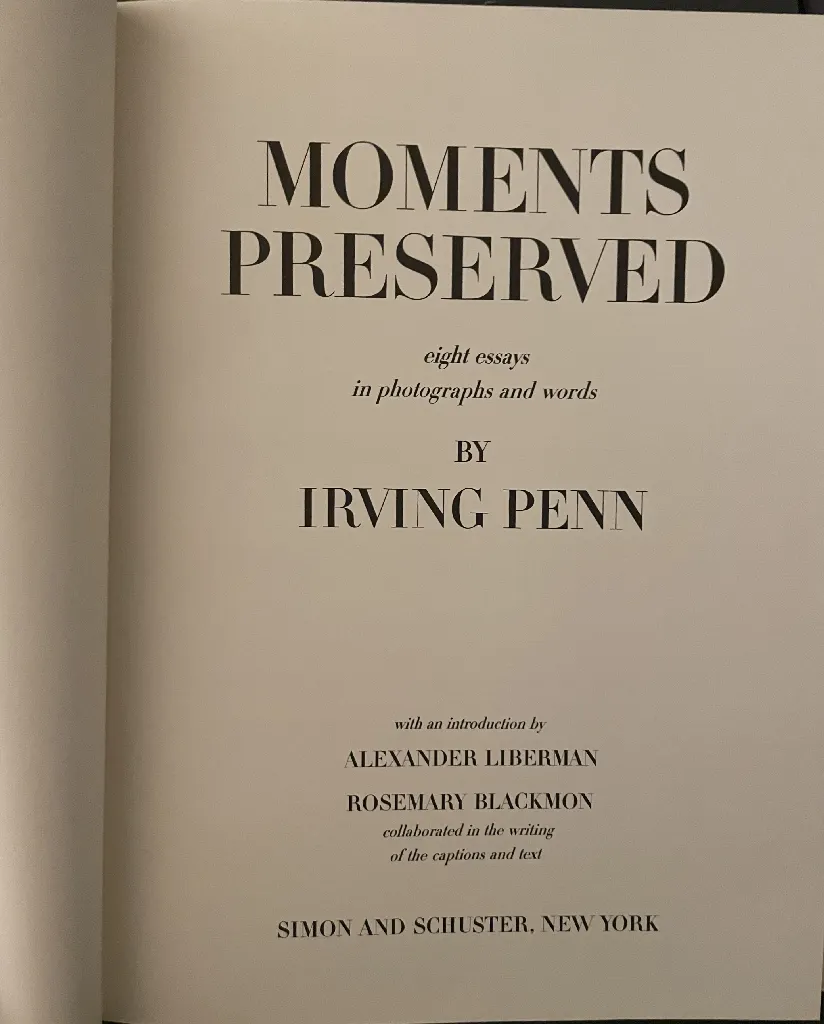

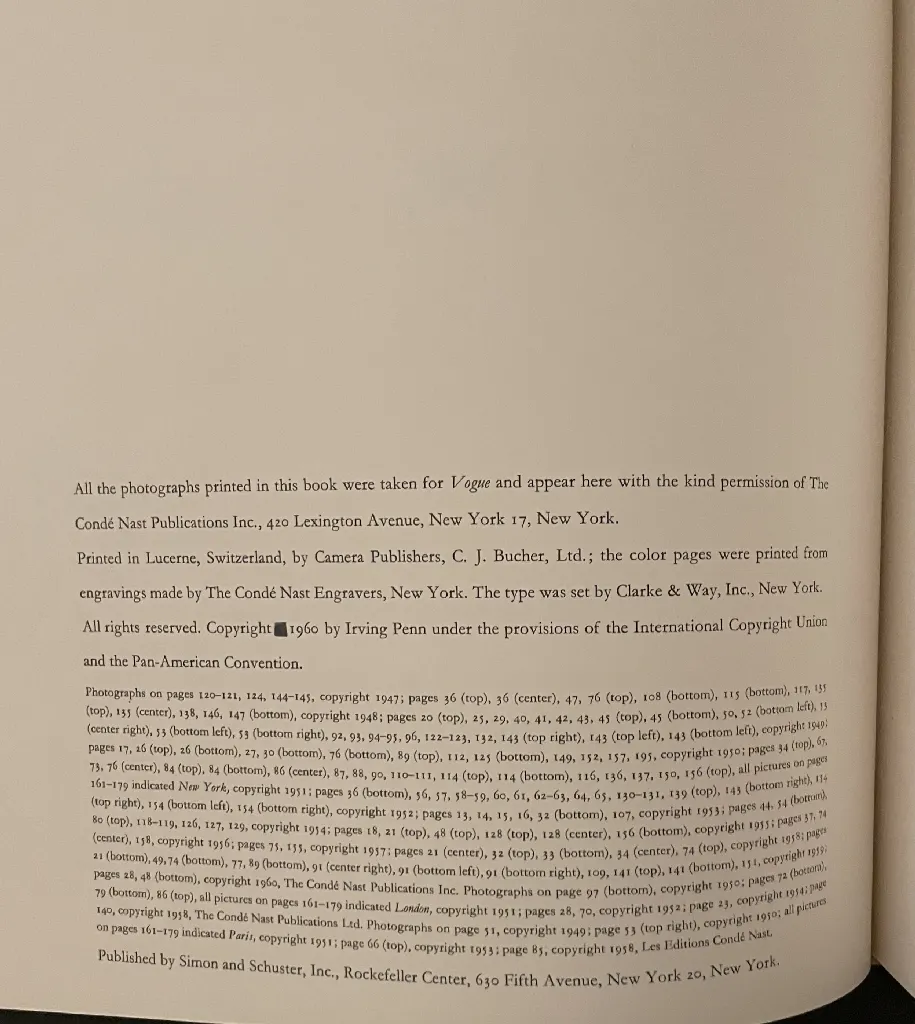
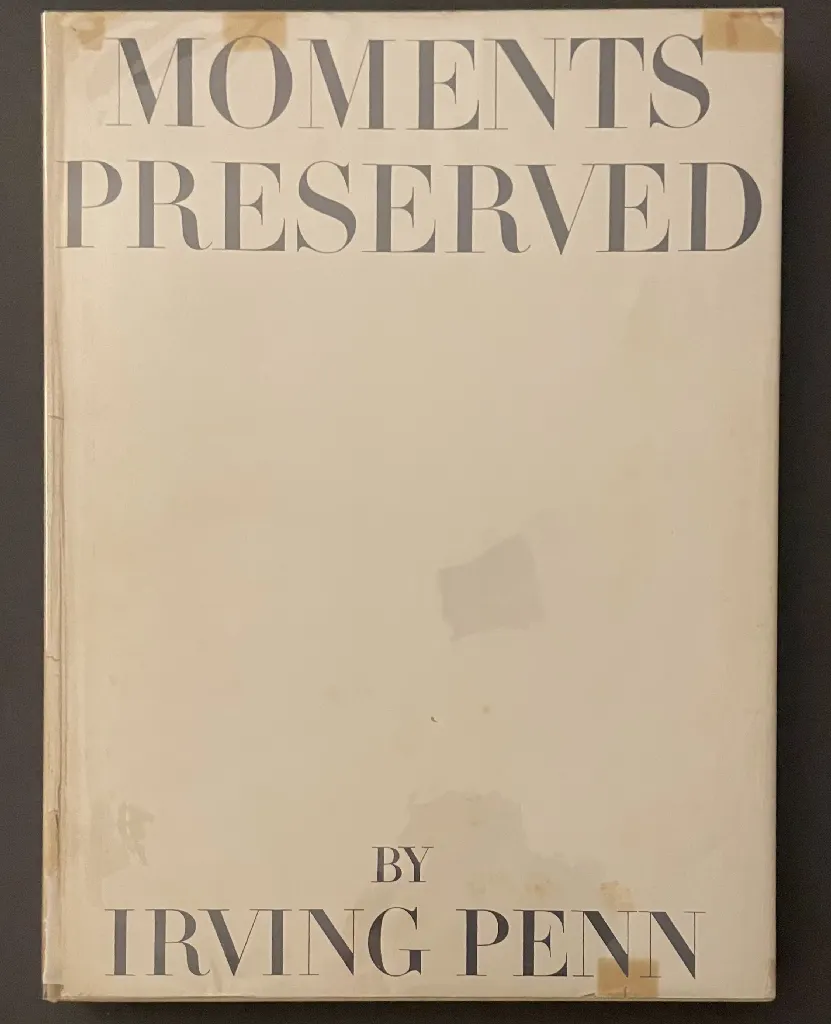
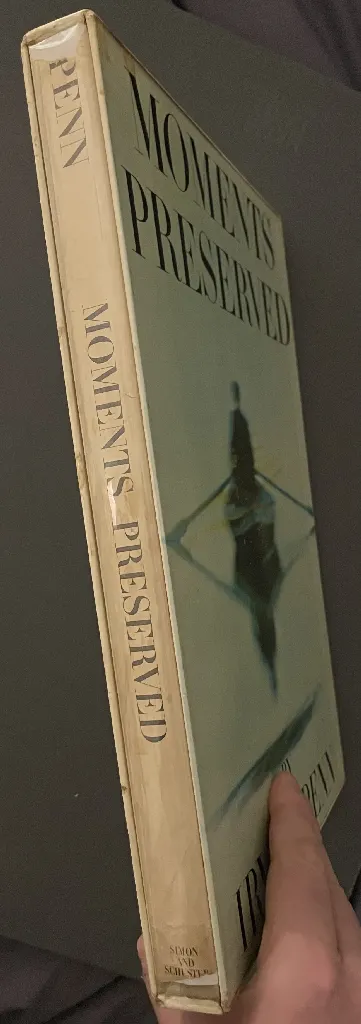
Irving Penn’s Moments Preserved, published in 1960, serves as the photographer’s inaugural monograph and a monumental summation of his early, definitive years at Vogue. Far more than a mere retrospective of editorial assignments, the book represents a critical assertion of authorship, elevating commercial fashion photography and celebrity portraiture into the realm of high art. By compiling his iconic studio portraits, fashion plates, and early ethnographic studies from Peru and Morocco into a single, cohesive volume, Penn established a democratic visual hierarchy where an haute couture model, a Peruvian child, and Pablo Picasso are all subjected to the same rigorous, uncompromising observation.
The visual language of the publication is a masterclass in graphic economy and spatial control. Penn famously strips away elaborate environmental contexts, confining his subjects against austere, mottled backdrops or within his claustrophobic, signature angled corner. This deliberate physical restriction forces the viewer into a direct, psychological confrontation with the sitter, emphasizing posture, silhouette, and the sculptural drape of fabric. The resulting compositions, rendered in both striking color and meticulously balanced black-and-white, rely on a flawless manipulation of natural studio light to carve out crisp, monumental forms from an otherwise empty void.