
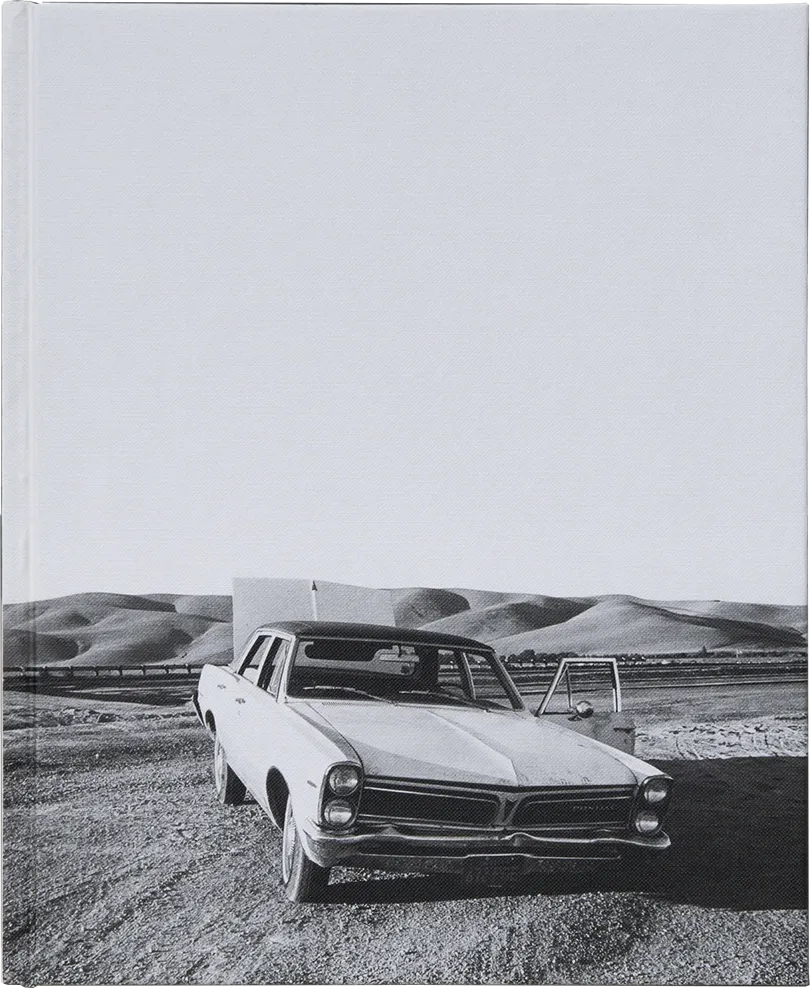
Hardcover without dust jacket, as issued
ISBN:
9781913288198


Mimi Plumb’s The White Sky serves as a poignant visual recollection of growing up in the San Francisco Bay Area during the 1970s, capturing a period marked by post-sixties disillusionment, environmental anxiety, and suburban isolation. Embedded within Plumb’s broader oeuvre, the project bridges the gap between personal narrative and documentary photography, offering an intimate yet critical reflection on youth culture and American domestic landscape at the tail end of the post-war boom.
Aesthetically, the work relies on a stark, high-contrast black-and-white visual language that mirror the oppressive heat and blinding light suggested by the title. Plumb constructs tense, off-kilter compositions, suburban wasteland backdrop, sun-bleached hillsides, makeshift forts, and candid, vulnerable portraits of teenagers, that convey a palpable sense of boredom, restlessness, and quiet threat. The interplay between human figures and the sprawling, altered suburban landscape creates an uneasy spatial tension, framing the environment not merely as a setting, but as an active psychological force.