
Stiff
ISBN:


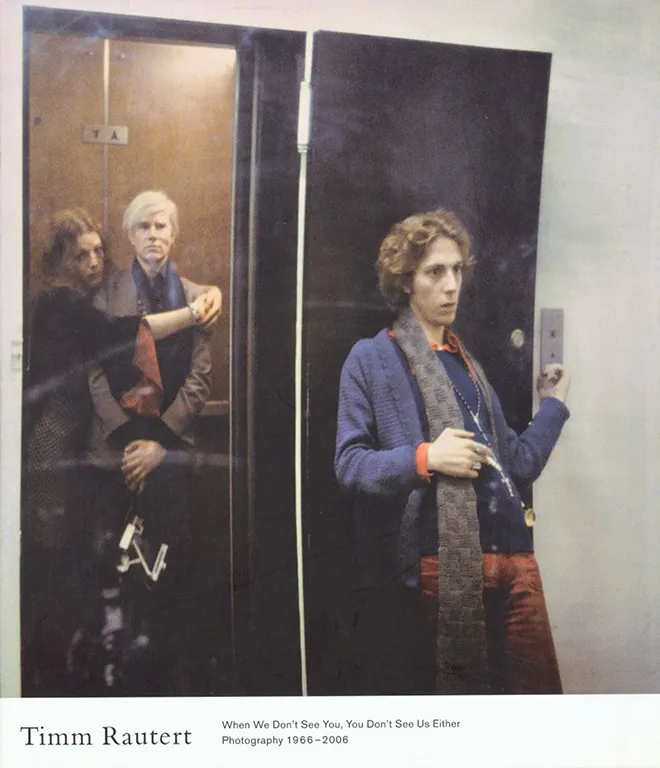
When we don’t see you, you don’t see us either: Photography 1966–2006 spans four decades of the Rautert's career, functioning as an expansive retrospective on the paradoxes of perception, surveillance, and the invisible structures that govern modern society. Rather than treating the camera as a mere instrument of objective recording, Rautert uses his lens to interrogate the invisible barriers, institutional mechanisms, and social blind spots that dictate what is permitted to be seen.
The monograph brings together diverse bodies of work, ranging from his early studies of modernist artists and industrial workspaces to prolonged examinations of labor, media, and systemic exclusion. His compositions are distinguished by a rigorous conceptual framework, where spatial geometry, meticulous framing, and austere tonality reflect an analytical detachment. Instead of relying on sensationalism, Rautert constructs images that operate as intellectual puzzles, compelling the viewer to confront the mechanisms of observation and the deliberate omissions embedded in visual culture.