
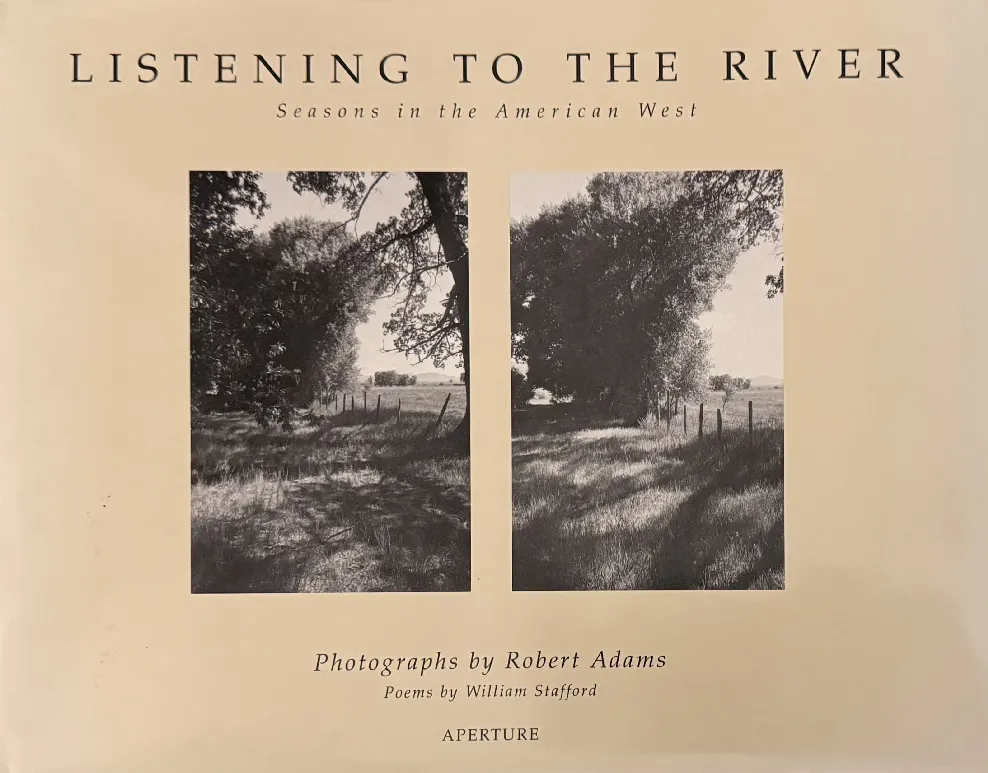


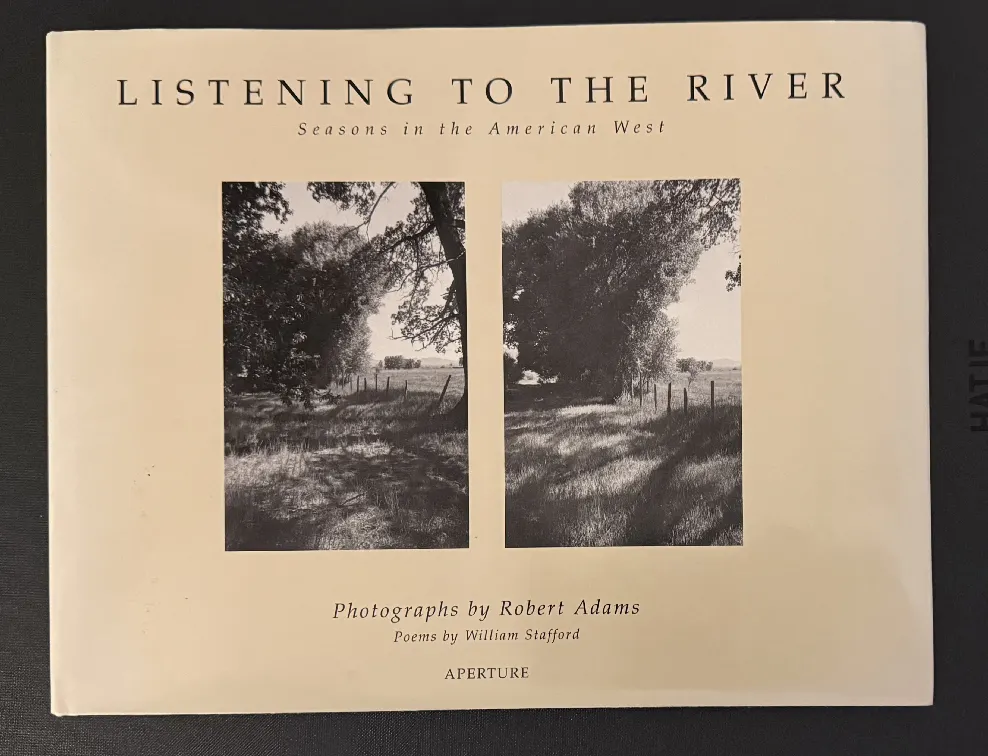
While Adams is widely recognized for his New Topographics documentation of human encroachment on the Western landscape, Listening to the River offers a quieter, more intimate, and surprisingly optimistic meditation. Returning in his fifties to the Colorado riverbeds, fields, and suburban fringes he explored as a boy, Adams walks along anonymous creeks and cottonwood groves around the Denver area.
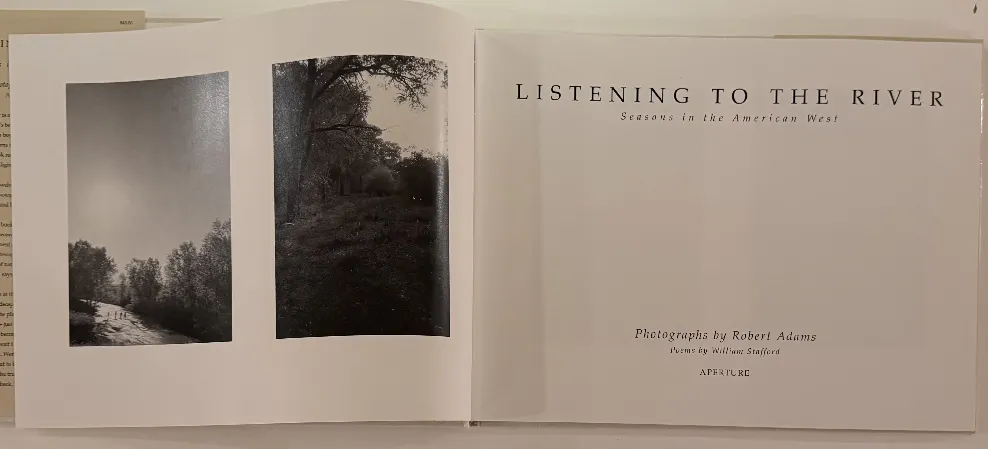
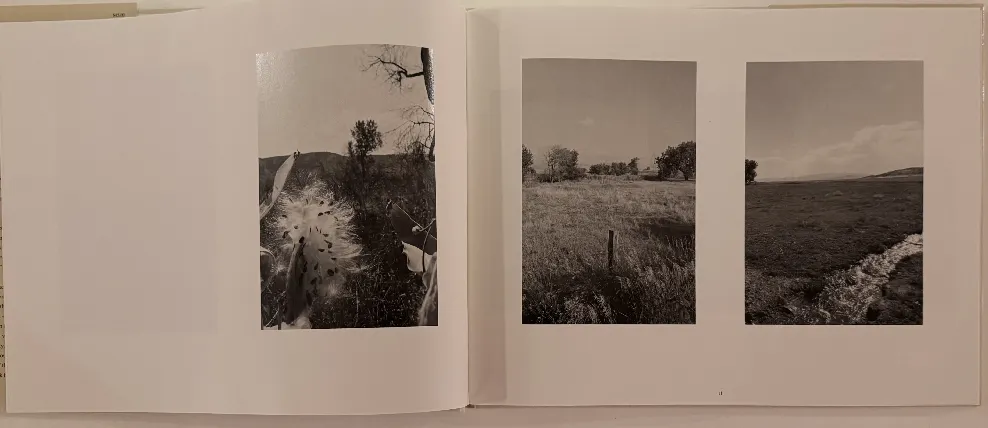
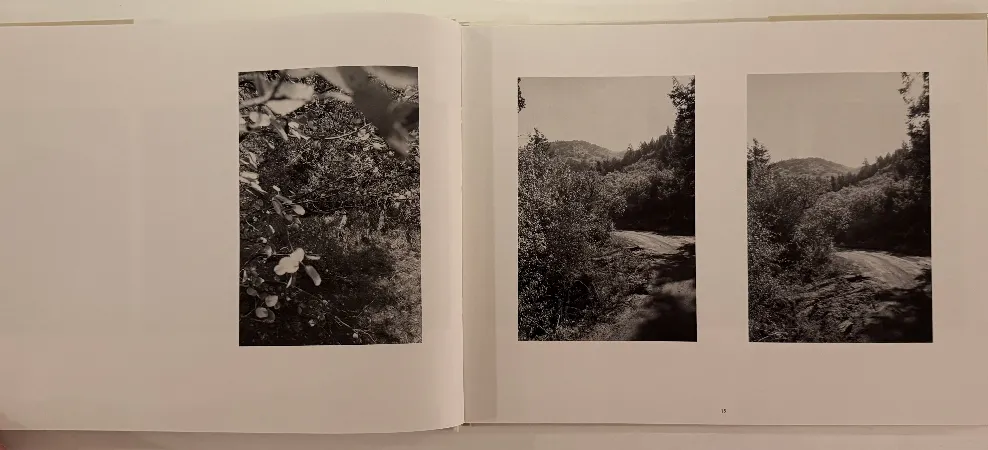
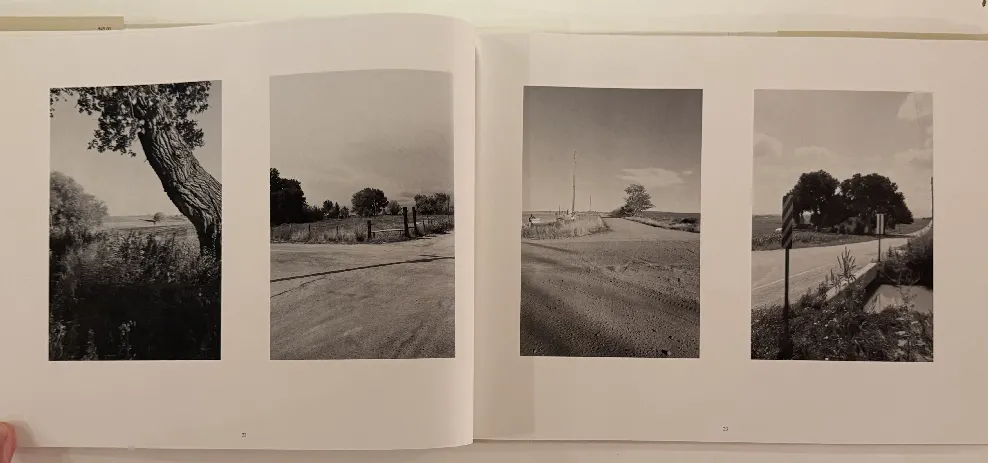
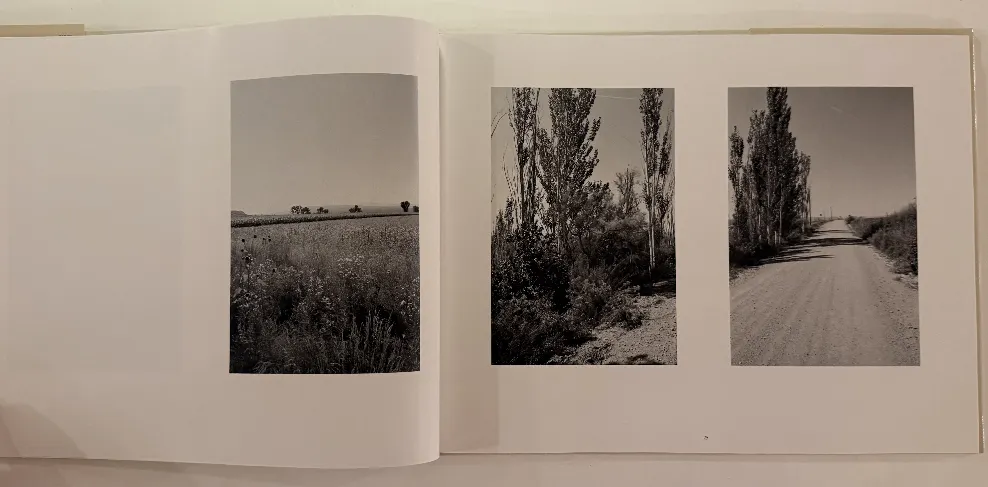
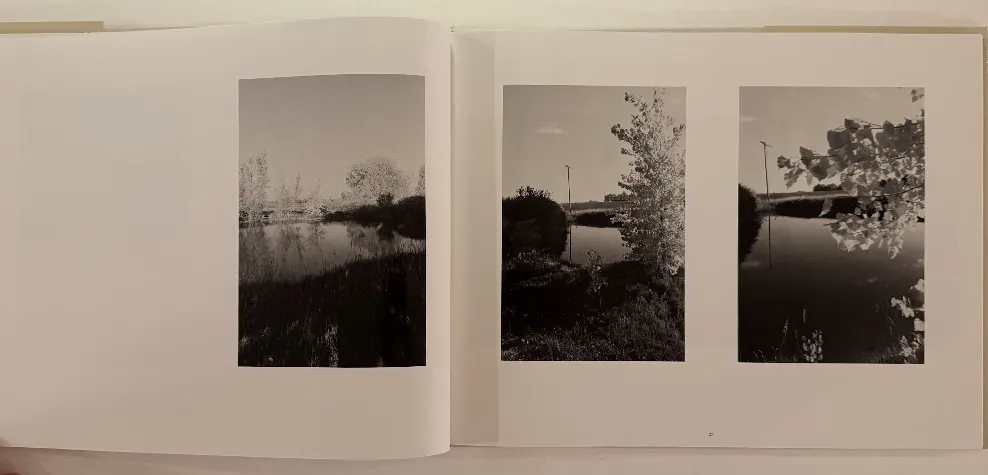
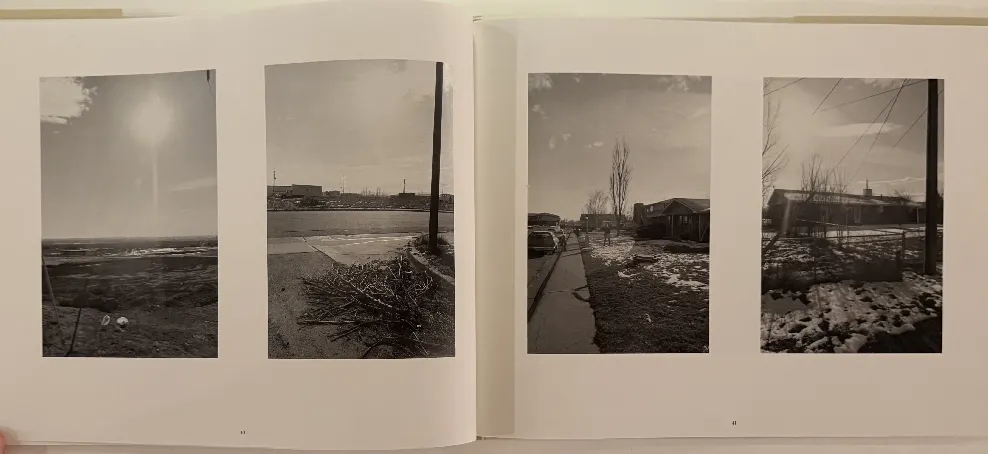
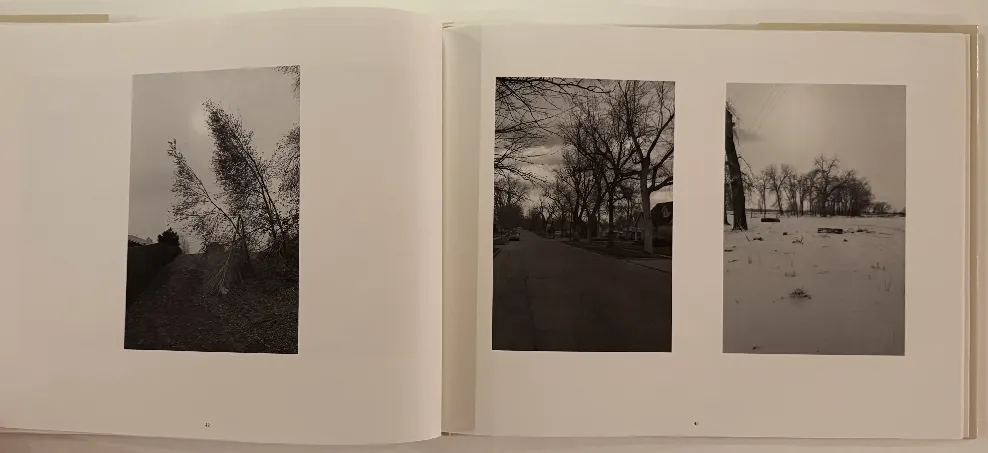
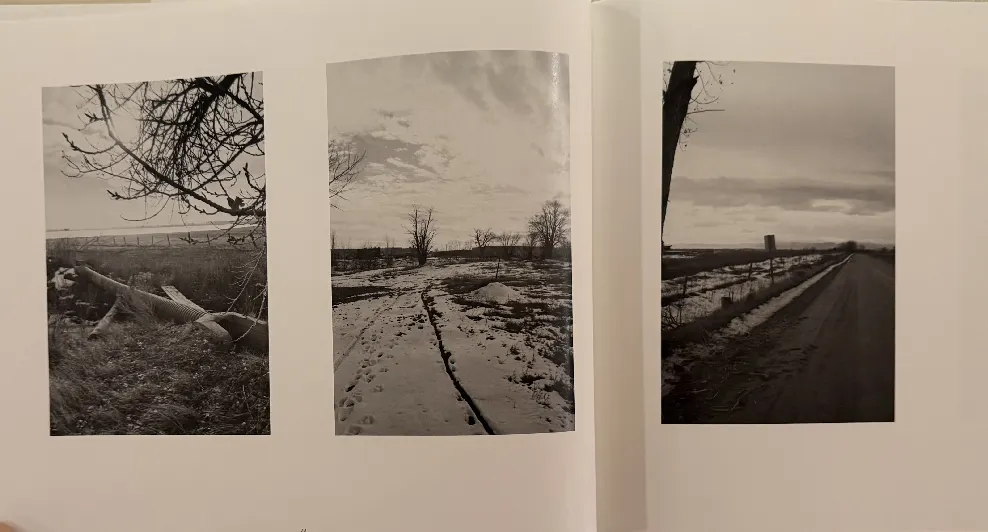
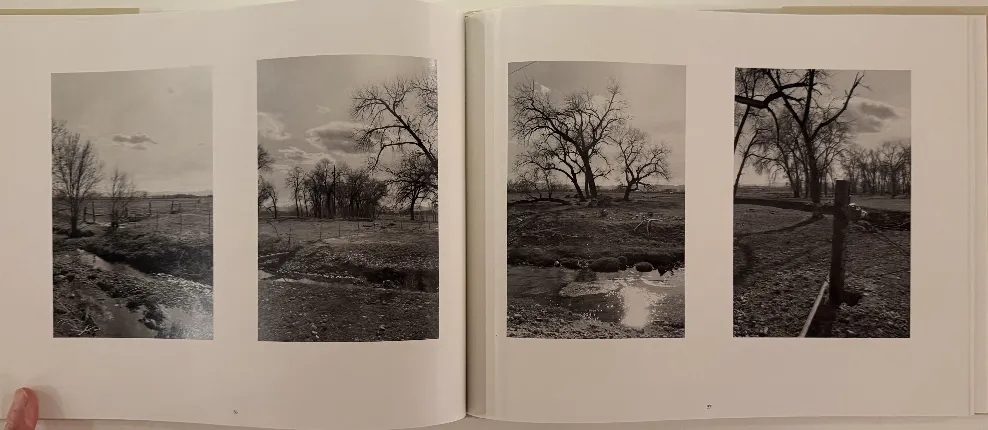
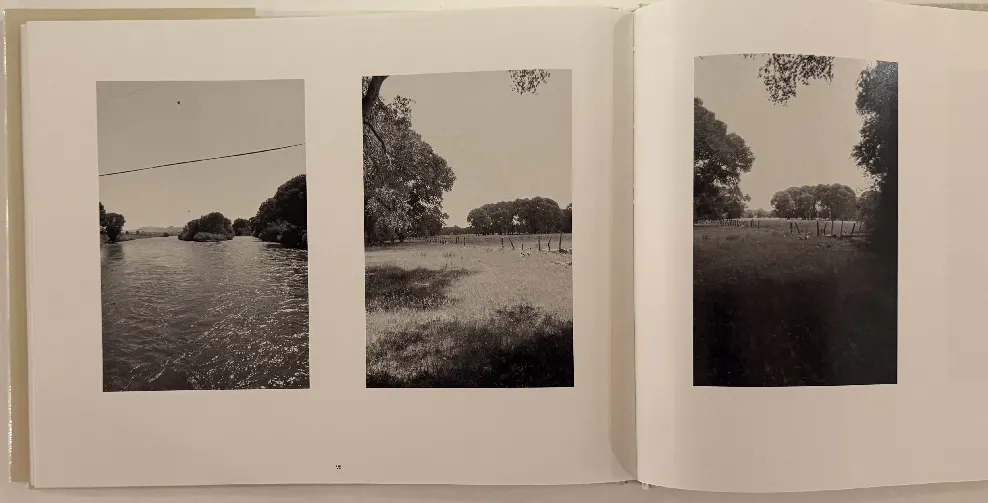
Rather than framing grand, pristine vistas, the book focuses on micro-landscapes: sunlit leaves, mud-banked streams, roadside weeds, and trees standing precariously beside suburban development. It records a practice of stillness and solitude in nature, balancing environmental fragility with enduring beauty.
Sequential Multi-Image Layout
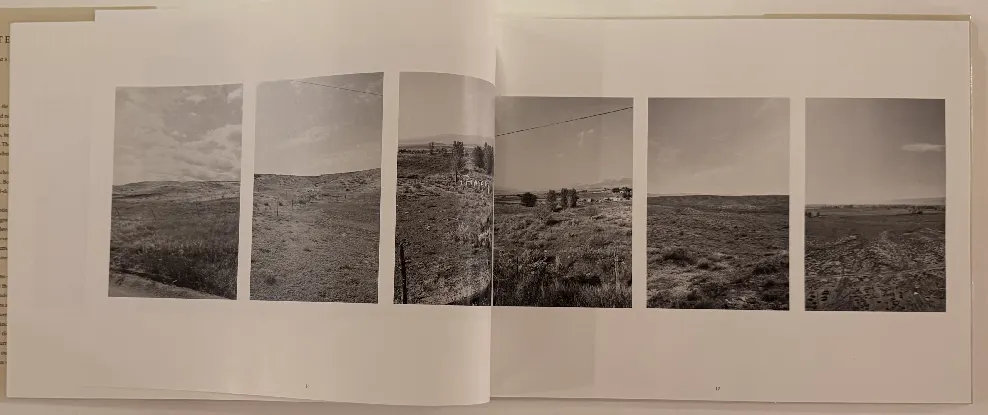
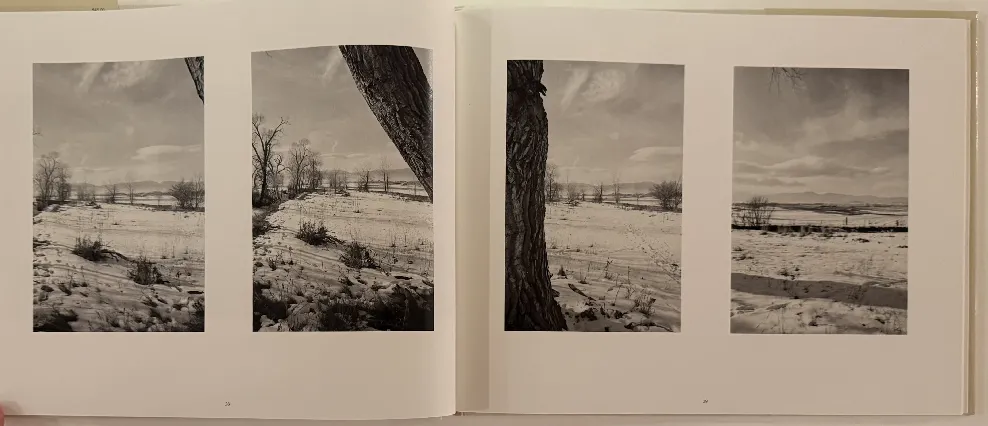
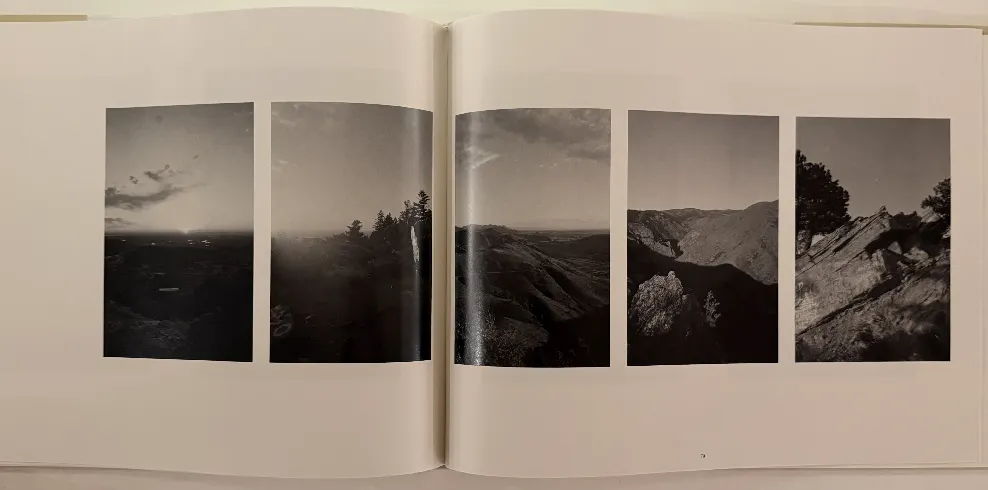
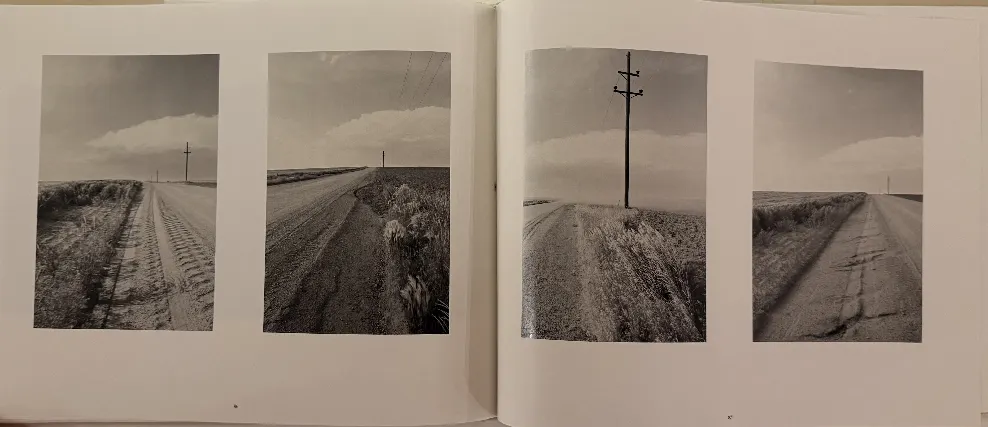
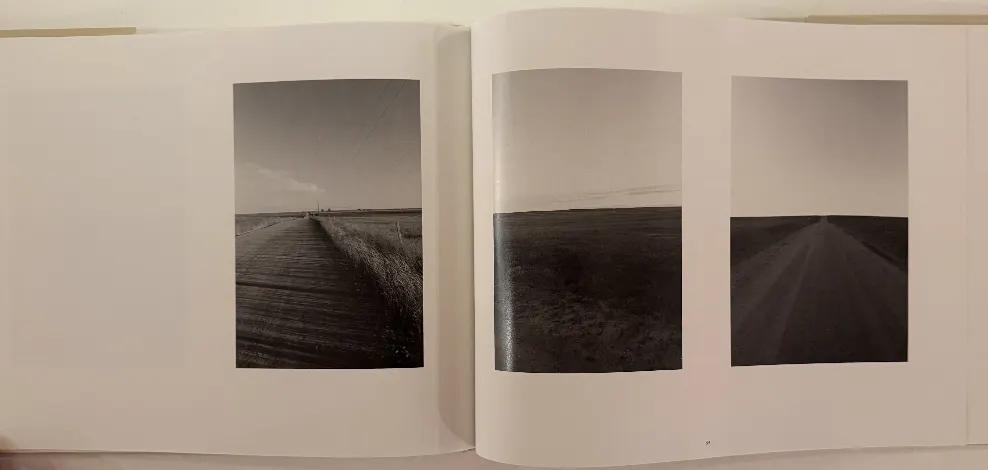
Unlike Adams’s typical single-plate presentations, the images are arranged in dynamic, multi-picture spreads with up to six vertically-oriented images per two-page spread. The sequence shifts subtly a step to the left, a pan across a field mimicking the natural movement and sensory flow of walking through a landscape.
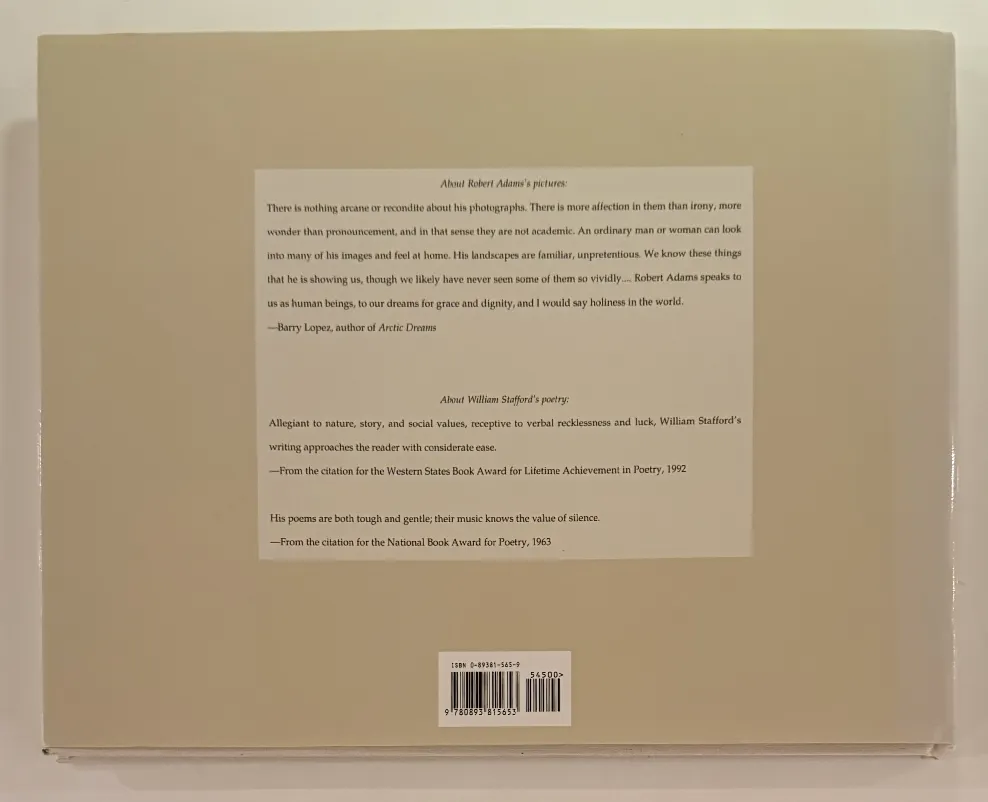
The book integrates 12 poems by former Oregon Poet Laureate William Stafford, whose understated, reflective voice mirrors Adams’s visual patience.

While Adams is widely recognized for his New Topographics documentation of human encroachment on the Western landscape, Listening to the River offers a quieter, more intimate, and surprisingly optimistic meditation. Returning in his fifties to the Colorado riverbeds, fields, and suburban fringes he explored as a boy, Adams walks along anonymous creeks and cottonwood groves around the Denver area.
Rather than framing grand, pristine vistas, the book focuses on micro-landscapes: sunlit leaves, mud-banked streams, roadside weeds, and trees standing precariously beside suburban development. It records a practice of stillness and solitude in nature, balancing environmental fragility with enduring beauty.
Sequential Multi-Image Layout
Unlike Adams’s typical single-plate presentations, the images are arranged in dynamic, multi-picture spreads with up to six vertically-oriented images per two-page spread. The sequence shifts subtly a step to the left, a pan across a field mimicking the natural movement and sensory flow of walking through a landscape.
The book integrates 12 poems by former Oregon Poet Laureate William Stafford, whose understated, reflective voice mirrors Adams’s visual patience.