
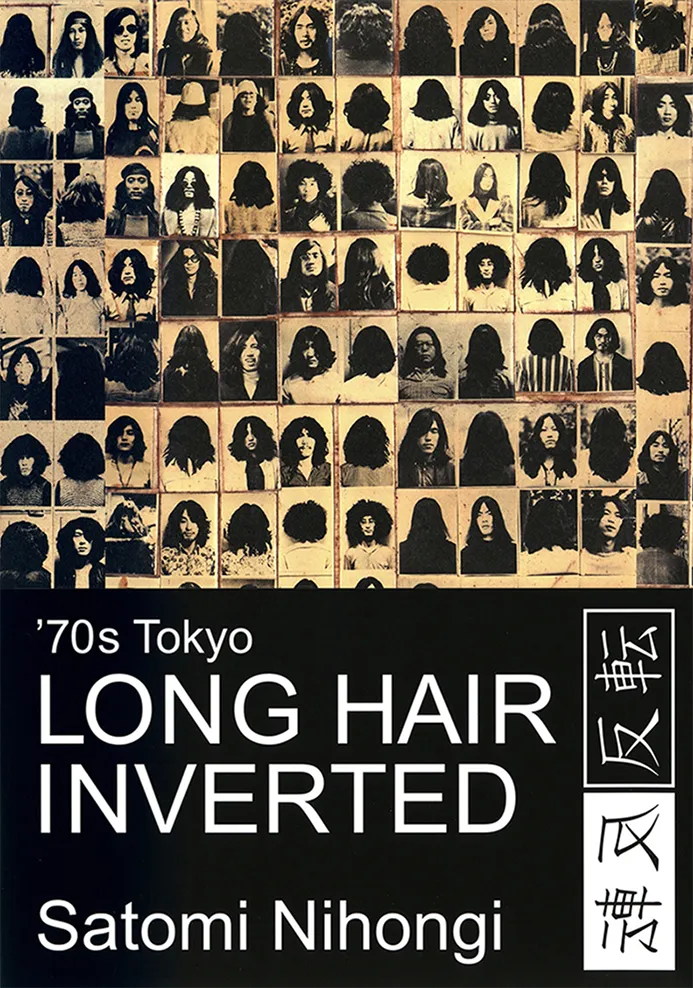
Slipcased embossed hardcover
ISBN:


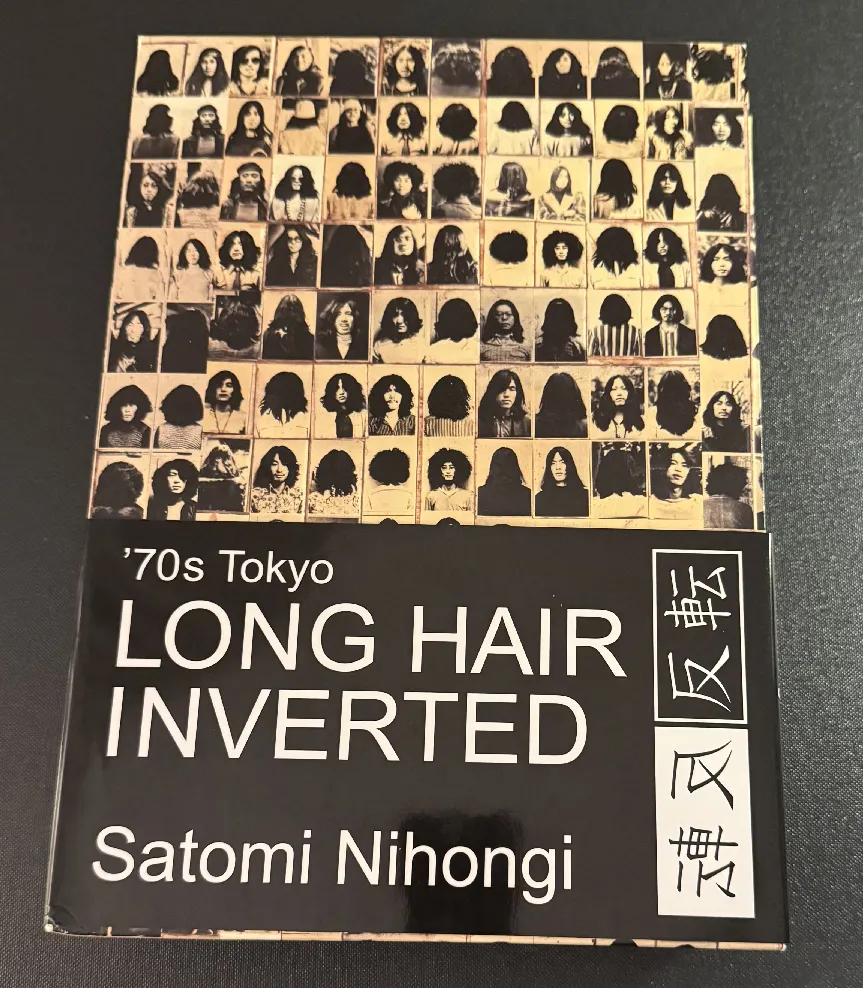
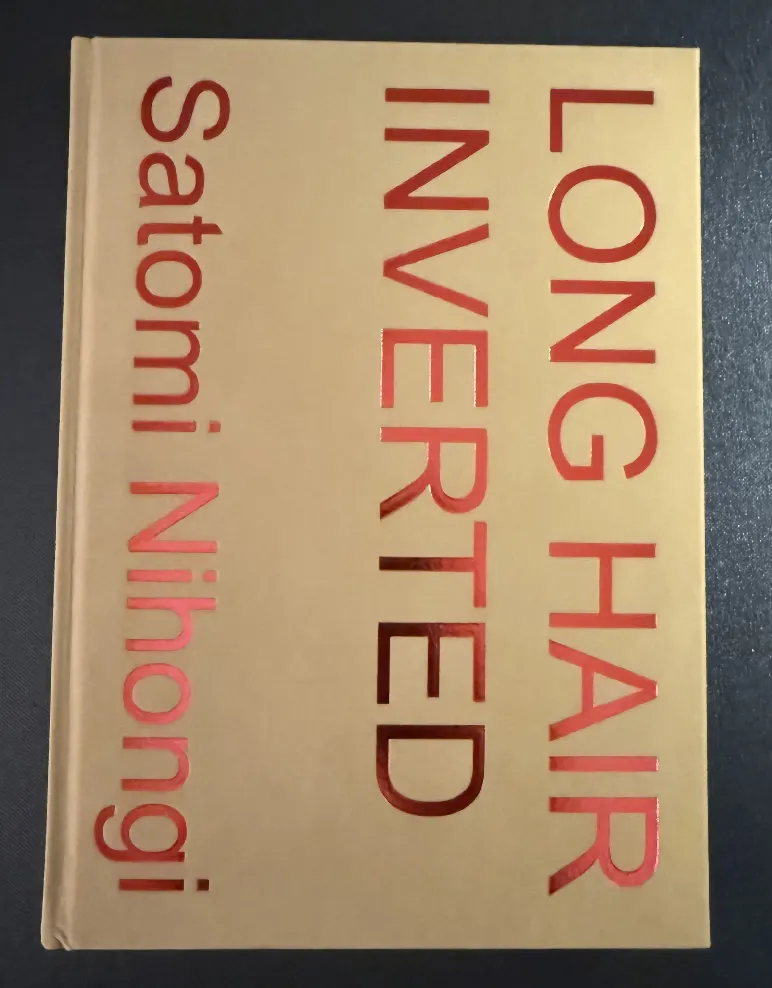
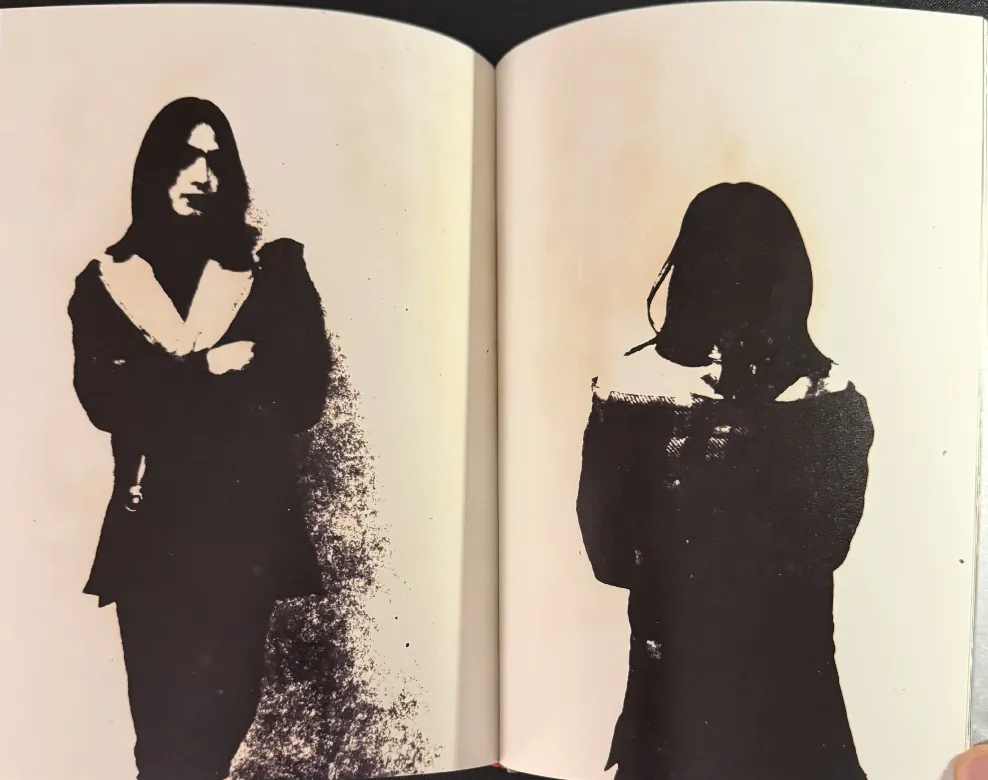
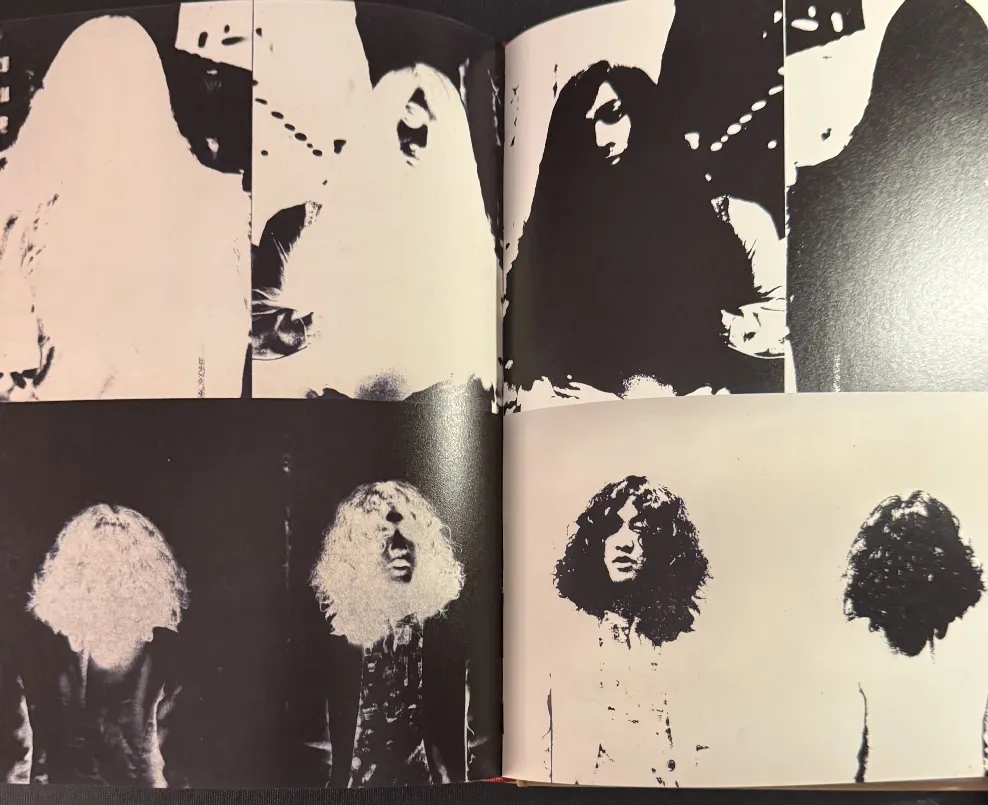
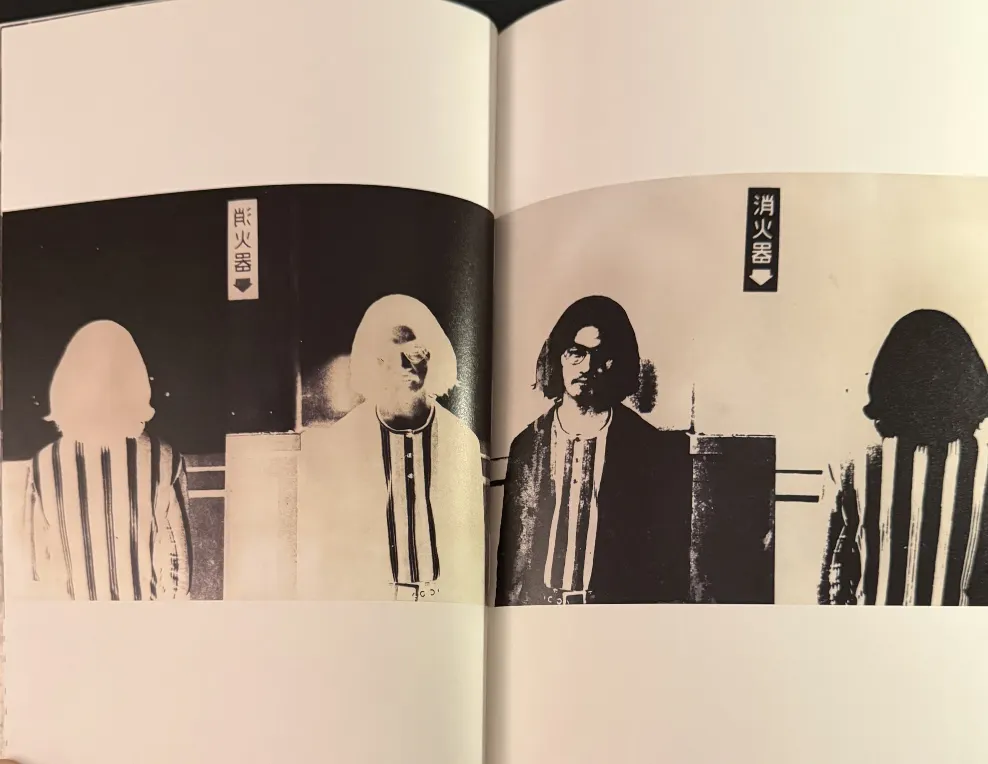
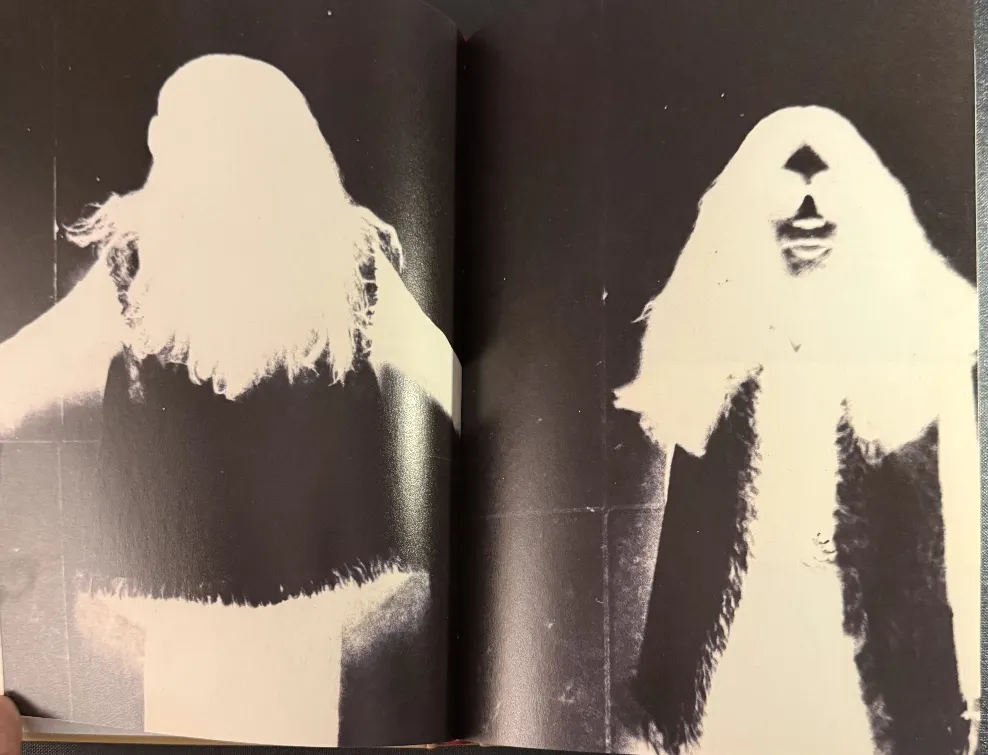
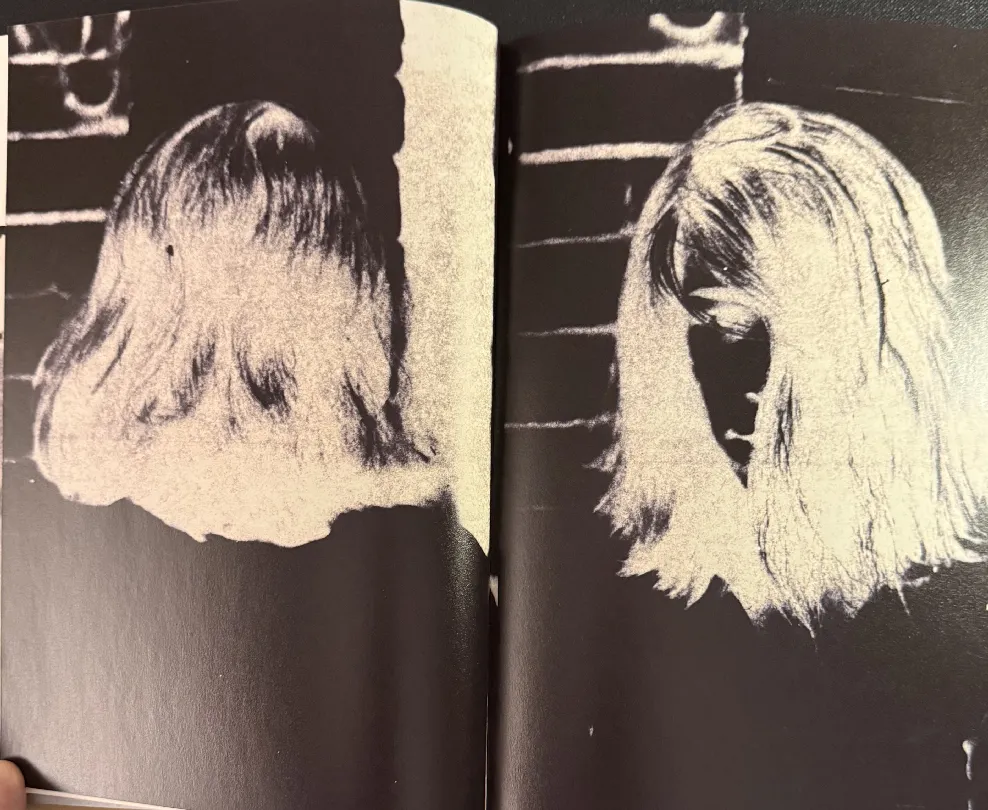
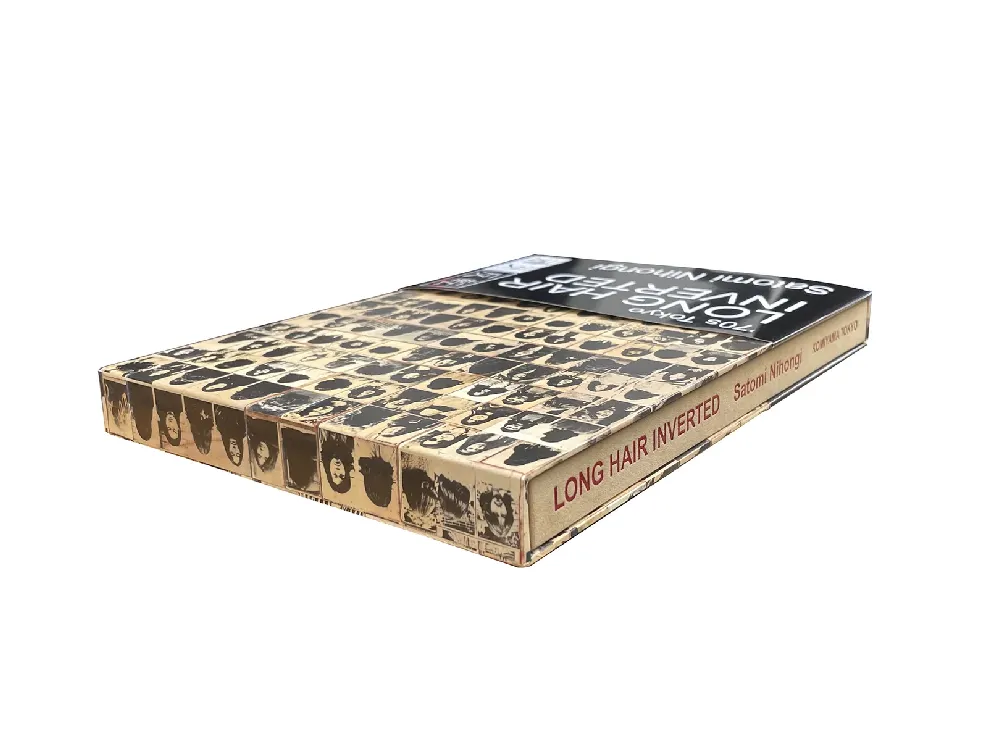
70s Tokyo Long Hair Inverted collects a striking series of street portraits capturing shifting youth fashion and hairstyle trends on the streets of Tokyo during the early 1970s, focusing specifically on the emergence of long hair styles.
Drawn from a trove of high-contrast vintage prints, the book features deadpan, front-and-back black-and-white street portraits reproduced directly alongside their inverted negative counterparts, creating a graphic mirror effect of silhouettes and textures.
Nihongi, who was part of Tokyo's early 1970s photography scene and associated with collectives like Geribara 5,documented the counterculture, alternative fashion, and underground communities developing during a period of rapid urban change in Japan.
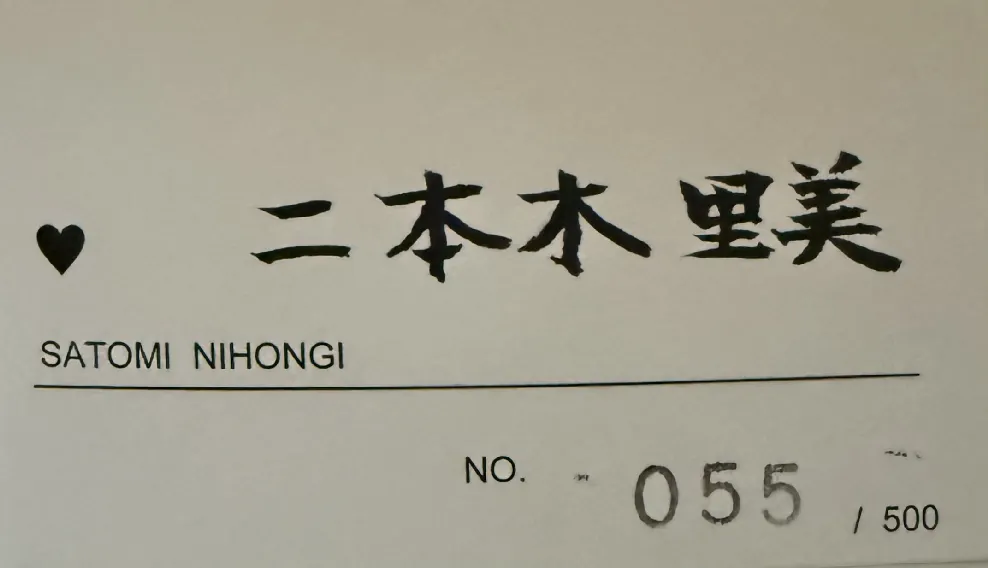
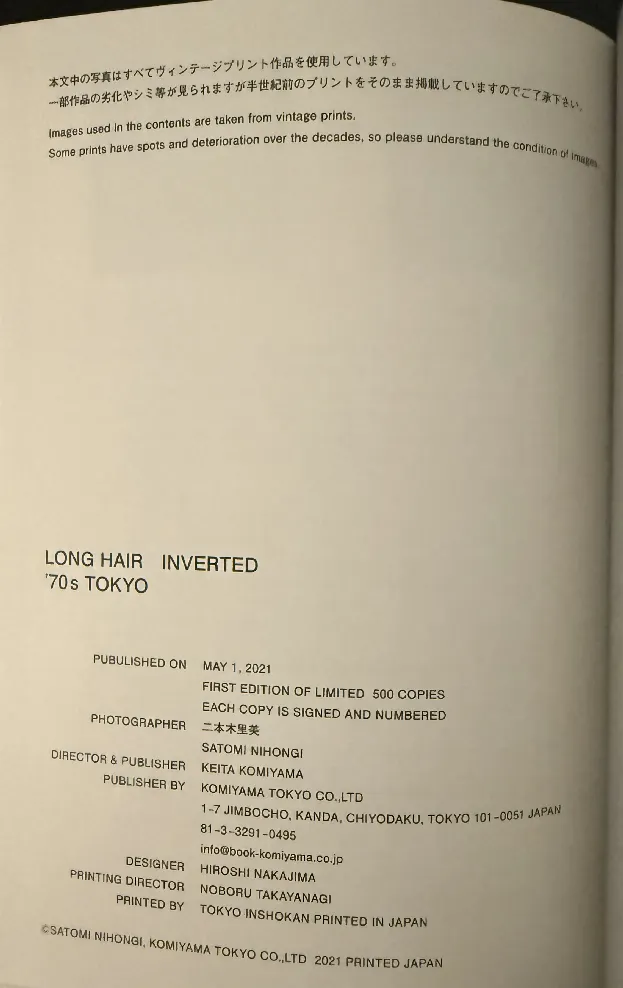
Originally partially featured in the influential Japanese counterculture magazine Hanashi-no-Tokushu in 1971, the complete body of work was brought together decades later in limited, slipcased hardcover edition.