
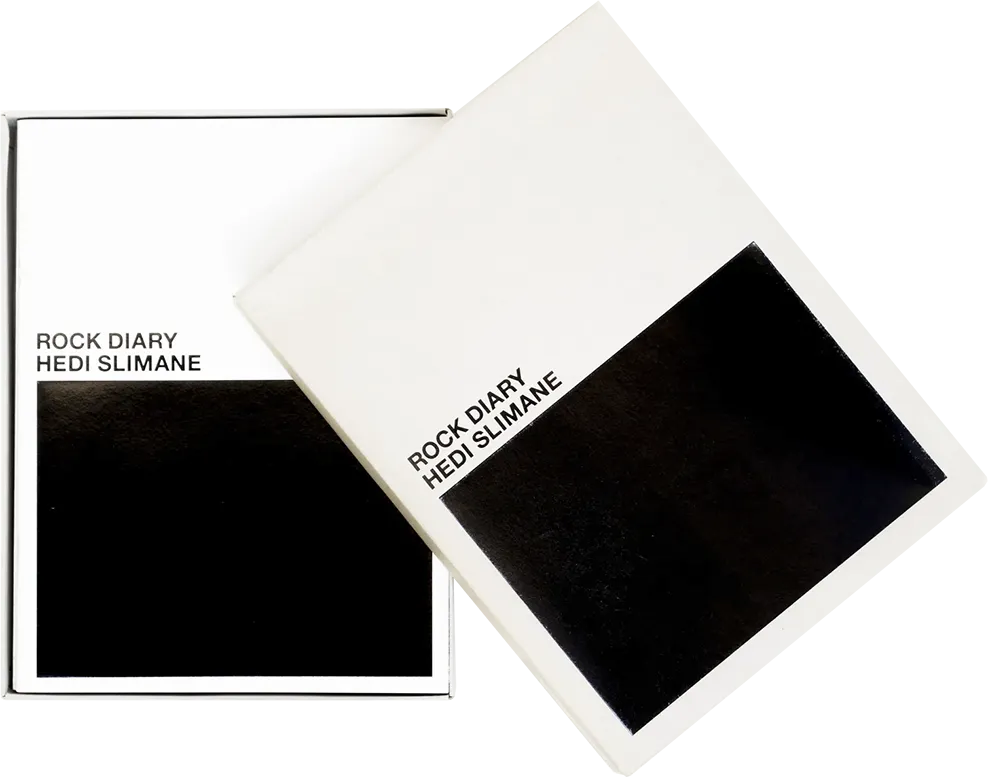
3 soft covers in box
ISBN:
9783905829600


Hedi Slimane’s Rock Diary chronicles the photographer’s immersive, multi-year journey through the international indie rock and garage rock revival of the early 2000s. Moving fluidly between Los Angeles, London, New York, and European tour stops, Slimane captures the raw, kinetic energy of a generation of musicians who defined the alternative soundscape of the decade, including artists like The Libertines, The Strokes, Interpol, and the White Stripes.
Rather than functioning as a standard collection of promotional concert photography, the monograph reads as an intimate, breathless visual diary. Slimane’s high-contrast black-and-white aesthetic strips away the gloss of traditional music journalism, focusing instead on backstage introspection, transient motel rooms, sweat-drenched club floors, and the stark, nocturnal rhythms of tour life. His framing treats youth culture and modern musicianship with a rigorous formal immediacy, highlighting the slender silhouettes, disheveled style, and restless defiance of his subjects.
Within Slimane's broader artistic output, Rock Diary bridges his acute observation of subcultural identity with the stylistic vocabulary of fashion and portraiture. The book presents rock and roll not merely as a genre of music, but as an acute existential posture, capturing a fleeting moment when underground music, independent style, and raw documentary immediacy converged.