
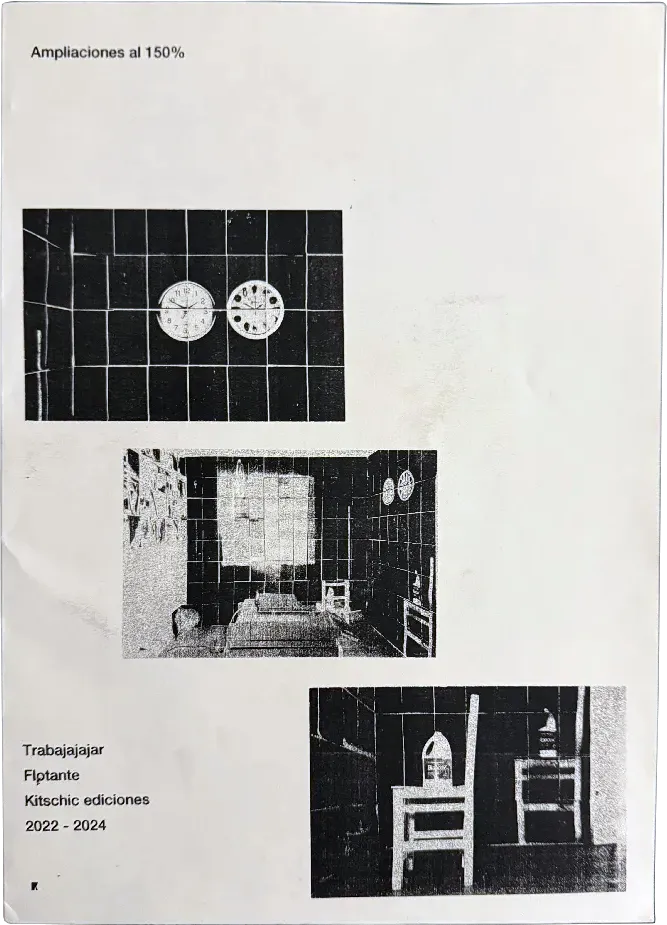
Staplebound xerox copies softcover
ISBN:


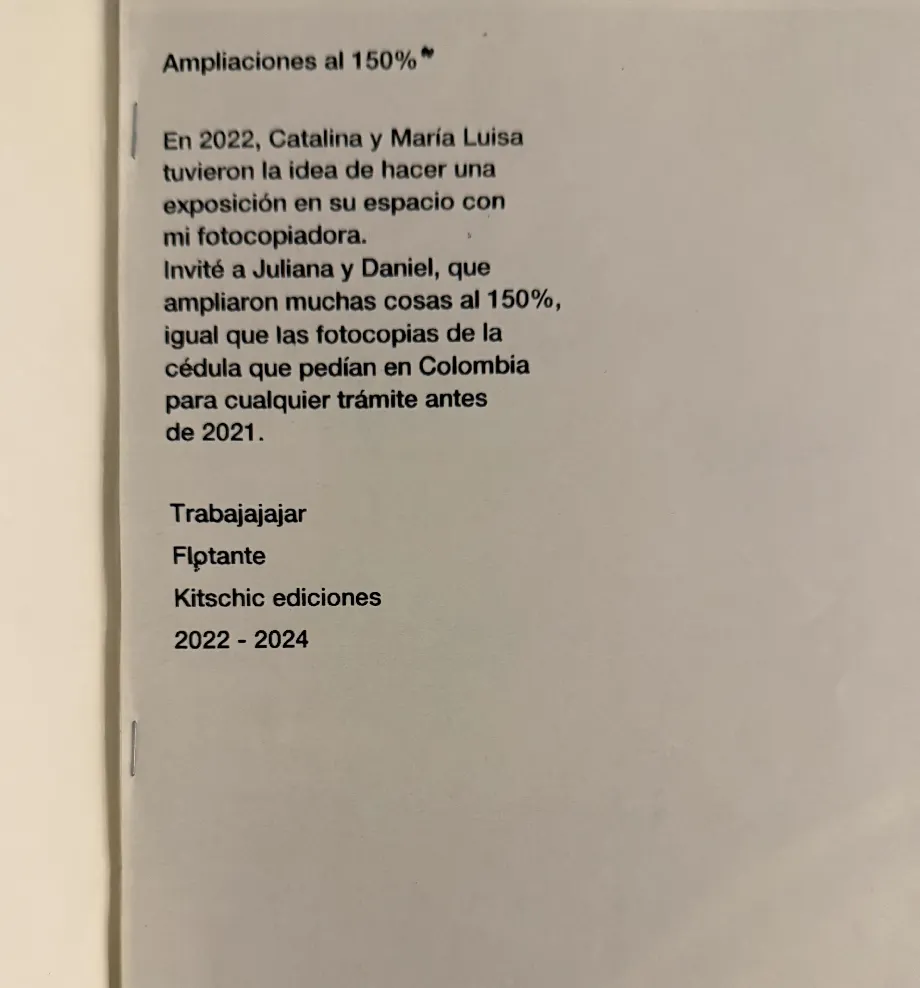
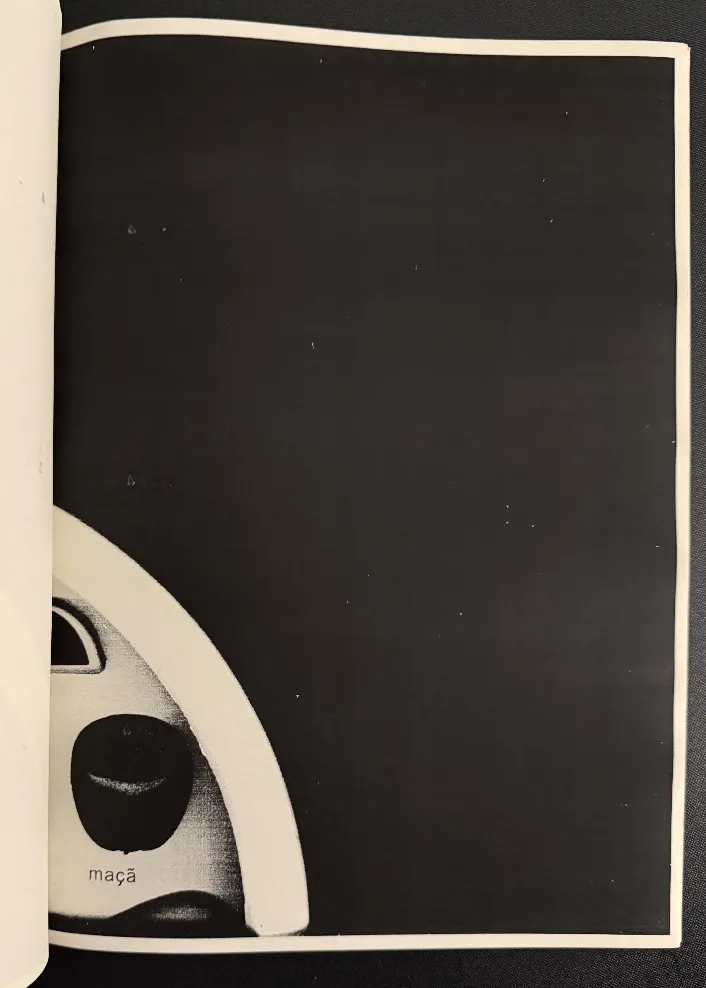
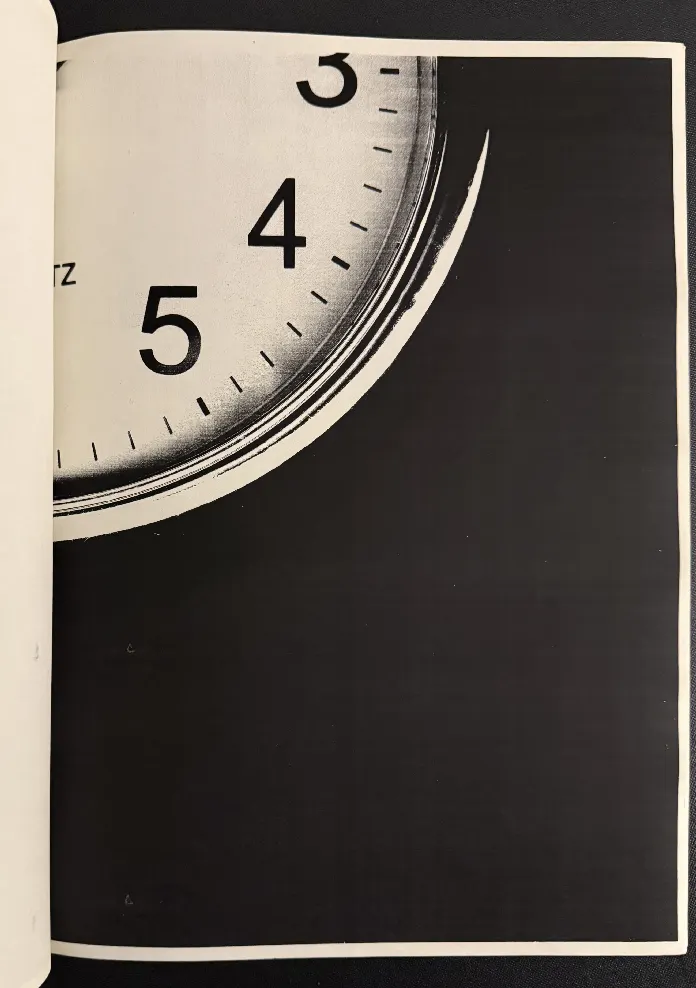
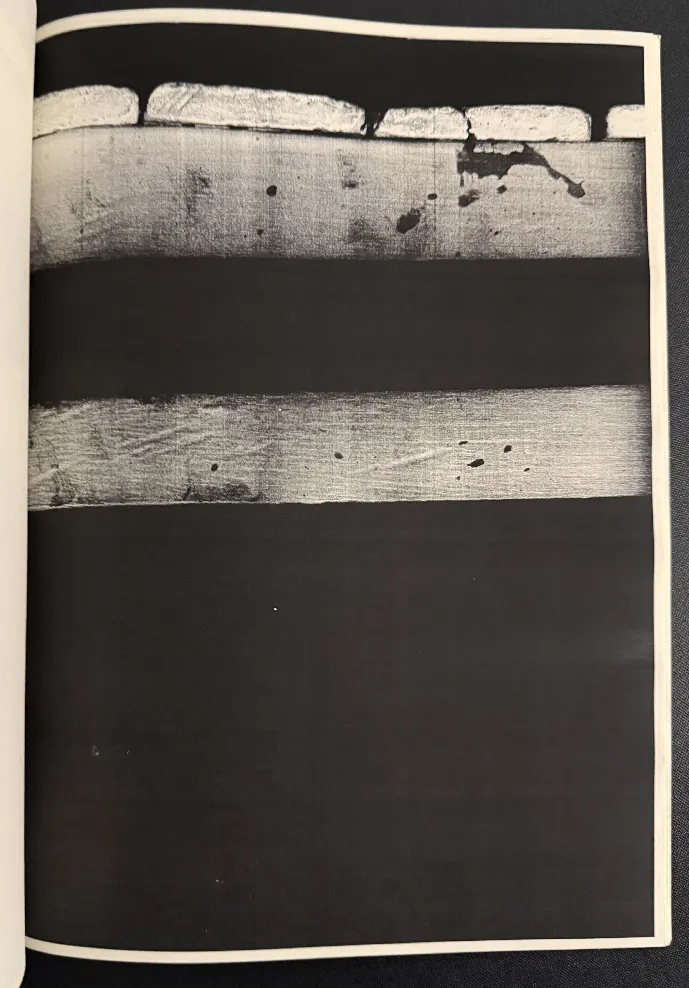
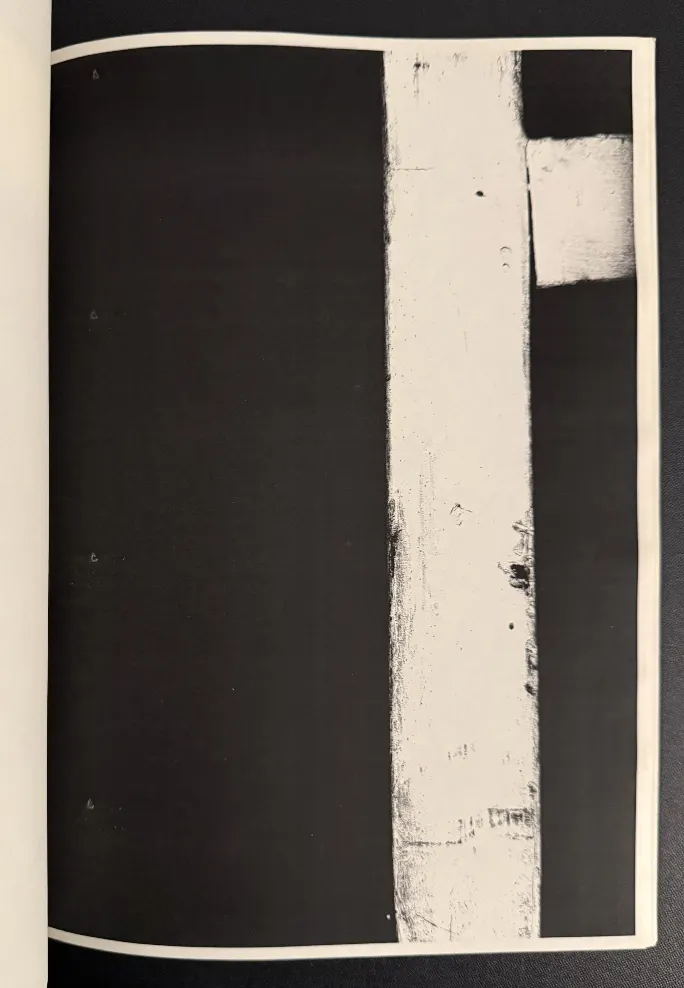
The collaborative project Trabajajajar, Flotante: Ampliaciones al 150% operates as a sharp conceptual critique of bureaucratic absurdity and the domestic sphere. Grounded in a specific, archaic administrative requirement in Colombia, where official identification cards had to be mechanically enlarged to exactly 150% scale for any legal procedure prior to 2021, the artists transform a mundane state mandate into a broader exploration of identity and systemic repetition. Originally conceived in 2022 as an installation where these oversized xeroxes were plastered across walls mirroring a domestic living room, the project physicalizes the often suffocating weight of state control. By doing so, it elevates the discarded, utilitarian aesthetics of the office photocopier into a profound vehicle for socio-political commentary.
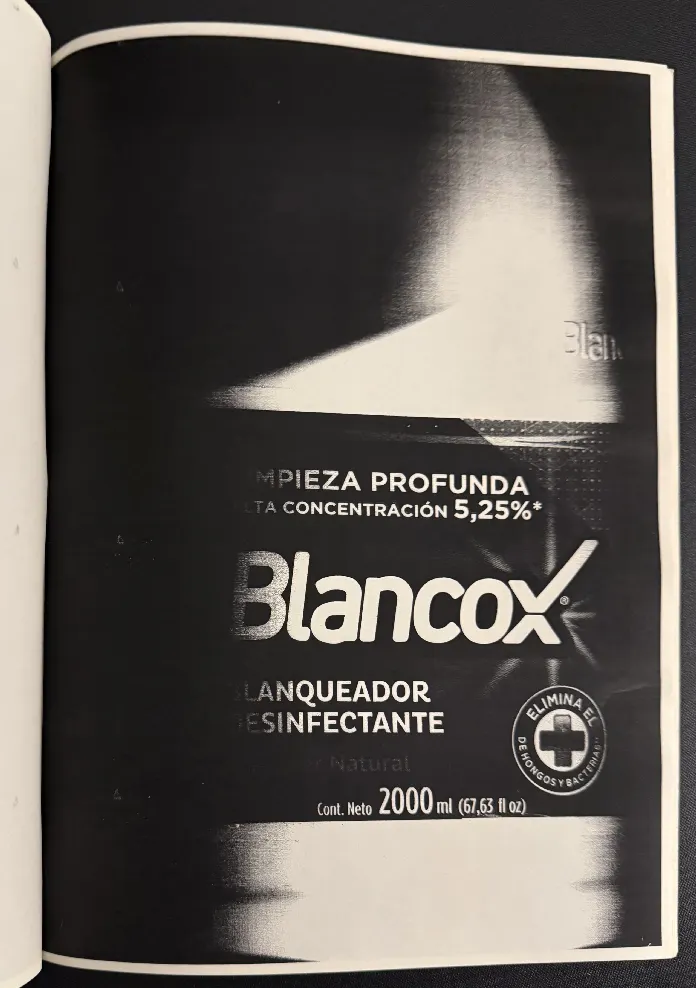
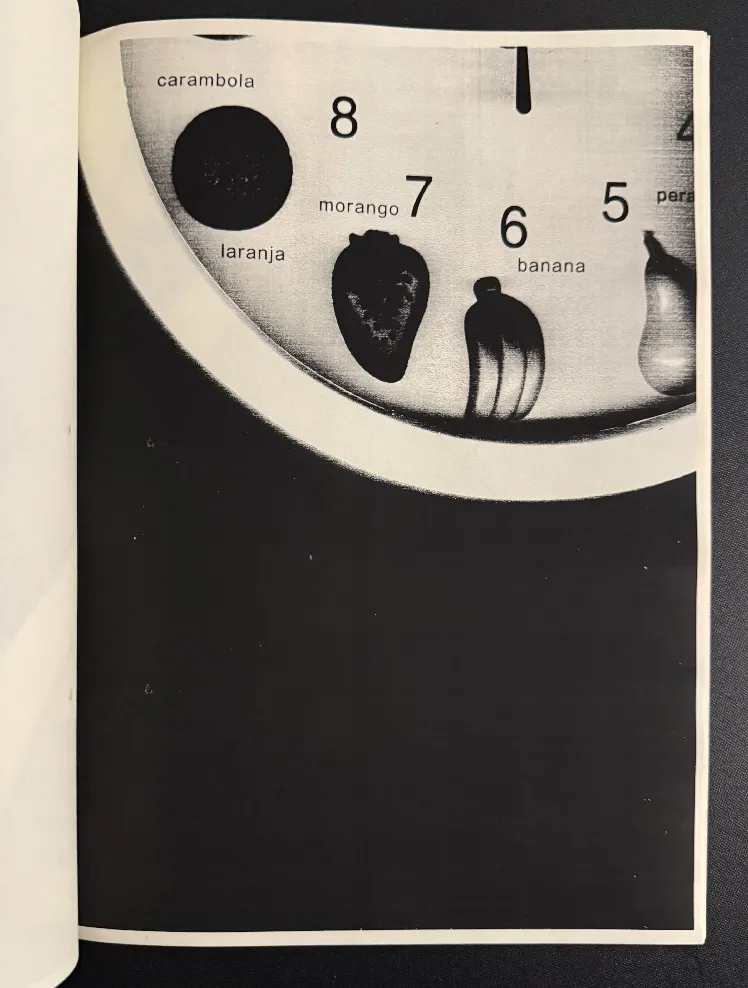
Aesthetically, the publication functions as a direct architectural facsimile, deliberately reproducing a specific wall from the original gallery installation. Eschewing traditional, high-fidelity photographic reproduction, the visual language fully embraces the degraded, high-contrast grit of standard xerography. Images and domestic objects are blown up to the mandated 150% scale, creating an imposing spatial dynamic where everyday items become oversized, aggressively flattened, and slightly abstract. The stark black-and-white compositions lean heavily on the inherent imperfections of the medium, tonal banding, harsh edges, and a severe loss of mid-tones, to construct a chaotic, highly tactile graphic landscape that echoes the visual noise of endless administrative paperwork.