
Softcover
ISBN:
9781927354261


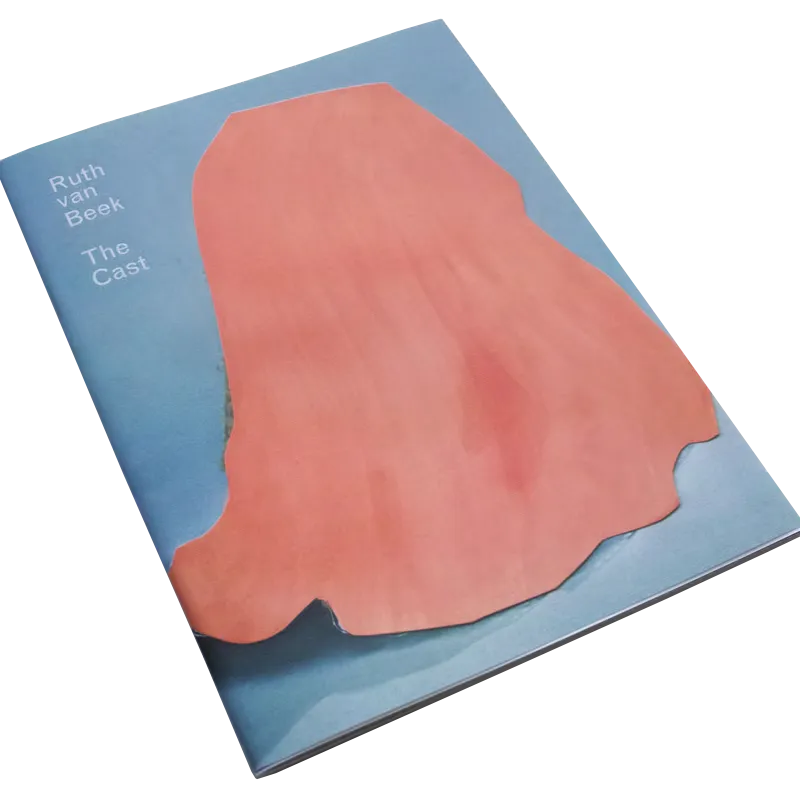
Ruth van Beek’s The Cast (2017) functions as a radical reinterpretation of the photographic archive, transforming discarded instructional manuals and vintage magazines into an obscure, animated taxonomy. Operating from her studio in the Netherlands, van Beek treats found imagery not as static historical documents, but as malleable raw material. By meticulously cutting, folding, and rearranging these domestic, often banal source photographs, she strips them of their original context. The title itself points to her methodological approach: she conceptualizes her collages as a theatrical production, where geometric backgrounds serve as the stage, and the manipulated found images act as the performing cast.
Aesthetically, the publication sits at the exact intersection of photography, collage, and sculptural intervention. Van Beek subverts the traditional flatness of the image by physically altering the surface of the paper, creating uncanny, lifelike compositions from inanimate subjects. The resulting figures often resembling exaggerated characters or strange domestic objects are rendered through precise, graphic isolation against solid bases. This deliberate physical manipulation emphasizes the tactile reality of the printed matter, forcing the viewer to confront the photograph as a constructed artifact rather than a transparent window.