%20Resized.webp)

SOLD
Copyright ©
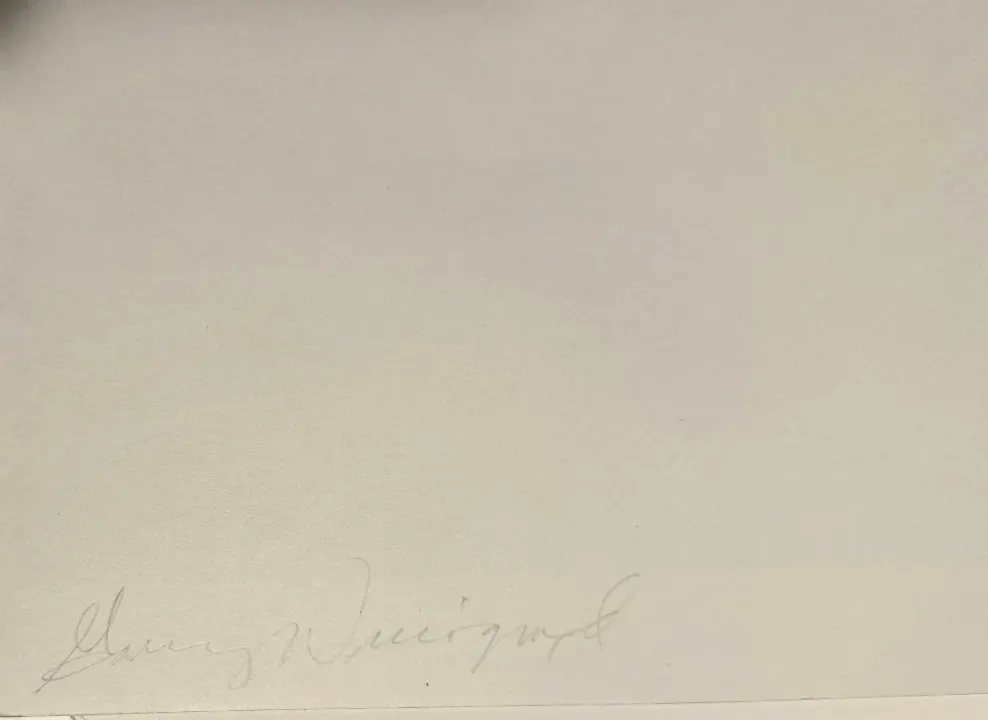
Garry Winogrand
or applicable right holders.


Other impressions of this photograph are in the permanent collections of the MOMA, New York (Object# 423.1992.3); the Art Institute of Chicago (Reference 1984.1591) and University of Michigan Museum of Art (UMMA), Accession No. 1981/2.65.3.
Litterature: Winogrand 1964, Arena Editions, 2002; Figments from the Real World ; Museum of Modern Art, 1988, p. 136; Garry Winogrand, SFMOMA / Yale University Press, 2013; Garry Winogrand: Fifteen Photographs (Double Elephant Press, 1974); New Documents, MOMA, 2013, p 129 (wrongly labeled Wyoming 1865); Robert Adams, Art Can Help, Yale, 2021.
Other impressions of this photograph are in the permanent collections of the MOMA, New York (Object# 423.1992.3); the Art Institute of Chicago (Reference 1984.1591) and University of Michigan Museum of Art (UMMA), Accession No. 1981/2.65.3.
Litterature: Winogrand 1964, Arena Editions, 2002; Figments from the Real World ; Museum of Modern Art, 1988, p. 136; Garry Winogrand, SFMOMA / Yale University Press, 2013; Garry Winogrand: Fifteen Photographs (Double Elephant Press, 1974); New Documents, MOMA, 2013, p 129 (wrongly labeled Wyoming 1865); Robert Adams, Art Can Help, Yale, 2021.
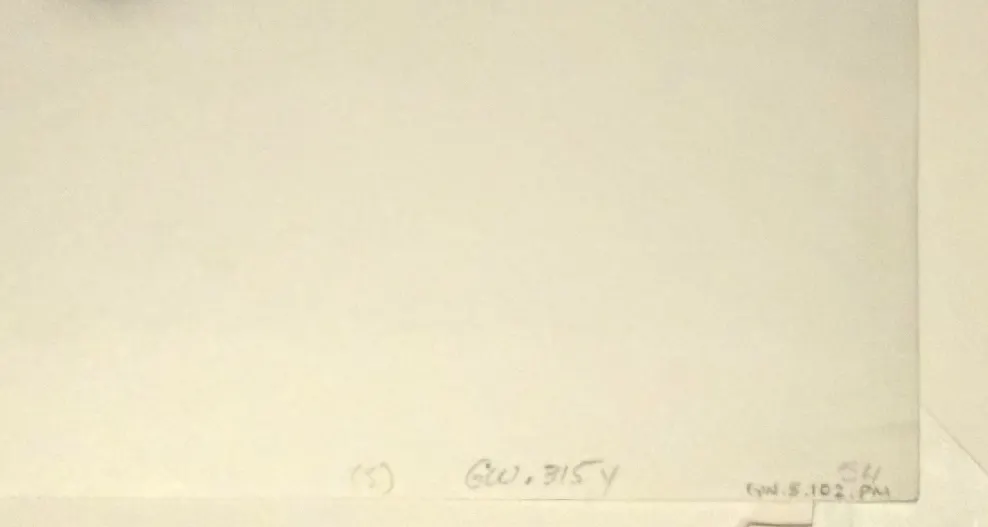
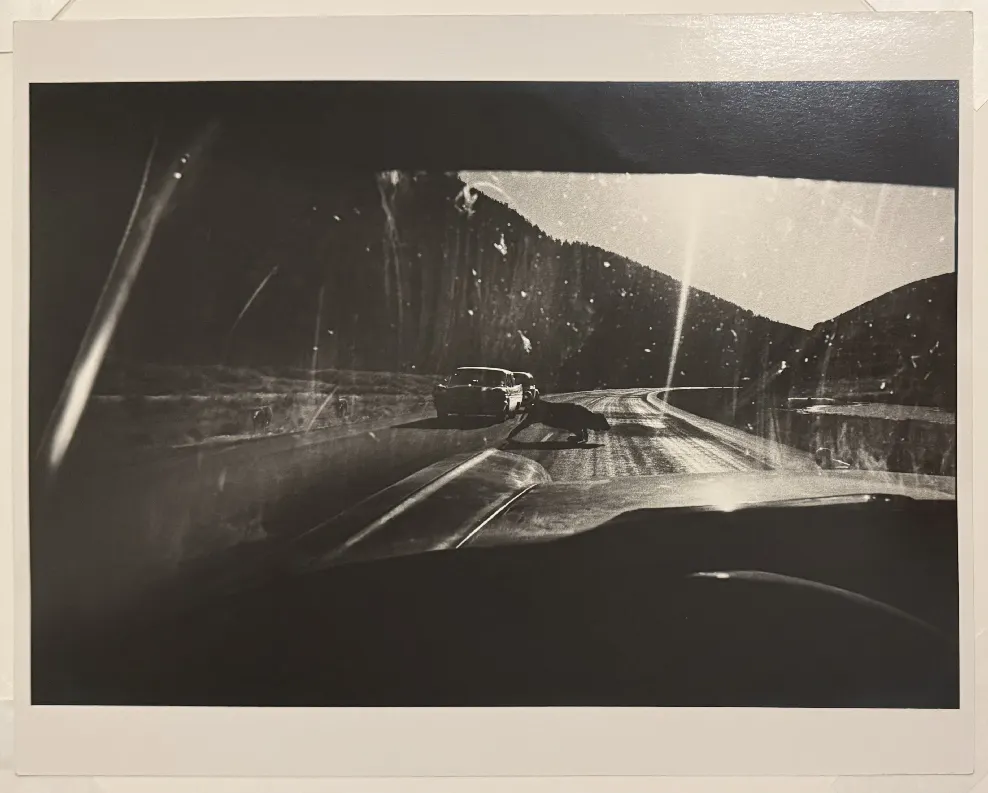
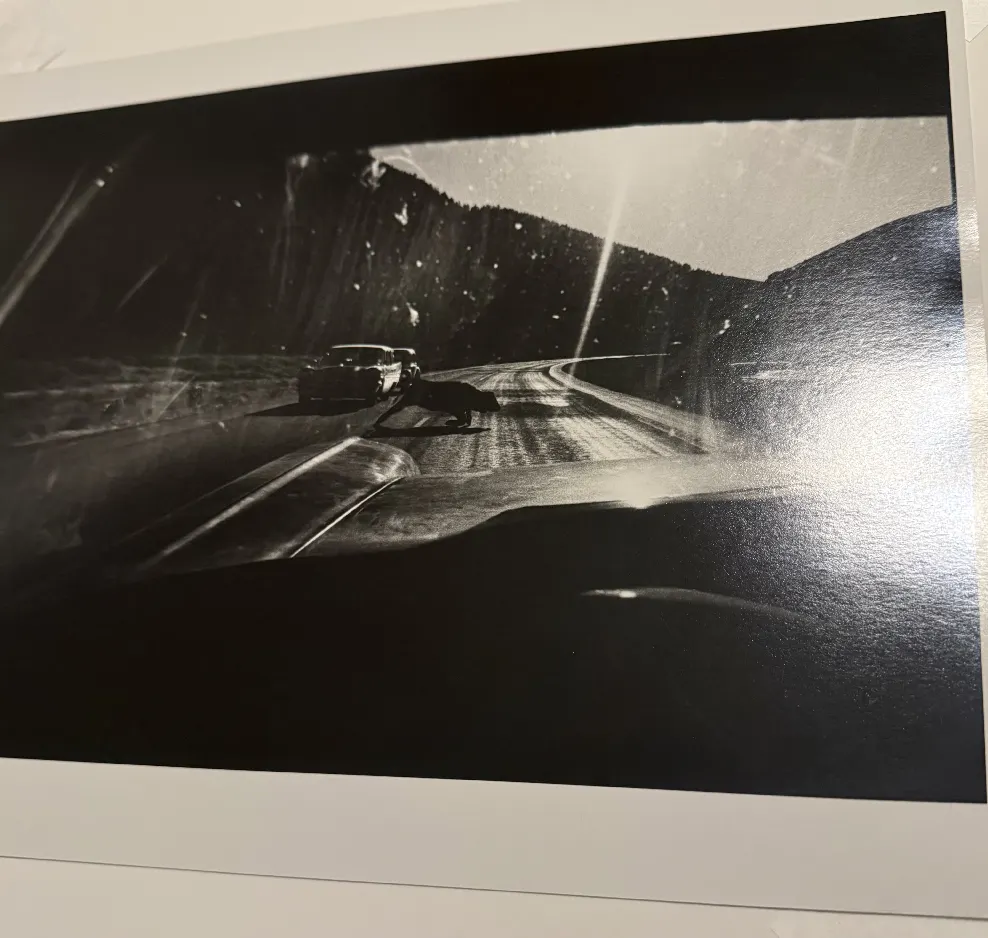
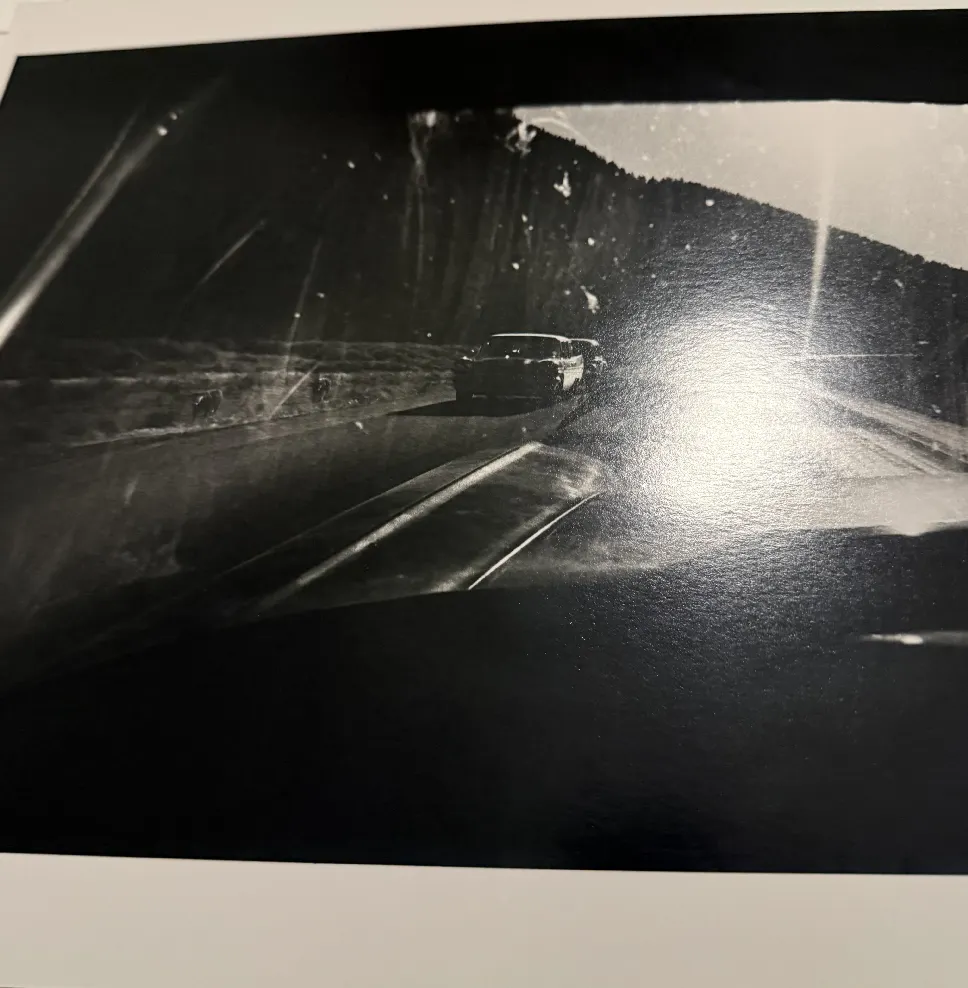
Utah 1964 is a iconic gelatin silver print by American street photographer Garry Winogrand, made during his seminal cross-country road trip funded by a Guggenheim Fellowship in 1964.
After receiving a Guggenheim grant to record "American life," Winogrand spent months driving across the United States. This trip yielded some of his most celebrated compositions, capturing the post-war American social landscape at a moment of cultural transition. This image was included in the show New Documents at MOMA in 1967, along with Diane Arbus and Lee Freidlander. This exhibition, curated by John Szarkowski, is now considered a landmark show in shifting documentary photography toward more personal, ambiguous work.
The image is also central to Winogrand's posthumous monograph 1964 (Fraenkel Gallery / Arena Editions), which showcases his definitive perspective on 1960s Americana.
The image features Winogrand’s signature wide-angle perspective and tilted horizon line, conveying immediacy, speed, and the spontaneity of life on the open road. Typical of his formalist eye, the composition balances vast, austere desert topography with human presence and domestic infrastructure, capturing the stark tension between the natural environment of the American West and human encroachment.
Other impressions of this photograph are in the permanent collections of the MOMA, New York (Object# 423.1992.3); the Art Institute of Chicago (Reference 1984.1591) and University of Michigan Museum of Art (UMMA), Accession No. 1981/2.65.3.
Litterature: Winogrand 1964, Arena Editions, 2002; Figments from the Real World ; Museum of Modern Art, 1988, p. 136; Garry Winogrand, SFMOMA / Yale University Press, 2013; Garry Winogrand: Fifteen Photographs (Double Elephant Press, 1974); New Documents, MOMA, 2013, p 129 (wrongly labeled Wyoming 1865); Robert Adams, Art Can Help, Yale, 2021.


Utah 1964 is a iconic gelatin silver print by American street photographer Garry Winogrand, made during his seminal cross-country road trip funded by a Guggenheim Fellowship in 1964.
After receiving a Guggenheim grant to record "American life," Winogrand spent months driving across the United States. This trip yielded some of his most celebrated compositions, capturing the post-war American social landscape at a moment of cultural transition. This image was included in the show New Documents at MOMA in 1967, along with Diane Arbus and Lee Freidlander. This exhibition, curated by John Szarkowski, is now considered a landmark show in shifting documentary photography toward more personal, ambiguous work.
The image is also central to Winogrand's posthumous monograph 1964 (Fraenkel Gallery / Arena Editions), which showcases his definitive perspective on 1960s Americana.
The image features Winogrand’s signature wide-angle perspective and tilted horizon line, conveying immediacy, speed, and the spontaneity of life on the open road. Typical of his formalist eye, the composition balances vast, austere desert topography with human presence and domestic infrastructure, capturing the stark tension between the natural environment of the American West and human encroachment.