SOLD
Copyright ©
Louis Stettner
or applicable right holders.
Poster


Louis Stettner, Wisdom Cries Out in Streets, 1999, p 178.
Another impression of this photograph is in the Whitney Museum collection (Access # 2017.243).


Louis Stettner, Wisdom Cries Out in Streets, 1999, p 178.
Another impression of this photograph is in the Whitney Museum collection (Access # 2017.243).
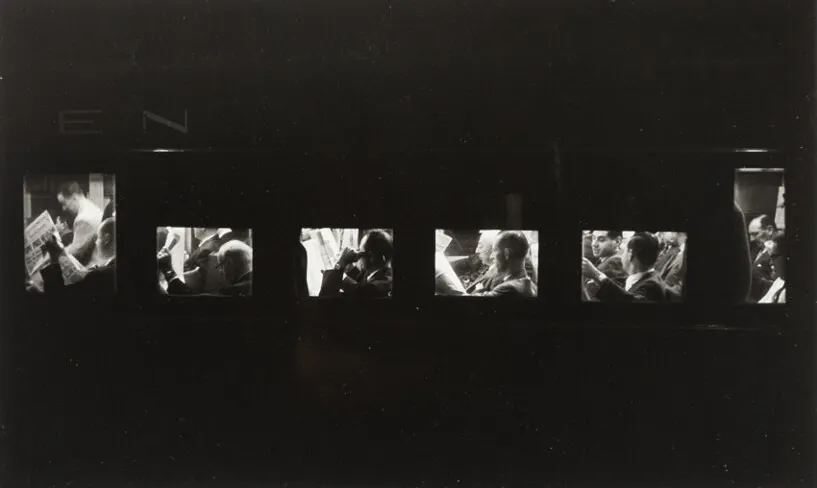
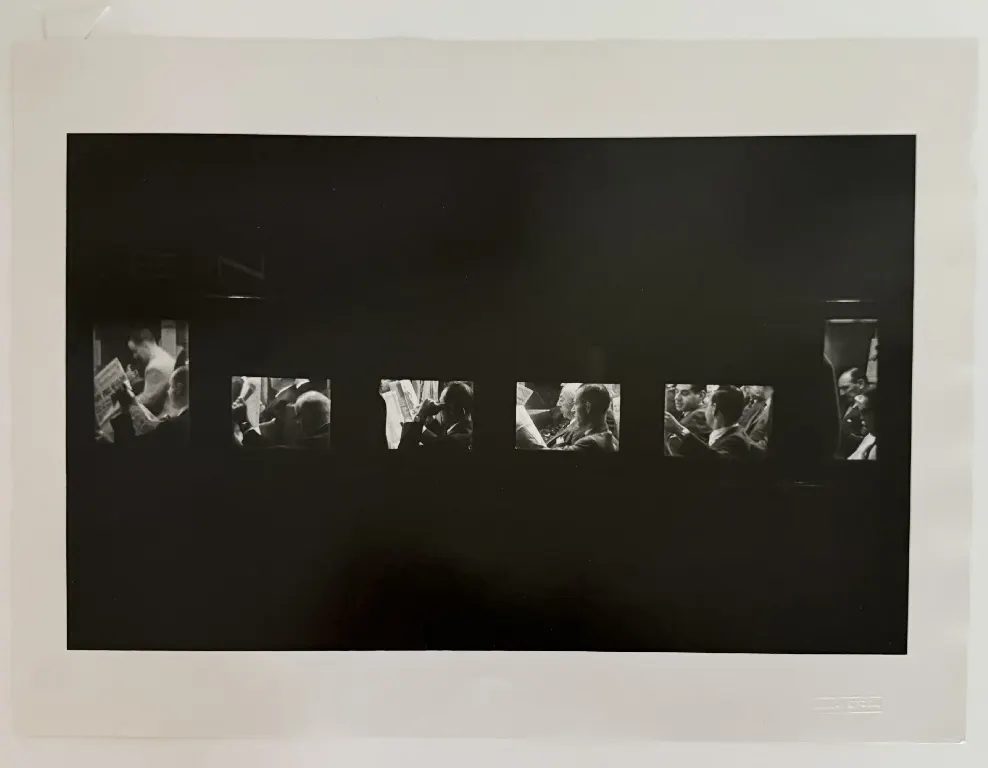
Louis Stettner’s Six Windows, Penn Station, New York (1958) captures a quintessential moment of mid-century urban transition through the lens of a master humanist street photographer. Documenting the architectural and social fabric of New York before the station's devastating 1963 demolition, the image transforms a mundane transit portal into a study of geometry, light, and human isolation.
The composition establishes a strict architectural rigor through the gridded framework of the station windows, echoing the industrial formalism of the era while maintaining psychological depth.
Notably, the high-contrast lighting produces a striking, almost-staged quality, though entirely candid, where the stark interplay of deep shadow and brilliant light carves out the figures as if under theatrical illumination. Stettner balances this rigid geometry with the transient presence of figures moving through the space, capturing the melancholy and kinetic energy characteristic of his finest New York reportage. Within his broader oeuvre, this work bridges his commitment to American working-class life with a refined modernist sensitivity shaped by his time living and working between New York and Paris.
Louis Stettner, Wisdom Cries Out in Streets, 1999, p 178.
Another impression of this photograph is in the Whitney Museum collection (Access # 2017.243).