

SOLD
Copyright ©
Jaap Scheeren
or applicable right holders.


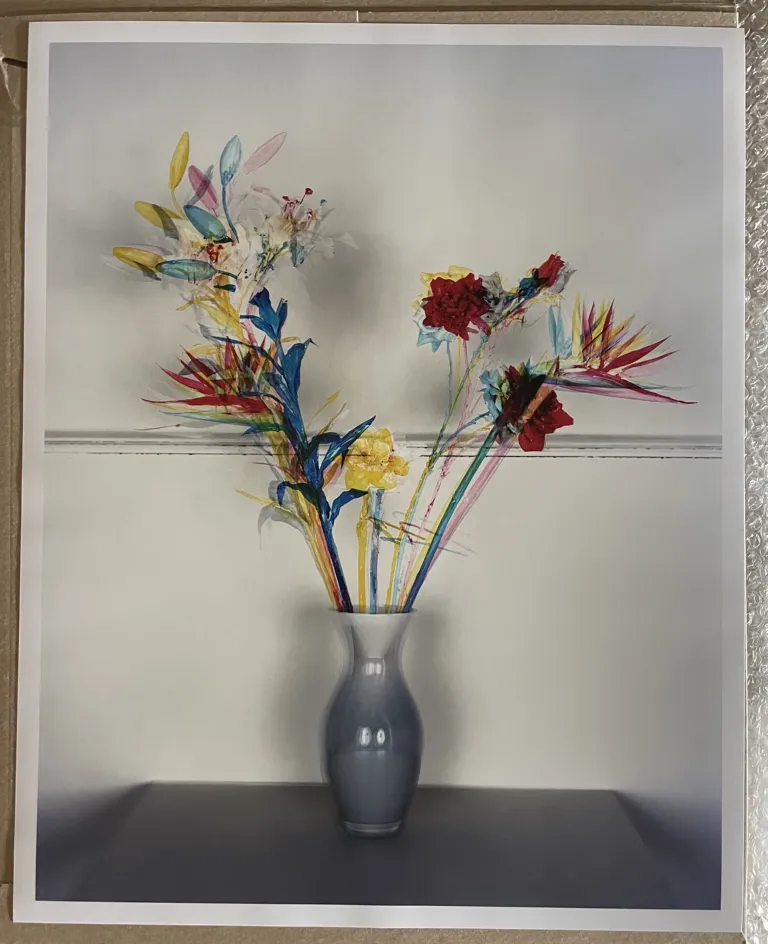
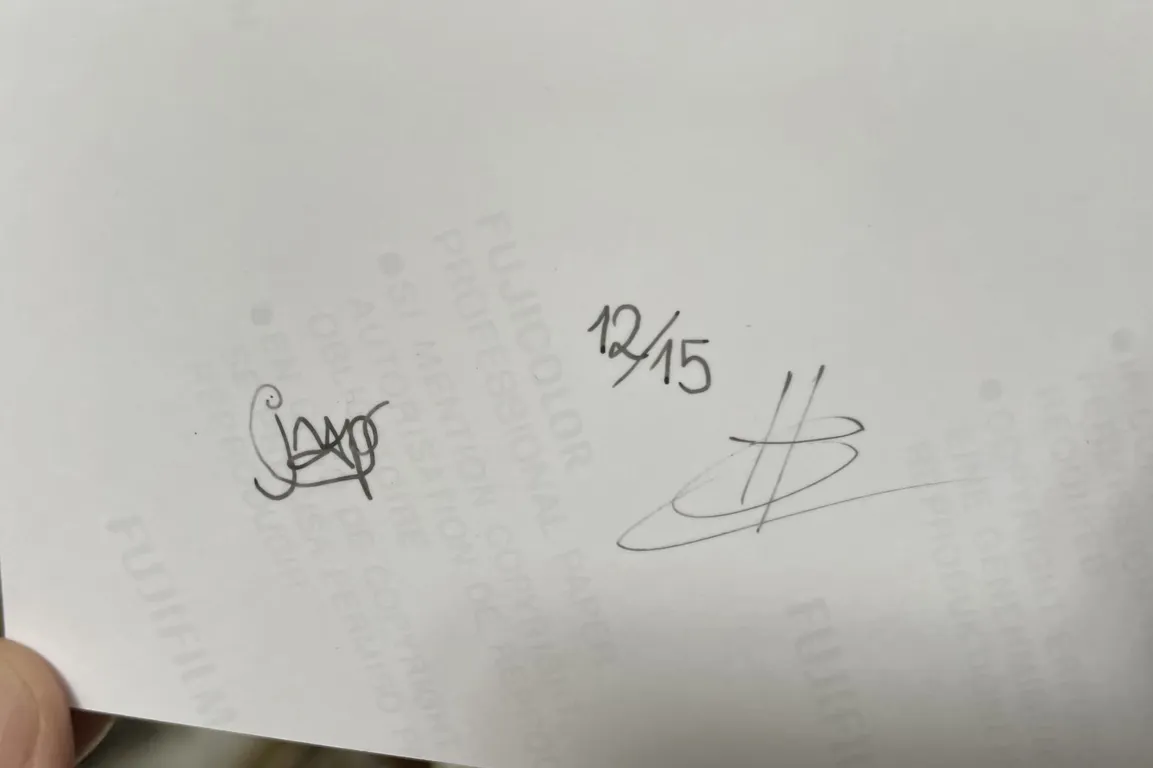
Fake Flowers in Full Color (2009) is a collaborative project created by Jaap Scheeren and graphic designer Hans Gremmen.
The project explores the mechanics of mechanical reproduction by asking: Is it possible to create a three-dimensional color separation?
Instead of digitally separating an image into CMYK (Cyan, Magenta, Yellow, Black) channels during printing, Scheeren and Gremmen executed the separation physically; they constructed four near-identical arrangements of artificial flowers, painting each bouquet entirely in one of the primary CMYK printing colors. Each monochromatic arrangement was photographed individually; the four separate photographs were then layered and merged back together into a single composite image.
The resulting composite does not yield a perfectly aligned, true-to-life color photograph. Because physical brushwork and slight spatial variances prevent perfect registration, the image produces slight misalignments, color fringes, and unnatural chromatic saturation.
By bringing standard four-color offset separation into physical space, the work lays bare the mechanics of photographic reproduction, questioning the perceived realism of full-color printing through deliberate technical aberration.


Fake Flowers in Full Color (2009) is a collaborative project created by Jaap Scheeren and graphic designer Hans Gremmen.
The project explores the mechanics of mechanical reproduction by asking: Is it possible to create a three-dimensional color separation?
Instead of digitally separating an image into CMYK (Cyan, Magenta, Yellow, Black) channels during printing, Scheeren and Gremmen executed the separation physically; they constructed four near-identical arrangements of artificial flowers, painting each bouquet entirely in one of the primary CMYK printing colors. Each monochromatic arrangement was photographed individually; the four separate photographs were then layered and merged back together into a single composite image.
The resulting composite does not yield a perfectly aligned, true-to-life color photograph. Because physical brushwork and slight spatial variances prevent perfect registration, the image produces slight misalignments, color fringes, and unnatural chromatic saturation.
By bringing standard four-color offset separation into physical space, the work lays bare the mechanics of photographic reproduction, questioning the perceived realism of full-color printing through deliberate technical aberration.