SOLD
Copyright ©
Thomas Ruff
or applicable right holders.
Poster



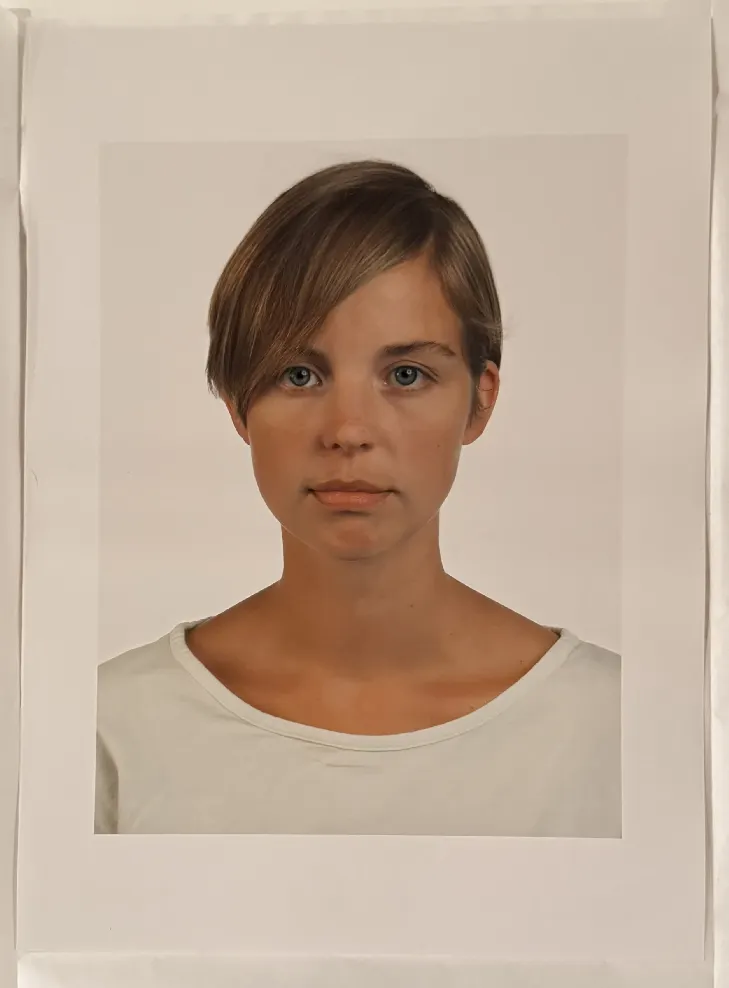
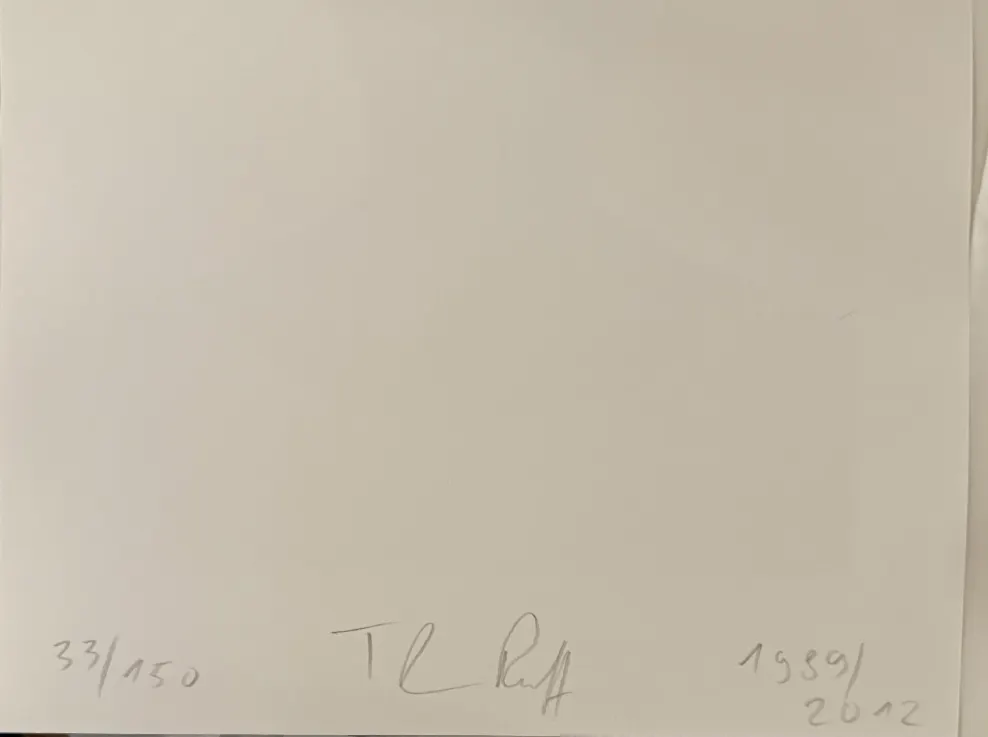
Portrat 1989 - 2012 is part of a rigorous investigation into portraiture, identity, and the objective recording of the human face, drawing upon his foundational training under Bernd and Hilla Becher at the Kunstakademie Düsseldorf. Initiated as part of his systematic approach to typology, the series subverts traditional psychological portraiture by stripping away dramatic lighting, narrative context, and expressive emotion, presenting subjects with the deadpan neutrality of passport photographs or police mugshots.
The print is structured as a high-definition frontal cataloging of the human visage, capturing subjects against neutral backgrounds with startling clarity. Although the standardized framing and blank backdrops deliberately eliminate overt biographical clutter, they paradoxically foreground subtle markers of socio-economic background, generational cohort, and cultural environment through the precise rendering of clothing, hair, posture, and facial expression.
Ruff and Höfer
While Ruff's headshots use clinical neutrality to strip away narrative context and expose the subtle markers of individual identity and socio-economic background, Höfer takes the exact opposite path: she meticulously documents expansive, empty public and institutional interiors, libraries, museums, universities, and palaces, completely devoid of human subjects.
Where Ruff forces an intense, confrontational encounter with the human face as an objective typographic specimen, Höfer examines human presence through its total absence, allowing the architectural volumes, chairs, lighting fixtures, and spatial layouts to quietly reveal the social stratification, history, and cultural psychology of the people who inhabit and design those spaces.