

Which art books, prints and posters are available by and about this artist? Here is a sample of items of interest to a typical collector:
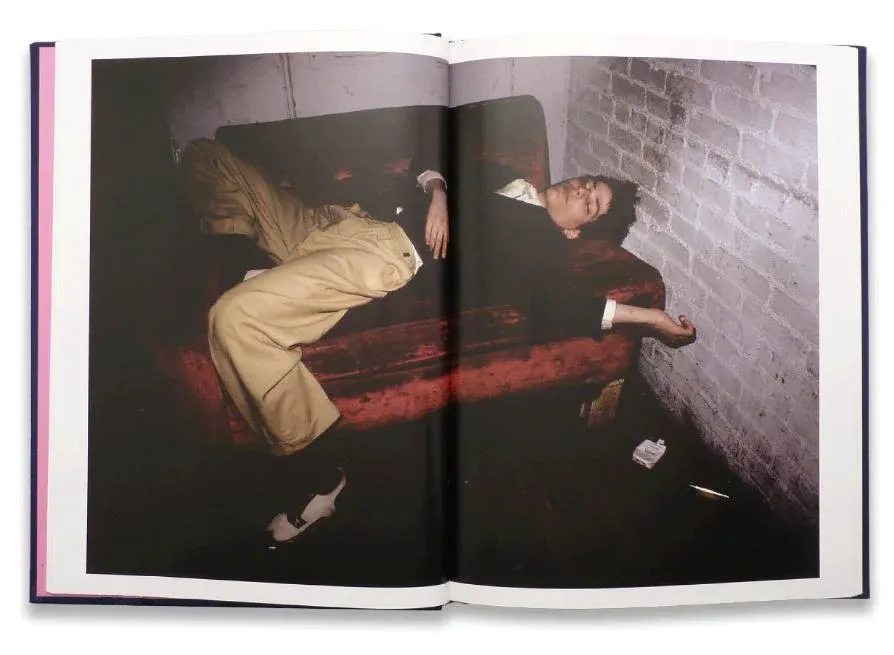


Published shortly after Armstrong's passing, Polaroids captures the intimate, unvarnished immediacy of the photographer’s private world, operating as an immediate visual diary of friends, lovers, and transient moments within his inner circle. Working within the spontaneous, tactile format of instant film, Armstrong bypassed the deliberate staging of traditional studio portraiture to record fleeting expressions, raw vulnerability, and quiet domestic tenderness.
The unique material qualities of the Polaroid medium, its soft tonal gradation, shallow depth of field, and rich, saturated color palette, amply suited Armstrong’s signature painterly aesthetic. Rather than presenting polished or definitive statements, these images retain the provisional, unpolished charm of memories captured in real-time, emphasizing the emotional warmth and psychological proximity between photographer and subject.
The Polaroids series provides a vital, foundational glimpse into the genesis of his visual language, showcasing the raw materials of observation that informed his larger portrait projects.

The Silver Cord presents an intimate, emotionally resonant photographic exploration of youth, intimacy, and the transitional spaces of male friendship and desire. Early in his carreer, Armstrong was emerging from the core of the Boston School of photographers alongside Nan Goldin and Mark Morrisroe, Armstrong focused his lens on his immediate circle of friends and lovers, capturing an evocative portrait of queer subculture during the 1970s and 1980s.
Armstrong’s compositions are distinguished by a tender, painterly naturalism and a distinct mastery of available light. Eschewing the harsh flash or confrontational staging common in much documentary work of the period, he utilized soft focus, shallow depths of field, and delicate tonal gradations to elevate everyday domestic moments into poetic, elegiac studies of human vulnerability. His portraits capture not just physical appearance, but the psychological interiority and profound emotional attachments of his subjects.
Within Armstrong's broader oeuvre, The Silver Cord stands as his first major monograph, encapsulating his signature aesthetic, one that balances raw autobiographical immediacy with classicist formal elegance

615 Jefferson Avenue (Damiani, 2011) is a poignant documentation of queer intimacy, domestic interiors, and subcultural portraiture within the lineage of the Boston School. Captured in Armstrong’s signature lyrical, out-of-focus aesthetic, the monograph explores the fragile beauty of youth and private sanctuary, presenting portraits that feel intensely personal yet universally resonant.
The visual language is characterized by a soft-focus treatment of light, a muted palette, and an atmospheric warmth that dissolves hard architectural boundaries into intimate, emotional spaces. Within the broader context of the Bushwick sur Seine collection, this work exemplifies the intersection of snapshot vernacular and deliberate fine art publishing, capturing a specific epoch of American countercultural identity through tactile printed matter.

Beauty was never a dirty word for David Armstrong. Untroubled by others' puritan fears of sensuality or by the follies of this or that zeitgeist, Armstrong has long pursued his twin vision of urban romance and bucolic serenity. All Day Every Day presents the artist's landscapes, interiors, and cityscapes, wistful and evocative images that discreetly suggest stories of love and loss, that bespeak the solitary pleasures of a flaneur adrift on urban streets and rural roads. A street corner, the facade of a skyscraper, blossoming trees, a chair in a room on a late afternoon: these are the elusive quotidian promises of happiness that Armstrong so elegantly captures, generously inviting viewers to interweave their own desires and reveries with his intricately languid images. Underlying Armstrong's radical aesthetic, we sense the utopian fervor of a revolt against utilitarianism, dogmatic narrow-mindedness, and the stifling fear of the senses and the body that still pervades our culture.


This publication marks the first posthumous exhibition catalogue of Armstrong's work. Organized and edited by the David Armstrong Archive, the catalogue is published to coincide with exhibitions at Kunsthalle Zurich in 2024 and LUMA Arles in 2025. The book focuses exclusively on his never-before-published contact prints, featuring 286 images reproduced at a 1:1 scale. The prints, from between 1974 and 1994, showcase many of his iconic portraits of friends in Provincetown, Boston, and downtown Manhattan, including those of Nan Goldin, Cookie Mueller, Mark Morrisroe, Rene Ricard, Gary Indiana, Jack Pierson, Tabboo! (Stephen Tashjian), Christopher Wool, Philip-Lorca DiCorcia, Teri Toye, Greer Lankton, Johnny Thunders, and others.
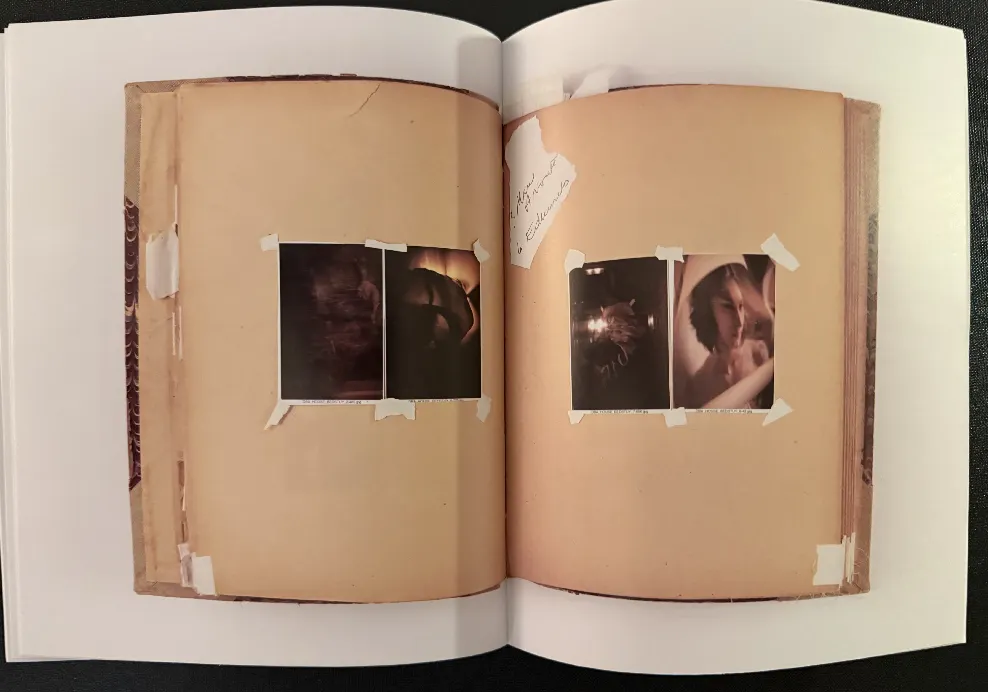
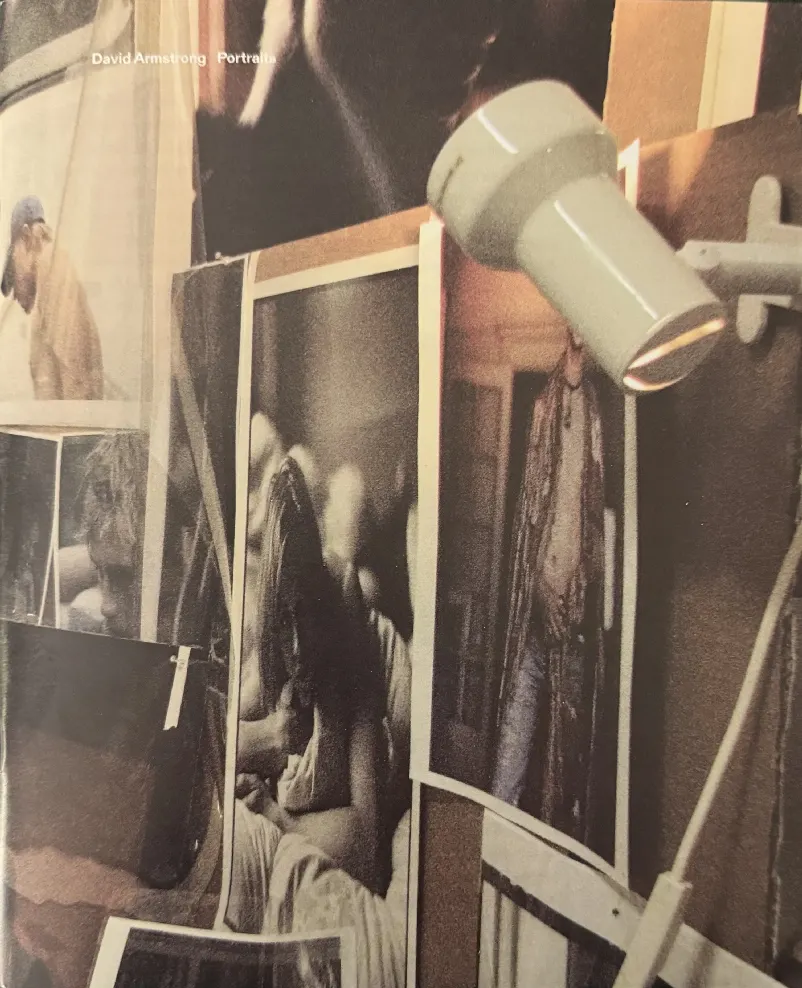
David Armstrong's Portraits exhibition catalog, published by Artists Space, documents the artist's foundational contributions to the Boston School and American portraiture. Chronicling his exploration of queer intimacy, youth culture, and domestic interiority, the catalog captures the tender, melancholic atmosphere that defines his photographic vision.
The catalog establishes its self-reflexive premise right from the cover, which features a dense, immersive studio wall arrangement of pinned photographic prints and contact sheets rather than a finished book. Turning to the interior pages, this meditation on physical reproduction shifts into a direct mise en abyme, displaying spreads of actual books and bound volumes laid out within the archival workspace. Together, this interplay between wall-pinned ephemera and bound pages transforms raw studio documentation into a deliberate, tangible preservation of intimacy and countercultural history.
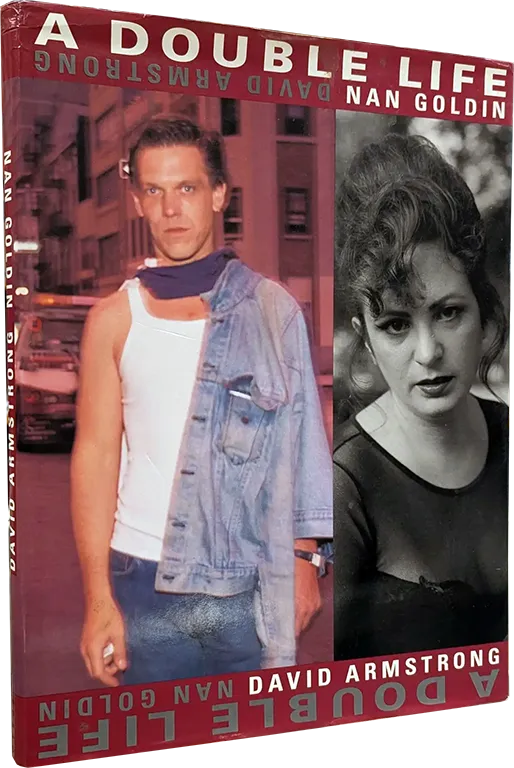
Double Life is a chronicle of Nan Goldin and her friend David Armstrong's friends, loves, and lives over 20 years. The book is both a visual dialogue between two artists and the portrait of a generation whose hopes and aspirations have been scarred by drugs, AIDS and sexual harassment. The parallel paths of their lives are represented in this book in the juxtaposition of styles - Goldin's colour photography set against Armstrong's more austere black-and-white imagery. It is both an illustrated history of recent culture and an artistic experiment.
David Armstrong, American (1954-2014)
Armstrong was a prominent figure in photography, capturing subcultures and exploring themes of beauty, queerness, and intimacy. He was associated with the Boston School, a movement known for its focus on intimate and personal photography. Armstrong's work was showcased in numerous one-person shows in major cities like New York, Boston, and various European locations.
His photography has been influential in the fields of photography, art, and fashion, shaping styles and perspectives. Armstrong's work offered a unique and defining portrait of his subculture, capturing the essence of a particular time and place. He also created a deeply moving panorama of beauty, queerness, and intimacy, exploring broader human experiences.
His photography continues to be studied and appreciated, with his legacy recognized through the David Armstrong Archive.


→
Night and Day is a lyrical synthesis of Armstrong's late-career output, bridging his origins in the intimate, raw portraiture of the Boston School with his subsequent evolution into ethereal fashion and editorial photography. Rather than a linear retrospective, the publication constructs a continuous, dreamlike atmosphere where boundaries between commercial assignments and personal obsessions have disappeared. The work navigates themes of ephemeral youth, fleeting beauty, and romantic melancholy, pairing his luminous, highly stylized portraits of young men with hazy, soft-focus landscapes and cityscapes often captured from hotel windows during his travels.
The book relies on Armstrong’s mastery of available light and his deliberate manipulation of depth of field. By pushing his camera into extreme soft focus, he strips away the hard-edged realism typically associated with documentary photography, rendering his urban scenes and architectural details as abstract, painterly washes of muted color. When juxtaposed with his sharply observed portraits, this visual strategy creates a rhythmic push-and-pull throughout the sequence. The structural arrangement of these contrasting aesthetic modes, the crisp articulation of the human figure against the blurred, impressionistic exterior, forces the viewer to engage with the images as emotional and formal states rather than mere representational facts.