

Softcover
ISBN:


David Armstrong's Portraits exhibition catalog, published by Artists Space, documents the artist's foundational contributions to the Boston School and American portraiture. Chronicling his exploration of queer intimacy, youth culture, and domestic interiority, the catalog captures the tender, melancholic atmosphere that defines his photographic vision.
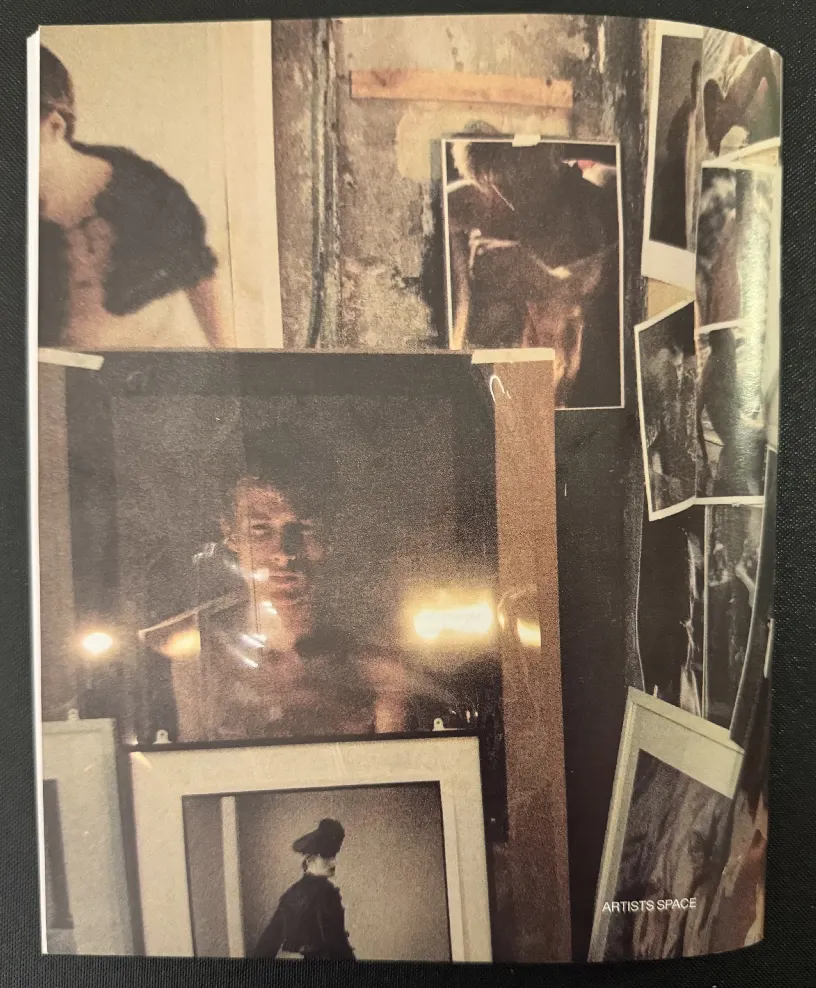
The catalog establishes its self-reflexive premise right from the cover, which features a dense, immersive studio wall arrangement of pinned photographic prints and contact sheets rather than a finished book. Turning to the interior pages, this meditation on physical reproduction shifts into a direct mise en abyme, displaying spreads of actual books and bound volumes laid out within the archival workspace. Together, this interplay between wall-pinned ephemera and bound pages transforms raw studio documentation into a deliberate, tangible preservation of intimacy and countercultural history.












David Armstrong's Portraits exhibition catalog, published by Artists Space, documents the artist's foundational contributions to the Boston School and American portraiture. Chronicling his exploration of queer intimacy, youth culture, and domestic interiority, the catalog captures the tender, melancholic atmosphere that defines his photographic vision.
The catalog establishes its self-reflexive premise right from the cover, which features a dense, immersive studio wall arrangement of pinned photographic prints and contact sheets rather than a finished book. Turning to the interior pages, this meditation on physical reproduction shifts into a direct mise en abyme, displaying spreads of actual books and bound volumes laid out within the archival workspace. Together, this interplay between wall-pinned ephemera and bound pages transforms raw studio documentation into a deliberate, tangible preservation of intimacy and countercultural history.