Copyright ©
Rafal Milach
or applicable right holders.


Which art books, prints and posters are available by and about this artist? Here is a sample of items of interest to a typical collector:


Rafal Milach’s monograph The Winners, published by Gost Books in 2014, offers a rigorous and unflinching examination of institutional conditioning, bureaucracy, and public image-making across post-Soviet Eastern Europe. Situated within Milach’s broader documentary oeuvre, the project investigates the mechanisms of authority and the architecture of state-sponsored propaganda, mapping how collective ideologies imprint themselves onto both physical spaces and individual psyches in countries such as Belarus, Russia, and Ukraine.
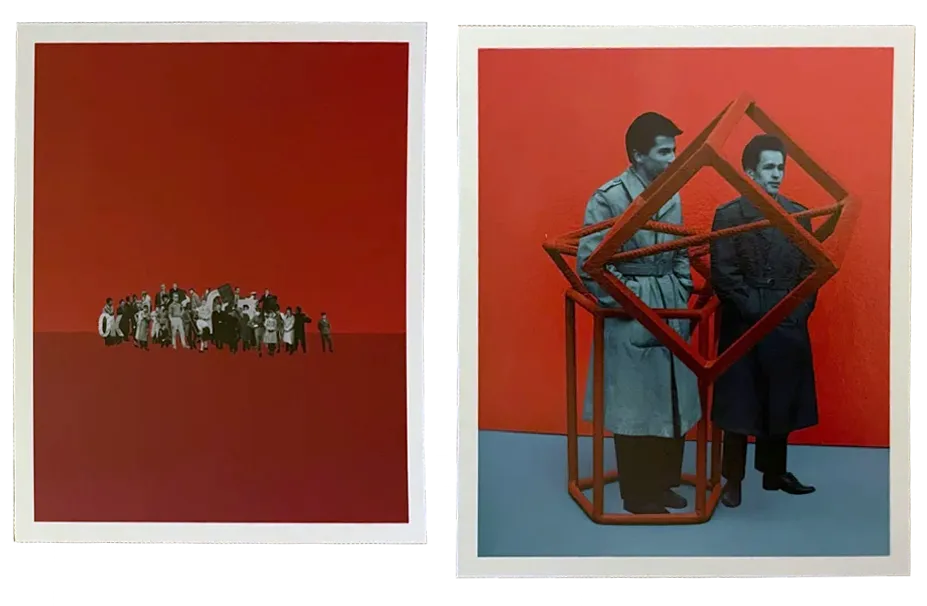
Visually, the book employs a stark, deadpan typological approach that pairs clinical architectural photography with portraits of individuals shaped by state apparatuses. The compositions emphasize sterile interiors, rigid symmetries, and oppressive institutional backdrops that underscore a sense of confinement and ideological surveillance. Through subdued palettes and uncompromising framing, Milach captures the subtle absurdities and quiet weight of systemic control, where human subjects appear as muted actors within towering political frameworks.
This is the limited edition issued with one of the 53 unique prints.


Book is signed and numbered 36/100, prints are signed, unnumbered.

Rafal Milach’s The First March of Gentlemen stands as a conceptual and documentary photobook that investigates the legacy of propaganda, historical memory, and ideology in post-communist Eastern Europe.
Drawing upon archival materials, propaganda photographs, and visual fragments from the Stalinist era in Poland, Milach reconstructs a narrative around the indoctrination of youth and the pervasive architecture of totalitarian control. Rather than presenting a straightforward historical chronology, the publication juxtaposes archival artifacts with contemporary photographs of the physical sites where these historical events unfolded, creating a layered dialogue between past coercion and present-day landscape.