
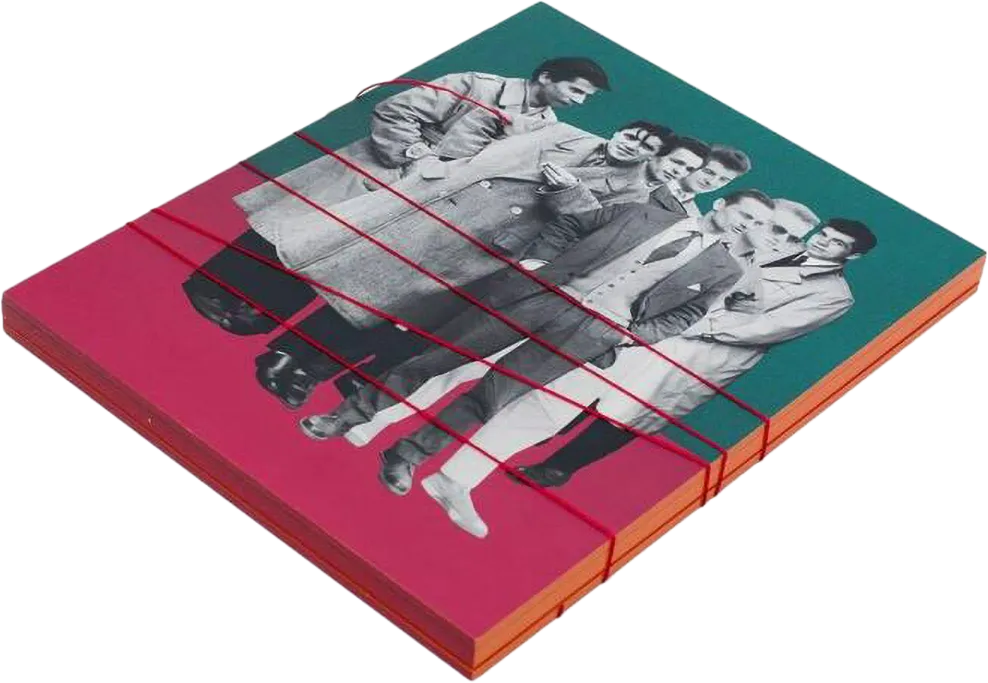
Hardcover with two prints
ISBN:
9781910401170


Rafal Milach’s The First March of Gentlemen stands as a conceptual and documentary photobook that investigates the legacy of propaganda, historical memory, and ideology in post-communist Eastern Europe.
Drawing upon archival materials, propaganda photographs, and visual fragments from the Stalinist era in Poland, Milach reconstructs a narrative around the indoctrination of youth and the pervasive architecture of totalitarian control. Rather than presenting a straightforward historical chronology, the publication juxtaposes archival artifacts with contemporary photographs of the physical sites where these historical events unfolded, creating a layered dialogue between past coercion and present-day landscape.