Which art books, prints and posters are available by and about this artist? Here is a sample of items of interest to a typical collector:
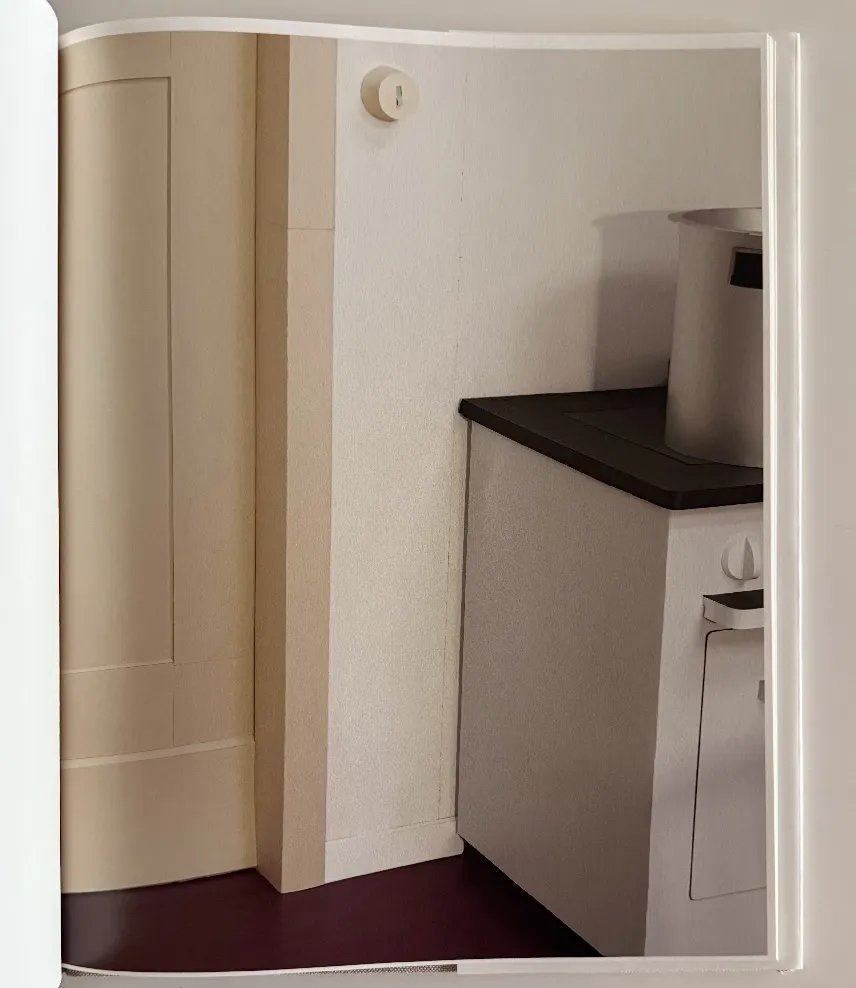
The Stove (Josef Beuys), published as part of Nazraeli Press’s limited Six by Six series, focuses on a singular, charged environment: a reconstruction of the studio space and heating stove belonging to the influential postwar German artist Joseph Beuys. By selecting an intimate, utilitarian object associated with an artist whose own mythos was deeply tied to raw, organic materials, such as fat, felt, and copper, Demand creates a stark conceptual contrast. The book presents a space stripped of Beuys’s characteristic chaos and tactile residue, reducing the heavy, historical weight of the artist's studio into an eerie, weightless paper simulation.
Visually, the work is defined by its artificial perfection and flat, even lighting, which intentionally highlights the absence of genuine texture, dust, or human wear. Upon close inspection, the crisp details reveal the subtle, deliberate imperfections of the papercraft, a slight gap between cardboard seams or the unnatural matte finish of the surfaces. Physically, this oversized hardcover is produced with exacting precision. The high-fidelity printing preserves the flawless, geometric illusion of the photographs, functioning as a sleek, self-contained vessel for Demand’s rigorous structural aesthetic.
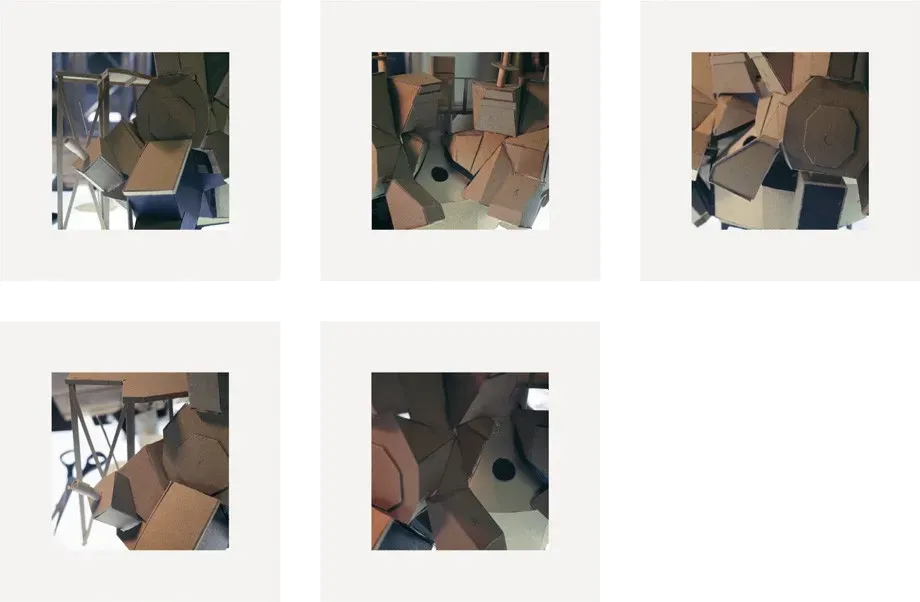
German sculptor and photographer Thomas Demand (born 1964) focuses his lens on the pockets, edges and corners of architectural models made from materials such as paper and cardboard. This volume compiles his first and second studies of such pieces within architects' workshops.
Walther König / Quadrat Bottrop Museum
This is not the 2019 reprint.
This is not the 2023 reprint expanded edition.
Actes Sud / Fondation Cartier
Walther König / Quadrat Bottrop Museum
Walther Koenig / Irish Museum of Modern Art
Modo Verlag
Des Moines Art Center with DCH / Art Montreal


Special book edition of 100 with print. Print had two very slight marks.

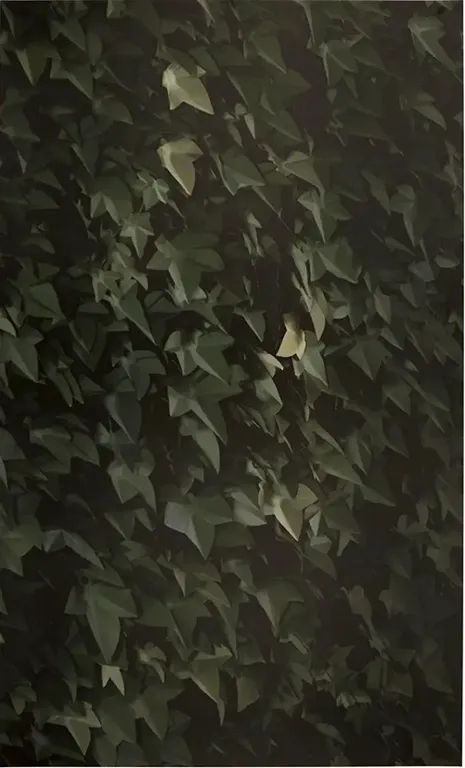
Thomas Demand’s Efeu (Ivy) presents a deceptively naturalistic depiction of a dense, cascading wall of ivy leaves, constructed entirely through the artist’s meticulous process of paper sculpture and large-format photography. Like much of Demand’s oeuvre, the image is based on a found photograph, in this case, a snapshot capturing a specific historical or political site masked behind dense foliage.
Rather than documenting real flora, Demand painstakingly recreates every individual leaf, stem, and surface out of colored paper and cardboard in his studio, only to photograph the paper model and dismantle it immediately afterward. The resulting image hovers in an uncanny space between realism and artificiality, where the crisp precision of the large-format camera clashes with the quiet fragility of the paper medium.

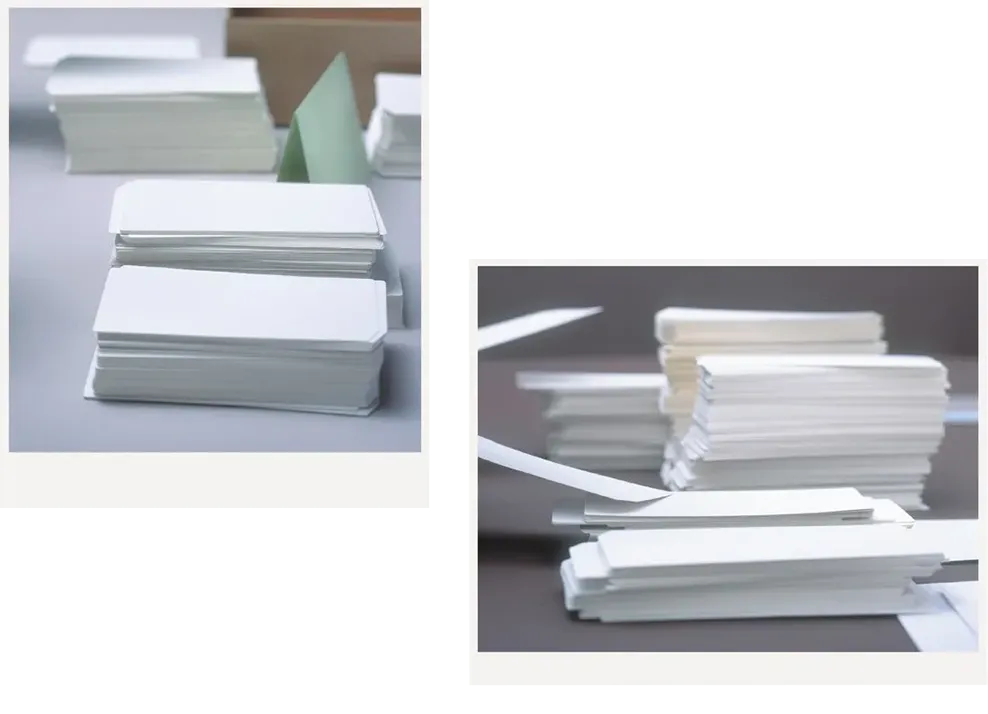
Thomas Demand’s Pile (Stapel) captures an ephemeral, towering stack of printer paper and documents, meticulously reconstructed entirely out of paper and cardstock in his studio before being photographed.
The work is characterized by clean architectural geometry, a muted palette, and an uncanny absence of organic wear or dust, reflecting Demand's signature sterile precision. By transforming disposable office waste and reams of paper into a permanent, staged photographic artifact, he examines the accumulation of ephemera and the physical systems of labor that quietly structure modern studio practice.

Thomas Demand’s The Stove (Joseph Beuys) investigates memory, historical artifact, and the act of artistic reconstruction through the artist's signature photographic process. Based on a historical event or site associated with Joseph Beuys, Demand meticulously reconstructs the subject entirely out of paper and cardboard in his studio before photographing the model and immediately destroying it.
The resulting image captures an uncanny space where the ordinary object, in this case, the stove, is rendered simultaneously hyper-detailed and artificial. By stripping away organic weathering and replacing it with flat, colored paper surfaces, Demand forces the viewer to confront the precariousness of historical preservation and the way photography mediates our relationship to the past.


Print came with the special edition of the Complete Papers catalogue raisonné published by Mack.

Only first of 5 prints is signed and numbered

Open edition unsigned poster.
Thomas Demand, German, born 1964.
Thomas Demand’s work investigates the persistence of images and their ability to embed themselves in a society’s collective memory. He studied sculpture at the Kunstakademie Düsseldorf, where Bernd and Hilla Becher had recently taught a generation of German photographers, including Andreas Gursky, Thomas Struth, and Candida Höfer. Like those artists, Demand often makes mural-scale photographs, but instead of finding his subject matter in landscapes, buildings, and crowds, he uses paper and cardboard to meticulously reconstruct images taken from various media sources, often well-known historical pictures or widely seen photographs from the news. Once he has photographed his re-created environments — always devoid of figures but often displaying evidence of recent human activity — he destroys his models, further complicating the relationship between reproduction and original.
Demand expanded the scope of his practice in 2008 with the series Dailies, photographs of constructions based on his own smartphone snapshots. In another recent series, Model Studies, he photographed scale models by architects such as John Lautner, SANAA, and Hans Hollein. Since 2002 Demand has also made films using stop-motion animation and a slow, painstaking manipulation of his paper and cardboard models.
Thomas Demand (b. 1964) lives and works in Berlin and Los Angeles. He has had one-person exhibitions at museums including the Museum of Modern Art in New York, the Neue Nationalgalerie in Berlin, the Museum of Contemporary Art in Tokyo, Museum Leuven in Belgium, the Garage Museum of Contemporary Art in Moscow, and Fundacíon Botín in Santander, Spain. In 2004 he represented Germany at the São Paulo Bienal.