Copyright ©
W Eugene Smith
or applicable right holders.


Which art books, prints and posters are available by and about this artist? Here is a sample of items of interest to a typical collector:

Lyndhurst Norton

W. Eugene Smith’s W. Eugene Smith Photographs 1934–1975 serves as a definitive retrospective tracking the evolution of one of the twentieth century's most uncompromising photojournalists. Bringing together four decades of landmark work, the volume spans his early graphic reportage and World War II Pacific combat coverage, his revolutionary long-form essays for Life magazine, such as Country Doctor, Spanish Village, and Nurse Midwife, his towering industrial survey of Pittsburgh, and his harrowing final documentation of mercury poisoning in Minamata.
The publication is structured as a chronological and thematic survey that traces Smith's transition from straightforward journalistic assignment work to deeply immersive, subjective photo-essays. By sequencing these milestone projects back-to-back, the book articulates his unwavering commitment to the photograph as a vehicle of moral witness, empathy, and social advocacy.
The volume is distinguished by high-quality duotone and monochrome plate printing that meticulously preserves Smith's legendary darkroom mastery.

W. Eugene Smith’s W. Eugene Smith: The Big Book operates as a monumental, definitive compendium celebrating the breadth and uncompromising vision of one of American photojournalism's most profound moral voices. Serving as a massive physical and editorial survey, the publication brings together Smith's most iconic essays, from his harrowing World War II combat photography and landmark Life magazine portfolios like Country Doctor and Spanish Village to his exhaustive Pittsburgh industrial undertaking and final masterwork Minamata.
University of Texas Press
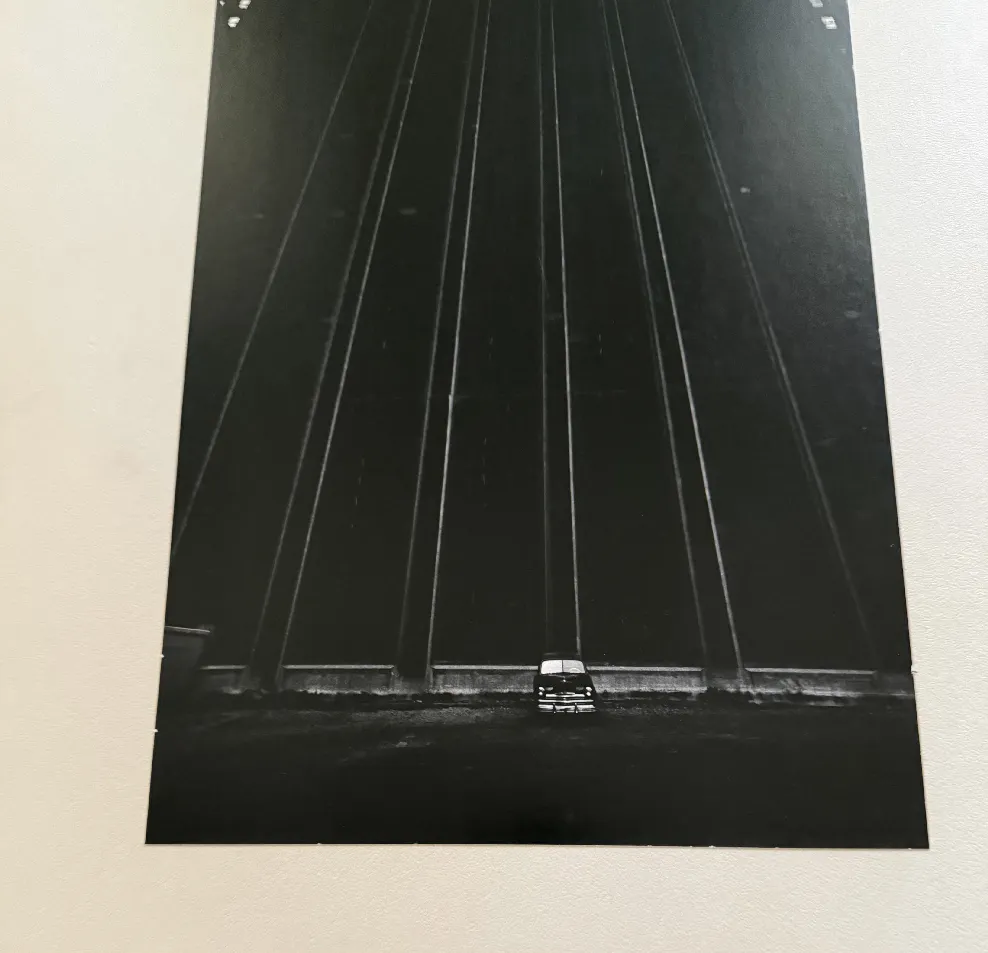

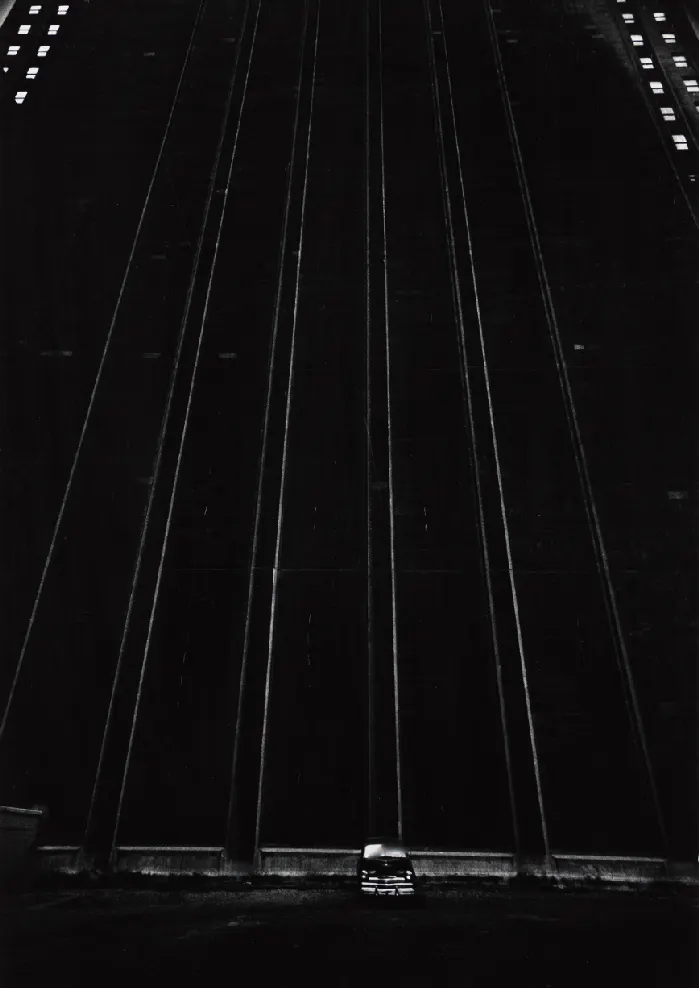
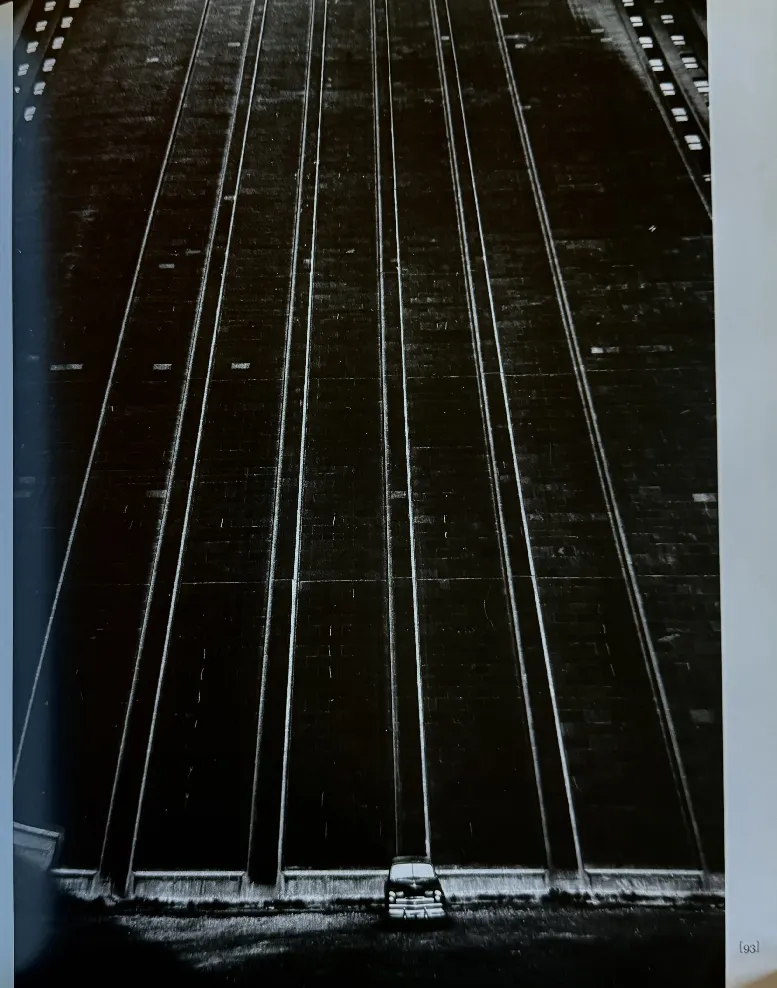
Lines of Steel (1955) is an iconic image from Smith's legendary Pittsburgh project, an ambitious, deeply immersive photo-essay commissioned in 1955 by Free Lance-Photo News (and later expanded into his most exhaustive independent labor of love) documenting the social, economic, and industrial life of Pittsburgh, Pennsylvania. Rather than delivering a routine corporate or industrial reportage, Smith approached the heartland of American heavy manufacturing with the intensity of a classical history painter, embedding himself in the city for over a year and producing tens of thousands of negatives that captured the sublime, punishing reality of the steelmaking empire at its historical peak.
Visually, the work is defined by an uncompromising darkroom mastery, where deep, velvety shadows and stark tonal contrasts accentuate the immense weight of the industrial structure. The towering overhead structural beams converge along a rigorous perspectival axis, creating a cavernous, cathedral-like vault that emphasizes the cold, relentless magnitude of mid-century manufacturing.

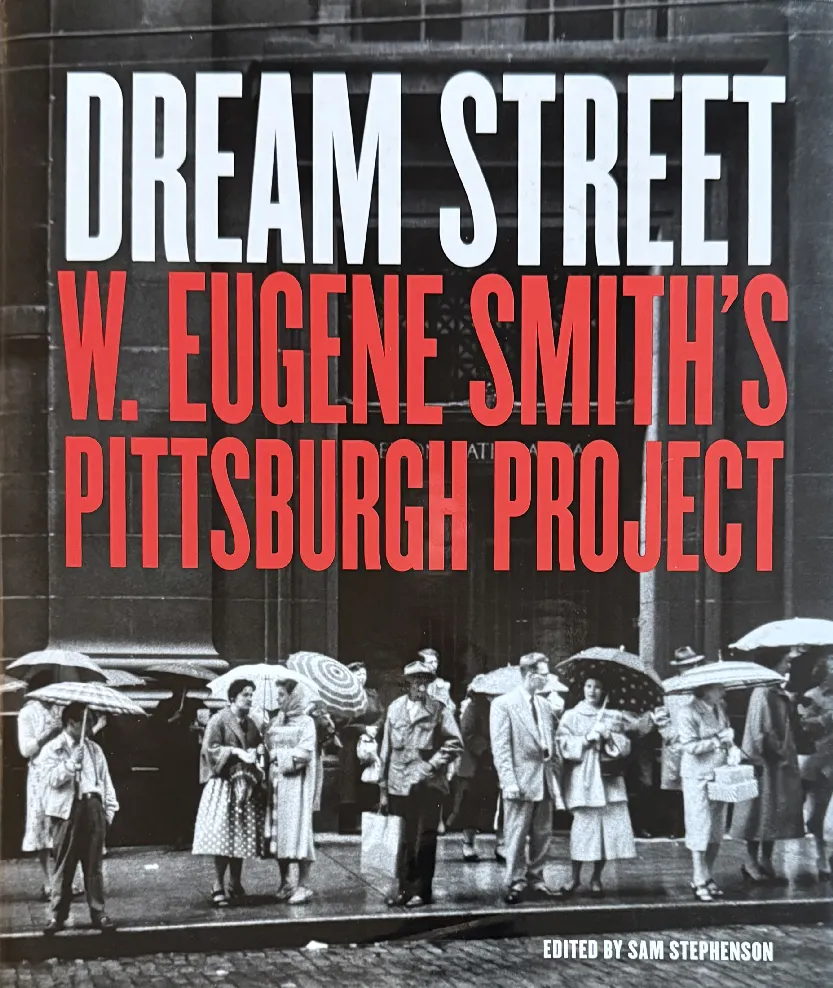
W. Eugene Smith's Pittsburgh Project stands as one of the most ambitious and immersive undertakings in the history of documentary photography. Initiated in 1955 after Smith abruptly resigned from Life magazine in pursuit of complete creative autonomy, the project was originally conceived as a modest three-week assignment to photograph Pittsburgh for a industrial development book. Instead, Smith became consumed by the city's labyrinthine social, economic, and topographical complexity, remaining there for over a year and accumulating a staggering archive of roughly 11,000 negatives.
While the broader project encompasses surveys of industrial plants, steel mills, and heavy infrastructural engineering, its true conceptual core lies in how it frames the human ecosystem caught in the shadow of that industrial might. Smith focused intently on Pittsburgh's historic Hill District, a vibrant, predominantly African American neighborhood undergoing the destructive pressures of mid-century urban renewal and industrial decline. By intertwining sweeping views of industrial manufacturing with intimate, street-level encounters of everyday community life, children playing on steep staircases, and neighbors congregating on stoops, Smith created a profound sociological portrait of a city at a historic crossroads.
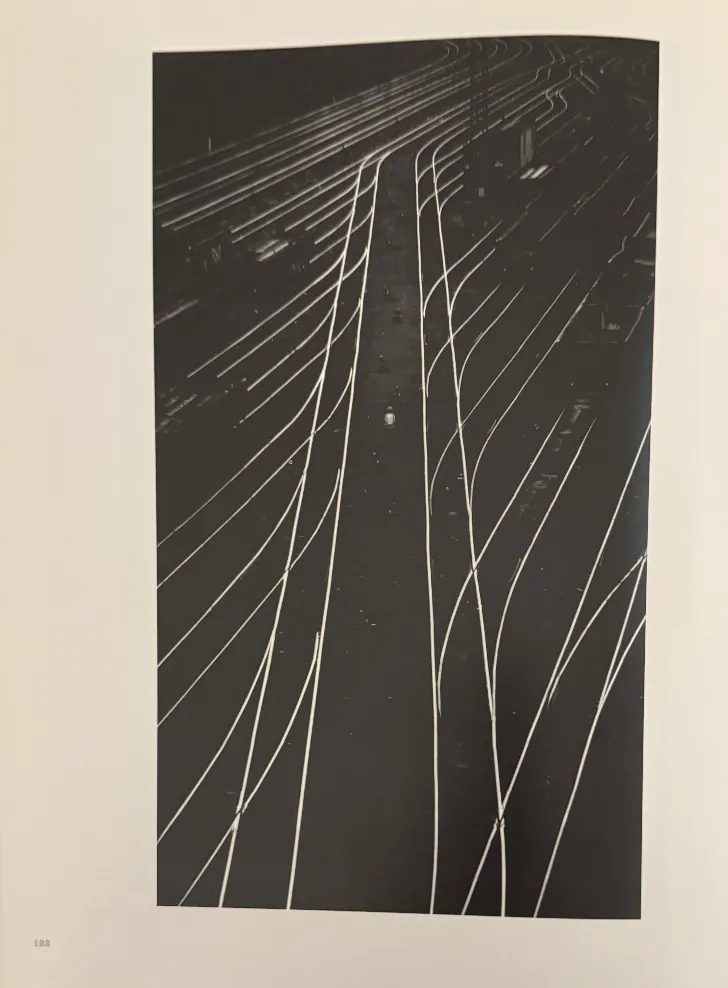
Smith's mastery of high-contrast printing, deep velvety shadows, and dramatic chiaroscuro transforms both the industrial floor and the urban street into stages of immense psychological gravity, preserving the fragile human history and monumental scale of a transformed era.