
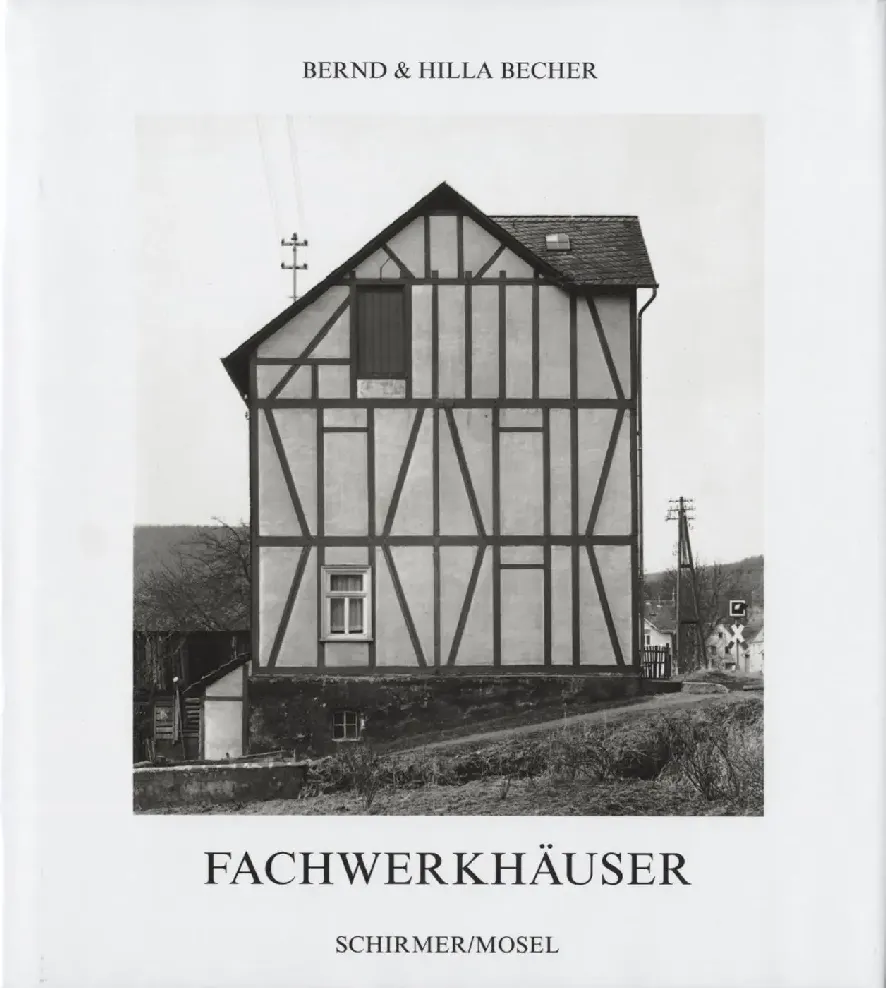


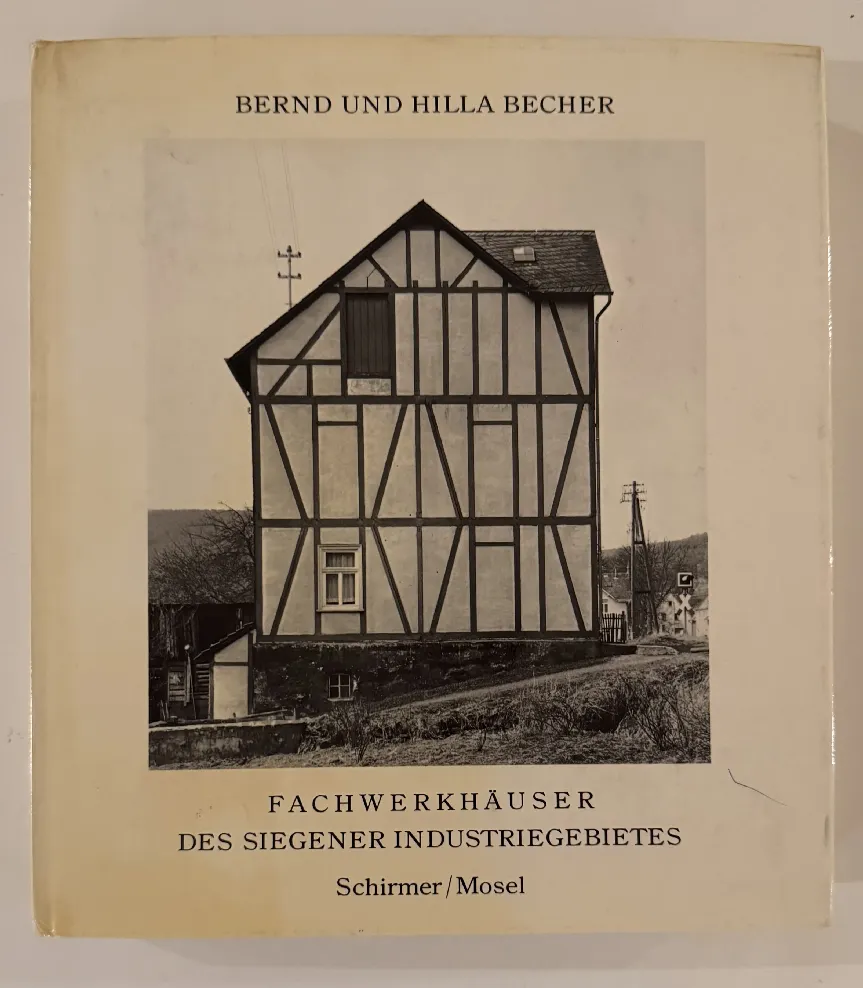
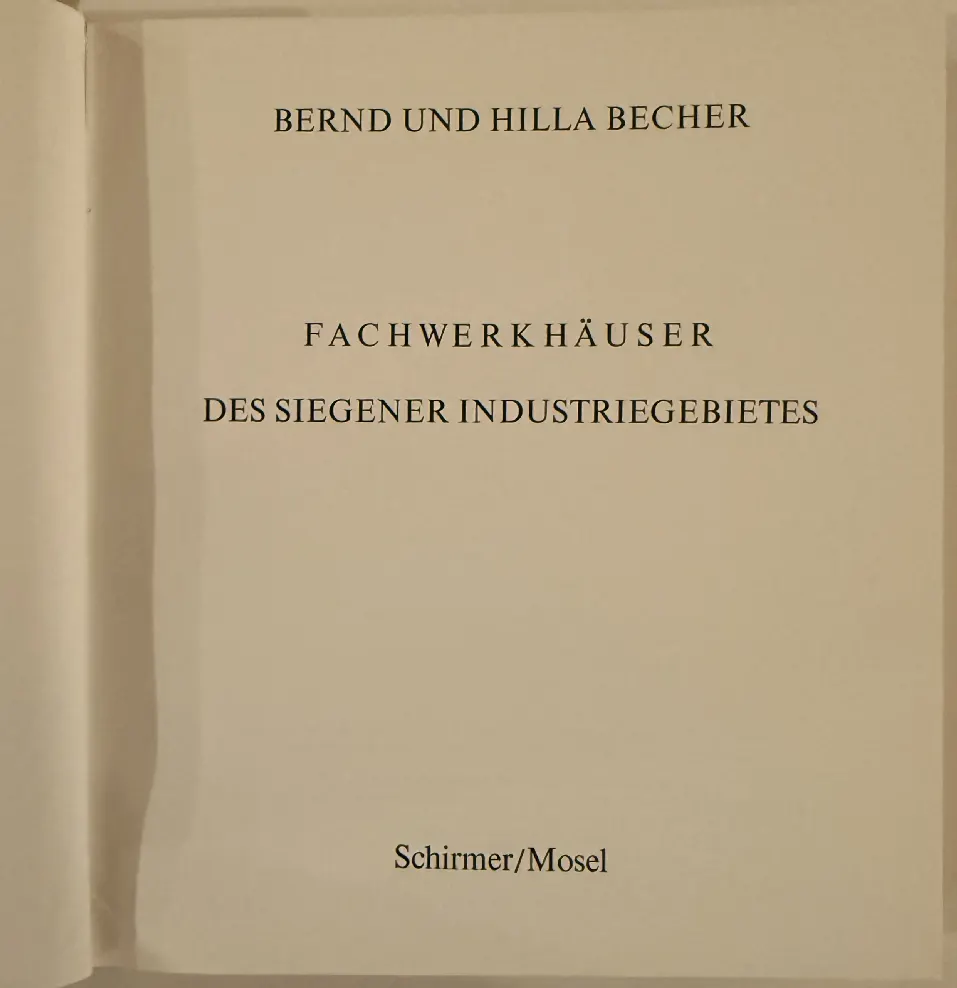
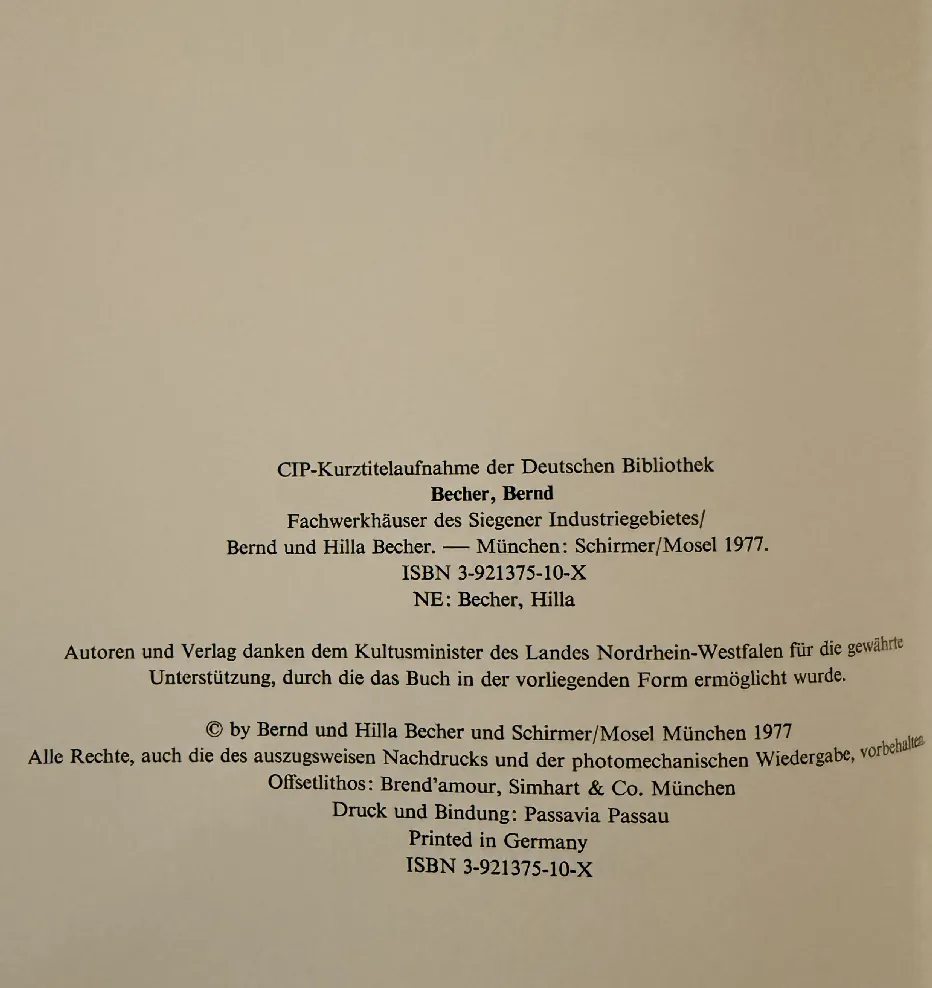
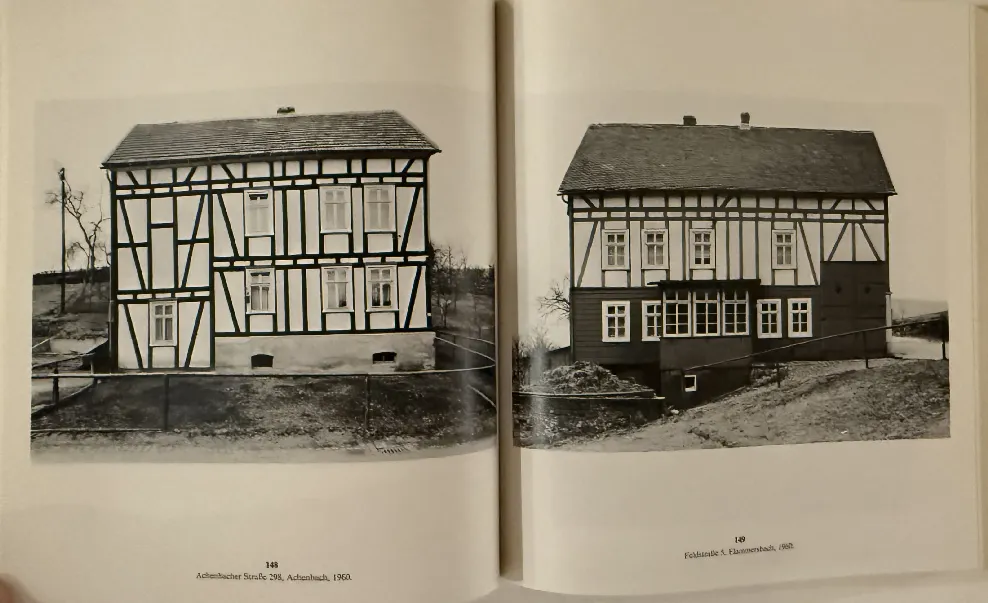
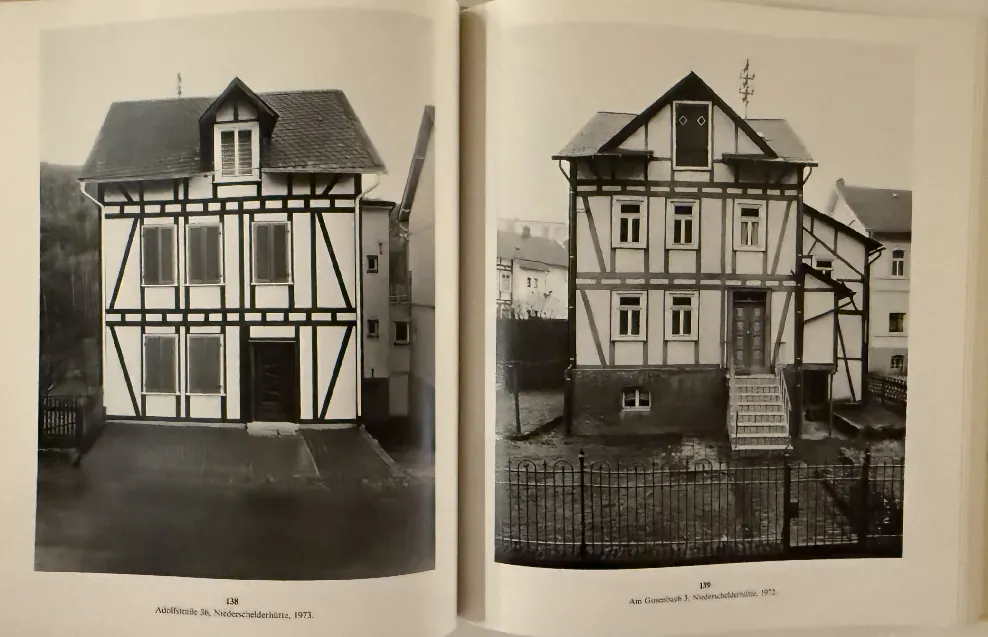
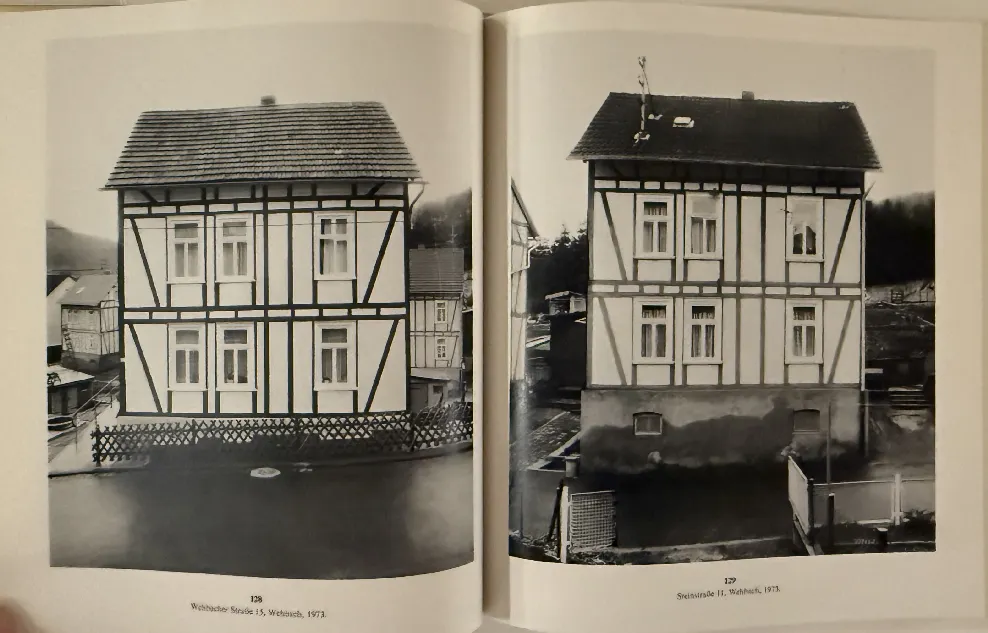
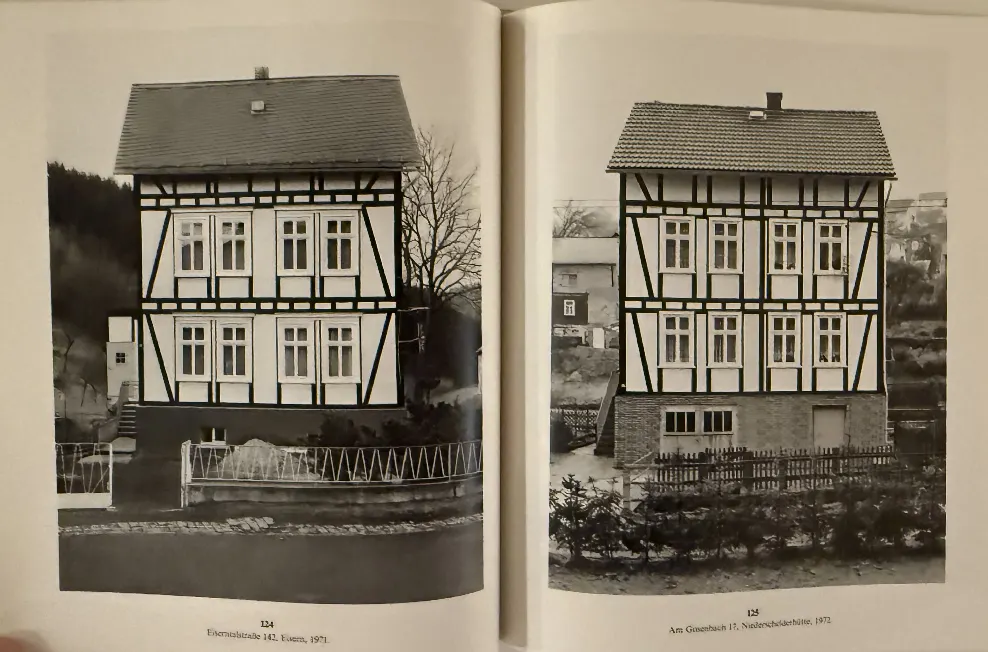
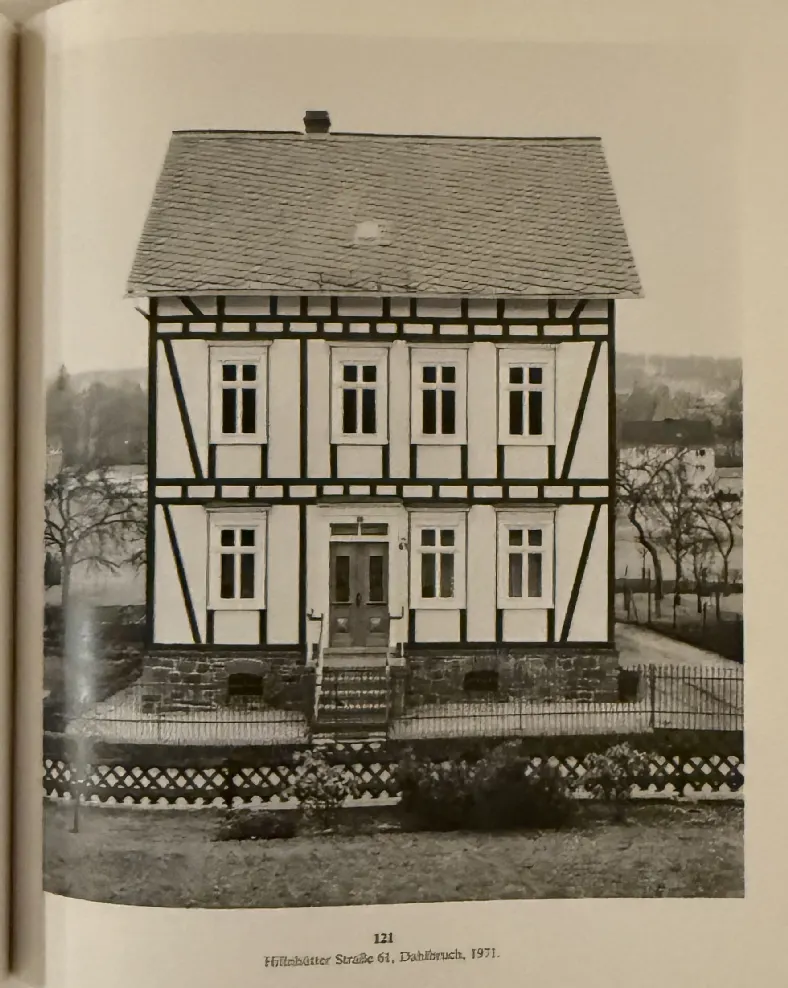
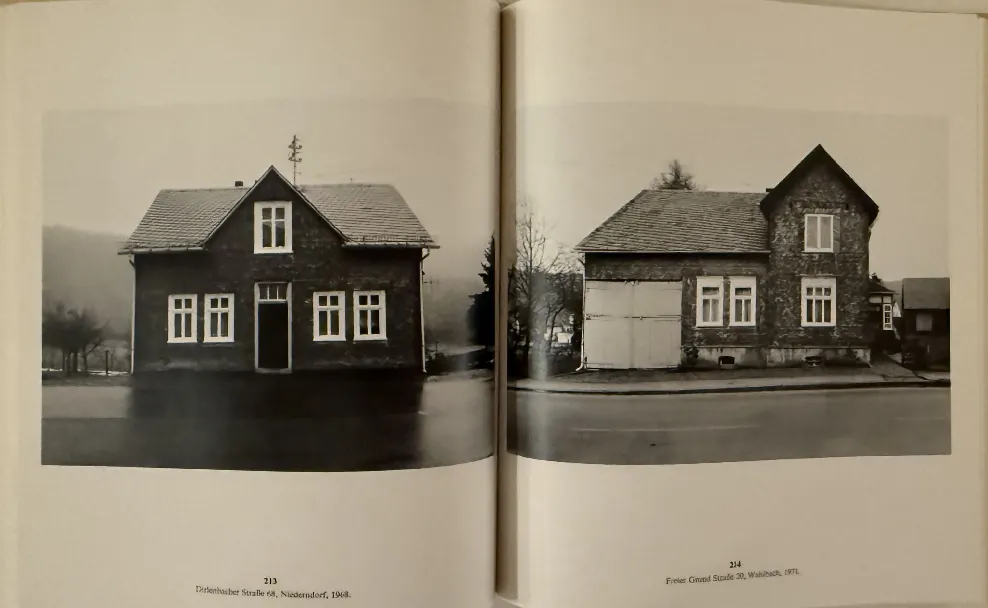
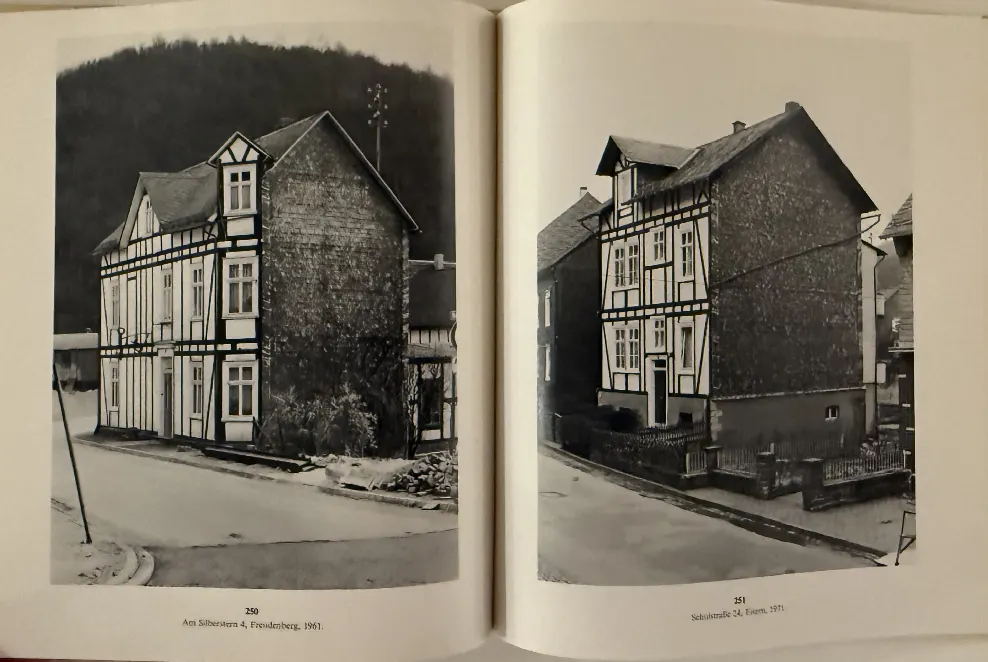
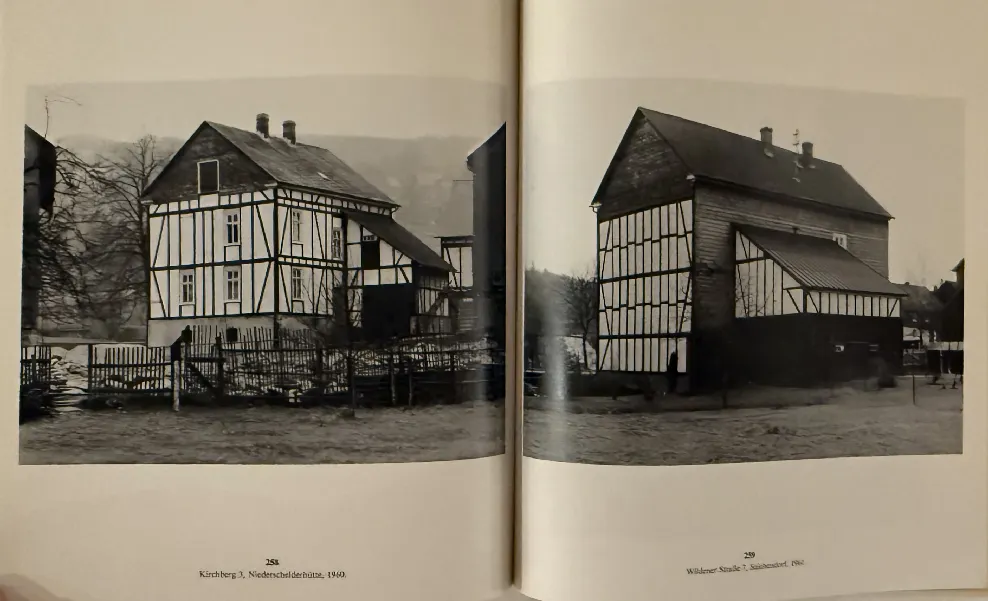

Fachwerkhäuser des Siegener Industriegebietes (Framework Houses of the Siegen Industrial Region), published by Schirmer/Mosel in 1977, is a seminal photobook that holds a highly unique and foundational position within the monumental body of work created by Bernd and Hilla Becher.
While the Bechers are globally renowned for their systematic documentation of heavy industrial monuments, such as blast furnaces, water towers, and cooling towers, this specific project marks the very beginning of their lifelong artistic collaboration.
Bernd Becher, a native of the Siegen region, initially began capturing the local iron-ore mines and industrial vernacular through drawings and lithographs in the late 1950s. Realizing that rapid structural changes and demolition were outpacing his ability to draw, he turned to photography to document the structures before they disappeared. After meeting Hilla Wobeser at the Düsseldorf Academy, they began photographing these half-timbered workers' houses together in 1959, a project they sustained until 1978.
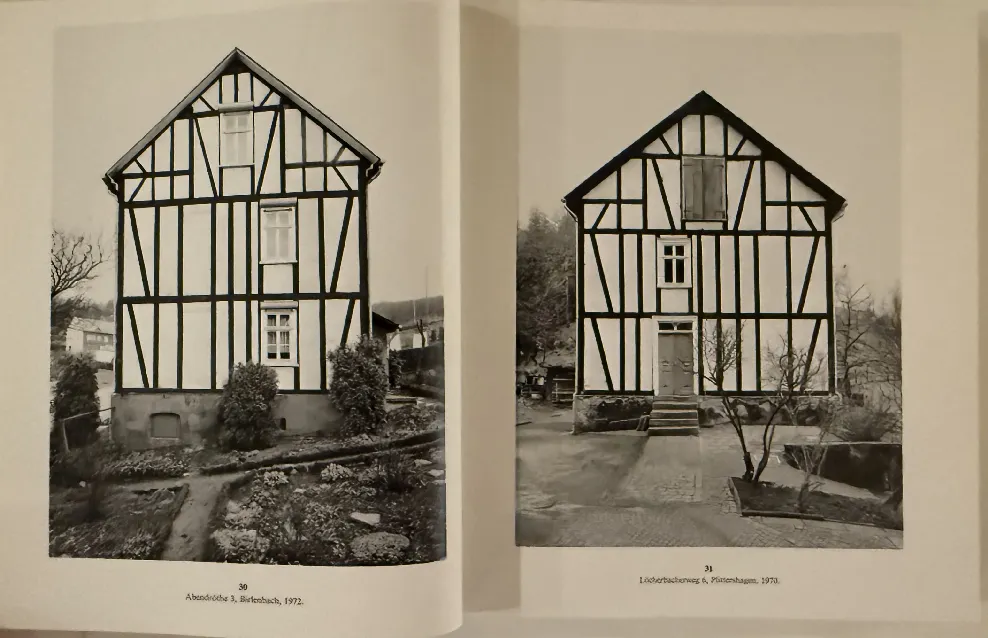
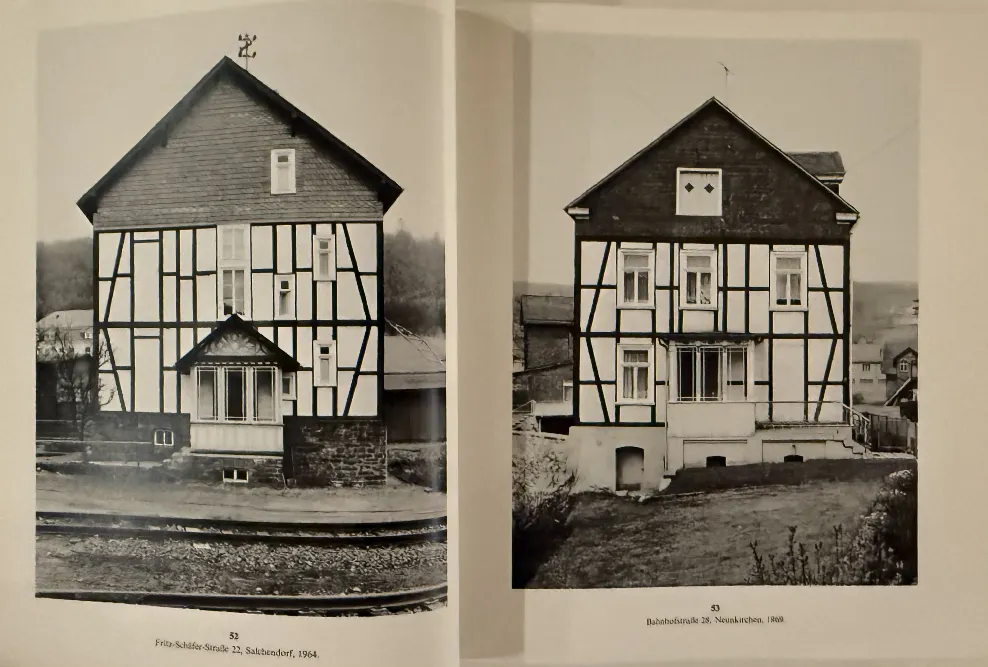
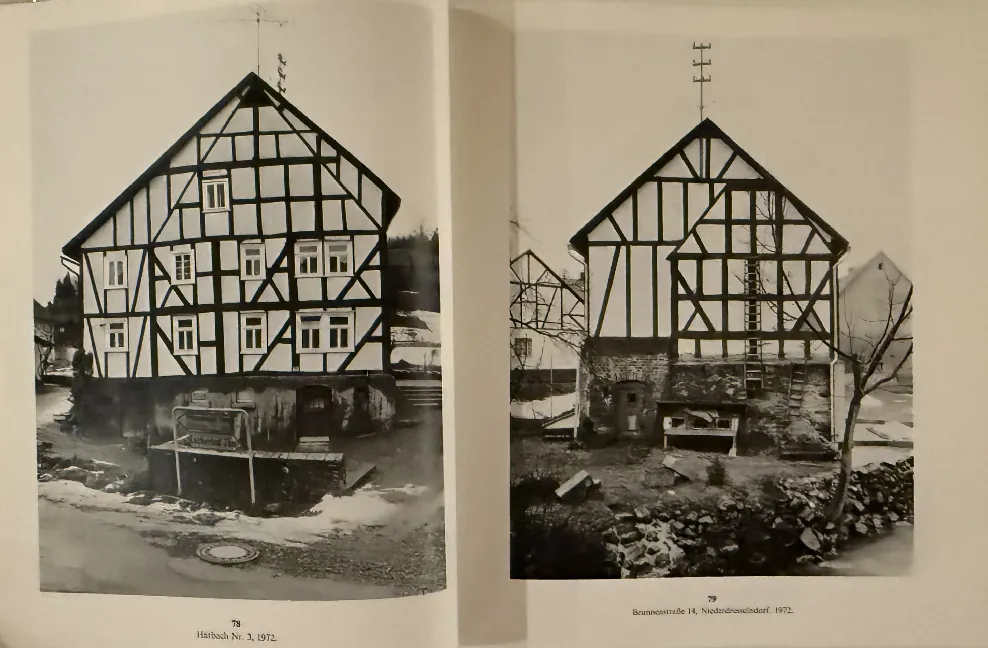
The houses themselves are unique historical artifacts. Because the Siegen area was an ancient iron-producing region, local laws historically regulated wood consumption, ,reserving timber heavily for the charcoal needed in iron smelting. This self-imposed economic restriction yielded highly standardized, strictly optimized, geometric timber framing, creating an unintentional architectural grid.
It was during the documentation of these Fachwerkhäuser that the couple established the rigid, objective photographic framework that would define the Düsseldorf School of Photography:
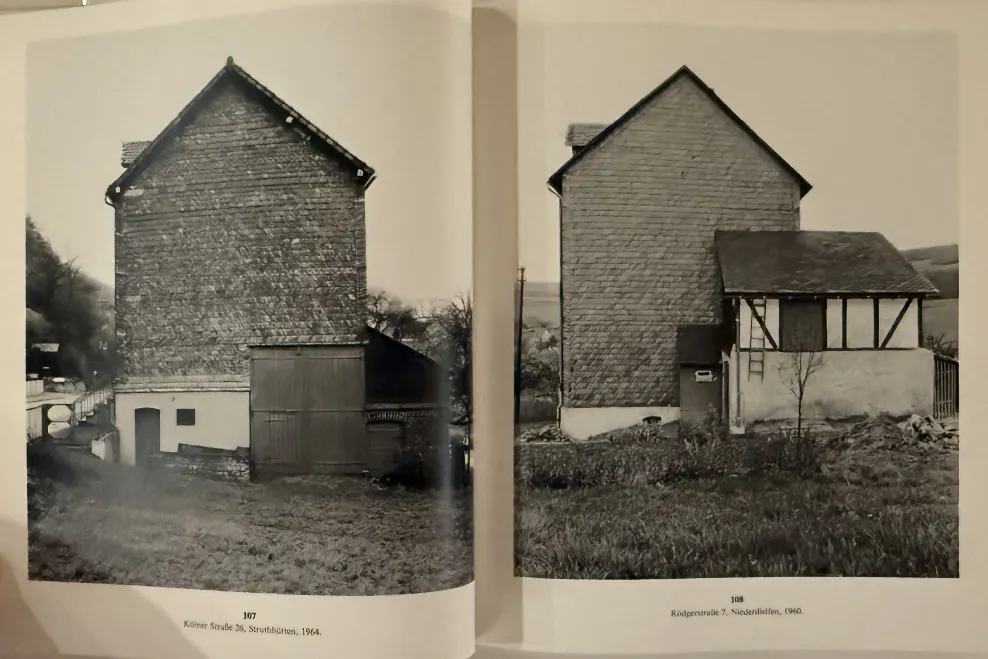
This body of work crystallizes the concept of the photographic typology, arranging groups of structurally similar objects into comparative grids.
By displaying these photographs side-by-side, individual variations in brick, slate tiling, and timber pattern become apparent within a singular, functional architectural family. Sculptor Carl Andre famously highlighted this work in Artforum (1972), noting how the Bechers successfully positioned their work at the threshold of documentary history, Conceptual Art, and New Topographics.
The 1977 first edition remains a major historical milestone, serving as the definitive printed monument to the project that birthed modern conceptual architectural photography.
â€

Fachwerkhäuser des Siegener Industriegebietes (Framework Houses of the Siegen Industrial Region), published by Schirmer/Mosel in 1977, is a seminal photobook that holds a highly unique and foundational position within the monumental body of work created by Bernd and Hilla Becher.
While the Bechers are globally renowned for their systematic documentation of heavy industrial monuments, such as blast furnaces, water towers, and cooling towers, this specific project marks the very beginning of their lifelong artistic collaboration.
Bernd Becher, a native of the Siegen region, initially began capturing the local iron-ore mines and industrial vernacular through drawings and lithographs in the late 1950s. Realizing that rapid structural changes and demolition were outpacing his ability to draw, he turned to photography to document the structures before they disappeared. After meeting Hilla Wobeser at the Düsseldorf Academy, they began photographing these half-timbered workers' houses together in 1959, a project they sustained until 1978.
The houses themselves are unique historical artifacts. Because the Siegen area was an ancient iron-producing region, local laws historically regulated wood consumption, ,reserving timber heavily for the charcoal needed in iron smelting. This self-imposed economic restriction yielded highly standardized, strictly optimized, geometric timber framing, creating an unintentional architectural grid.
It was during the documentation of these Fachwerkhäuser that the couple established the rigid, objective photographic framework that would define the Düsseldorf School of Photography:
This body of work crystallizes the concept of the photographic typology, arranging groups of structurally similar objects into comparative grids.
By displaying these photographs side-by-side, individual variations in brick, slate tiling, and timber pattern become apparent within a singular, functional architectural family. Sculptor Carl Andre famously highlighted this work in Artforum (1972), noting how the Bechers successfully positioned their work at the threshold of documentary history, Conceptual Art, and New Topographics.
The 1977 first edition remains a major historical milestone, serving as the definitive printed monument to the project that birthed modern conceptual architectural photography.
â€