
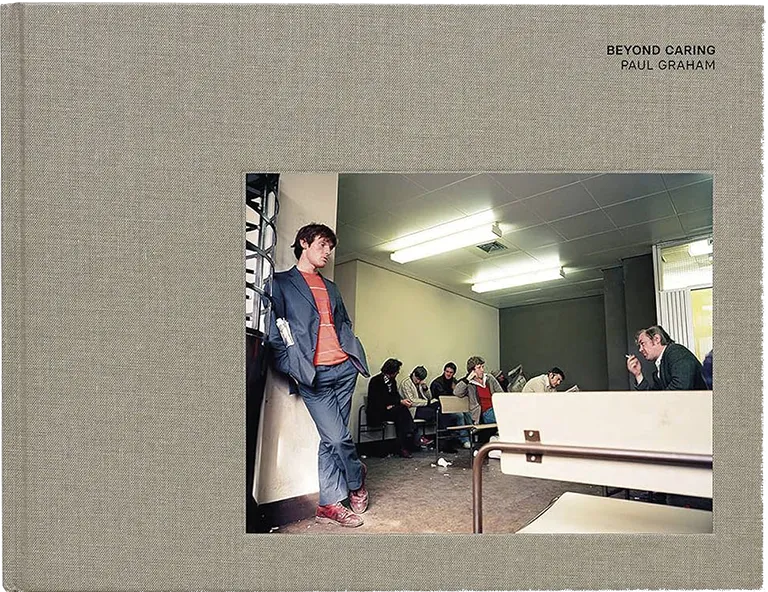
Hardcover without dust jacket, as issued
ISBN:
9781913620127


Paul Graham’s Beyond Caring stands as a seminal, empathetic documentary photobook chronicling the bleak realities of the British welfare and unemployment system during the height of Margaret Thatcher’s administration in the mid-1980s.
Commissioned to investigate the state bureaucracy encountered by the working class, Graham gained unprecedented access to drab, fluorescent-lit social security offices, dole queues, and waiting rooms across Britain. His photographs capture the profound indignity, institutional alienation, and quiet despair etched into the faces of citizens navigating endless forms and impersonal counters. By utilizing candid, unvarnished color, a radical departure from the traditional gritty black-and-white documentary style of the era, he exposes the stark, fluorescent reality of state neglect with unsparing clarity.
Beyond Caring marked a critical milestone for Graham that established his reputation as a pioneer of British color documentary photography. It bridged his early political investigations into institutional power with his nuanced psychological portrayals of contemporary society, cementing the book as a powerful indictment of systemic indifference.