Which art books, prints and posters are available by and about this artist? Here is a sample of items of interest to a typical collector:
Signed on tipped-in print on the flipside of the back cover. This is the first reprint of the iconic 1983 book.
Paul Graham’s Beyond Caring stands as a seminal, empathetic documentary photobook chronicling the bleak realities of the British welfare and unemployment system during the height of Margaret Thatcher’s administration in the mid-1980s.
Commissioned to investigate the state bureaucracy encountered by the working class, Graham gained unprecedented access to drab, fluorescent-lit social security offices, dole queues, and waiting rooms across Britain. His photographs capture the profound indignity, institutional alienation, and quiet despair etched into the faces of citizens navigating endless forms and impersonal counters. By utilizing candid, unvarnished color, a radical departure from the traditional gritty black-and-white documentary style of the era, he exposes the stark, fluorescent reality of state neglect with unsparing clarity.
Beyond Caring marked a critical milestone for Graham that established his reputation as a pioneer of British color documentary photography. It bridged his early political investigations into institutional power with his nuanced psychological portrayals of contemporary society, cementing the book as a powerful indictment of systemic indifference.
Graham’s Films represented a conceptual pivot away from the socio-political narratives of his broader documentary practice. Rather than presenting the American landscape or urban life that characterized series like A Shimmer of Possibility or The Present, this project turns the apparatus inward to examine the raw material of the medium itself. The book consists entirely of scanned images of the unexposed, blank ends of the various rolls of film Graham shot over his career. By stripping away the representational image, Graham isolates the chemical and physical architecture of analog photography, creating a visual catalog of the medium's inherent flaws and latent possibilities.
Graham’s New Europe originates from a period of historical transition, capturing the continent between 1986 and 1992, an era defined by the fall of the Berlin Wall and the uneasy march toward a unified European Union. Rather than photographing major political events, Graham focused on the psychological undercurrents of a landscape awkwardly attempting to forge an optimistic future while remaining deeply haunted by the traumas of the twentieth century. This body of work investigates a kind of collective amnesia, exploring how the shadows of dictatorships, war, and historical trauma linger just beneath the surface of modern, everyday life.
The content of the book oscillates between the banal and the historically burdened. Graham sequences blank, introspective portraits of young Europeans alongside tightly cropped images of scarred environments, discarded consumer goods, and mundane spaces. By juxtaposing everyday scenes, such as a sticky nightclub floor, a rusted metal door, or a simple ash tray; with the invisible weight of history, he constructs a narrative that is fragmented, poetic, and deeply unsettling.
Included in Parr/Badger Vol 2
Paul Graham’s Retrospective surveyed the mid-career trajectory of a photographer whose rigorous, evolving approach redefined contemporary color documentation. Spanning his early investigations into social and economic landscapes through to his complex, multi-frame narratives, the monograph traces how Graham mapped the structural and psychological realities of modern society.
The work highlights his formalist commitment to examining the mundane, overlooked surfaces of the everyday. By eschewing sensationalism in favor of an objective yet deeply observant viewpoint, Graham uses color, light, and duration to question how institutional and domestic spaces shape human experience.
Within his broader output, this retrospective volume stands as a definitive overview of his transition from stark political critique to a more luminous, phenomenological investigation of time, perception, and visual representation.
Signed on tipped-in print on the flipside of the back cover.
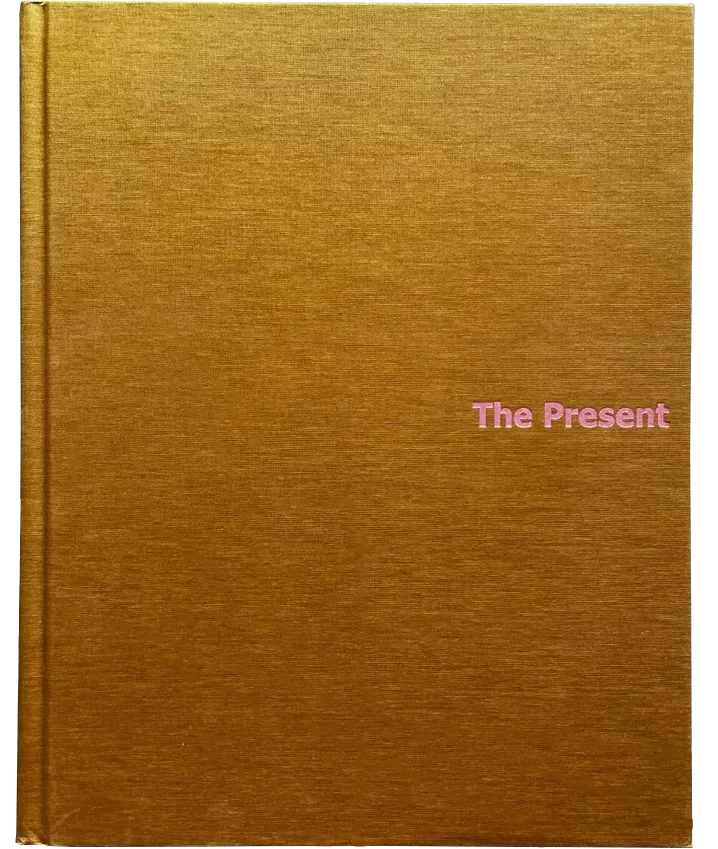
Published by MACK in 2012, The Present is the final installment in Paul Graham’s trilogy of photographic projects exploring contemporary America, following American Night (2003) and a shimmer of possibility (2007).
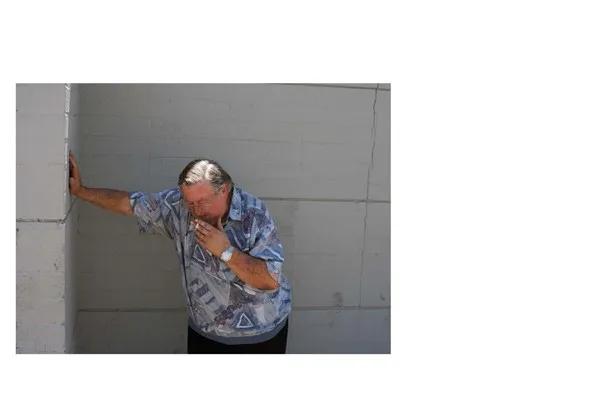
The book re-examines the traditional genre of New York street photography through a distinct structural approach. Shot on the streets of New York, the images are presented in pairs or short sequences taken from the exact same vantage point, separated only by fractions of a second or a slight shift in focus.
While American Night manipulated light (aperture) and a shimmer of possibility manipulated time (shutter), The Present focuses on selective depth of field and human consciousness. A slight rack focus or step in time shifts the viewer’s attention from one individual to another within the same crowded street space.
Rather than capturing a singular "decisive moment," the paired images highlight the provisional, unscripted nature of everyday life, where narrative focus shifts instantly as people move through the frame.
The physical book uses 13 custom gatefold pages (unfolding horizontal and vertical spreads) to physically mimic the act of looking, revealing the second or third image in a sequence as the reader unfolds the page.
True to Graham’s photobook design philosophy, the main body contains no accompanying text or captions, allowing the rhythm of the visual pairs to drive the narrative.
The Errata Editions: Books on Books series is uniquely relevant to the Bushwick sur Seine collection due to its fascinating concept of reproducing a book within a book. Rather than a standard facsimile or replica format, these editions present the original work with its own physical pages and margins visibly documented. While this approach was likely conceived to navigate copyright complexities surrounding long out-of-print titles, the resulting act of reprinting, recontextualizing, and reappropriation aligns perfectly with the core themes of this archive.
The actual full-size second edition of the book is included in the collection.

Special book edition with 15 unique prints
.webp)
Paul Graham’s Untitled, Paris, 1988 (Man on Metro) stands as a pivotal image from his seminal New Europe series, embodying the photographer's characteristic interrogation of the contemporary sociopolitical landscape beneath the glossy veneer of institutional modernity.
Captured inside the transit system of the French capital, the composition investigates the quiet, alienating rhythms of everyday urban transit. Graham uses natural, unvarnished color and documentary directness to frame a solitary commuter, turning an ordinary moment of public exhaustion into a poignant study of individual interiority contrasted against anonymous collective infrastructure.
Within Graham’s broader oeuvre, the work bridges his early investigations into political and institutional power structures with his later, more phenomenological explorations of human perception and duration. It underscores his enduring commitment to examining how the lingering weight of history and modern displacement manifest in the quiet, overlooked margins of contemporary life.
Paul Graham (born 1956, Stafford, UK) is a British fine-art and documentary photographer based in New York City. He is widely recognized for pioneering the deliberate use of color photography within social documentary practice in the early 1980s, a medium previously dominated by traditional black-and-white photojournalism.
Graham gained international attention with a trilogy of books examining contemporary social and political realities in the United Kingdom:
Throughout the late 1980s and 1990s, Graham expanded his geographical scope across Europe and Asia:
After moving to the United States, Graham developed multi-layered visual structures reflecting social division and quiet daily phenomena:
Major Awards & Collections
His work is held in major international public collections, including the Museum of Modern Art and the Solomon R. Guggenheim Museum in New York, the Tate Gallery and Victoria & Albert Museum in London, and the Fotomuseum Winterthur.