
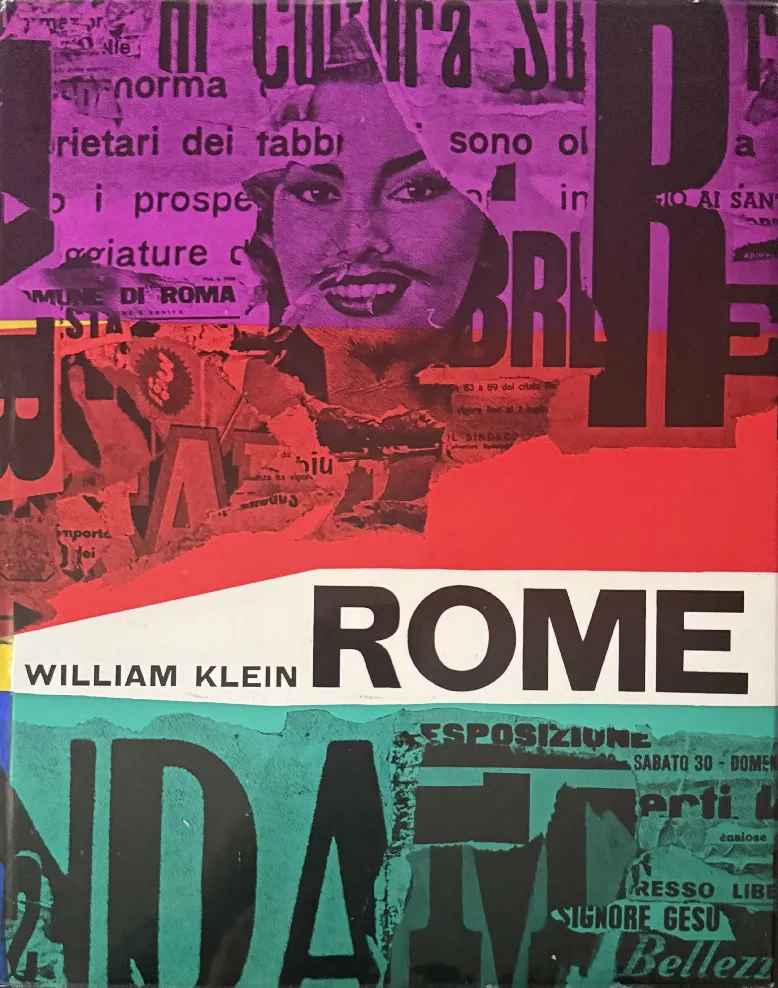


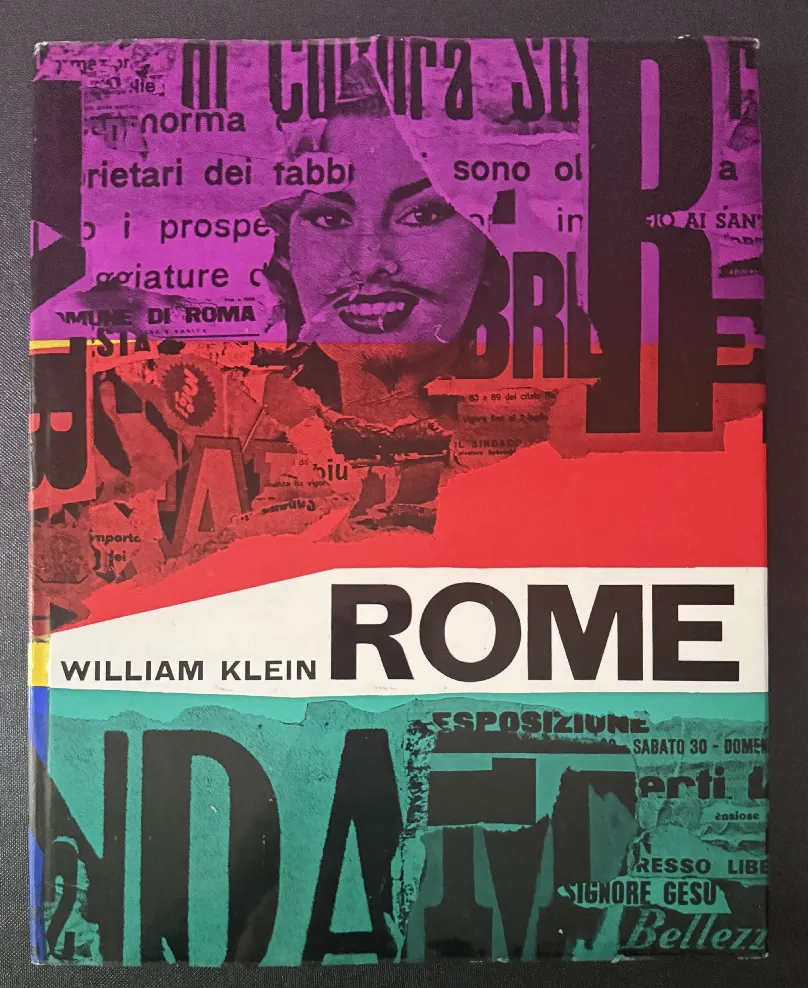
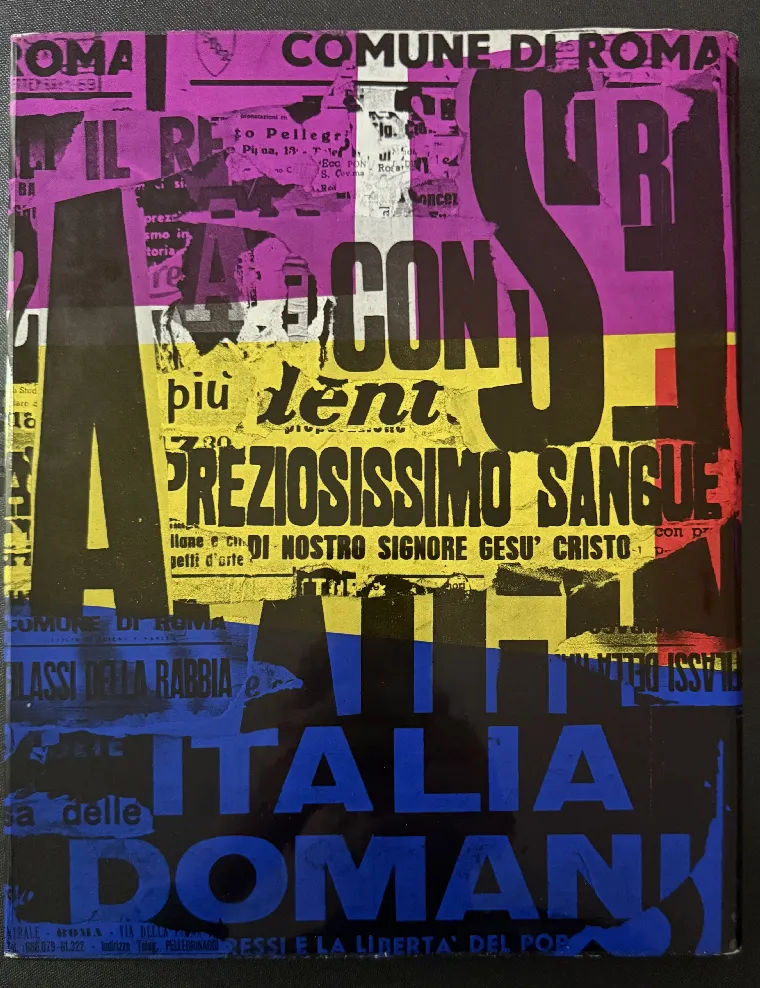
Rome (1959) by Klein is widely regarded as one of the seminal photobooks of the 20th century. Published by Éditions du Seuil in Paris, it stands as the second volume in Klein's iconic "city series," following his acclaimed Life Is Good & Good for You in New York (1956).
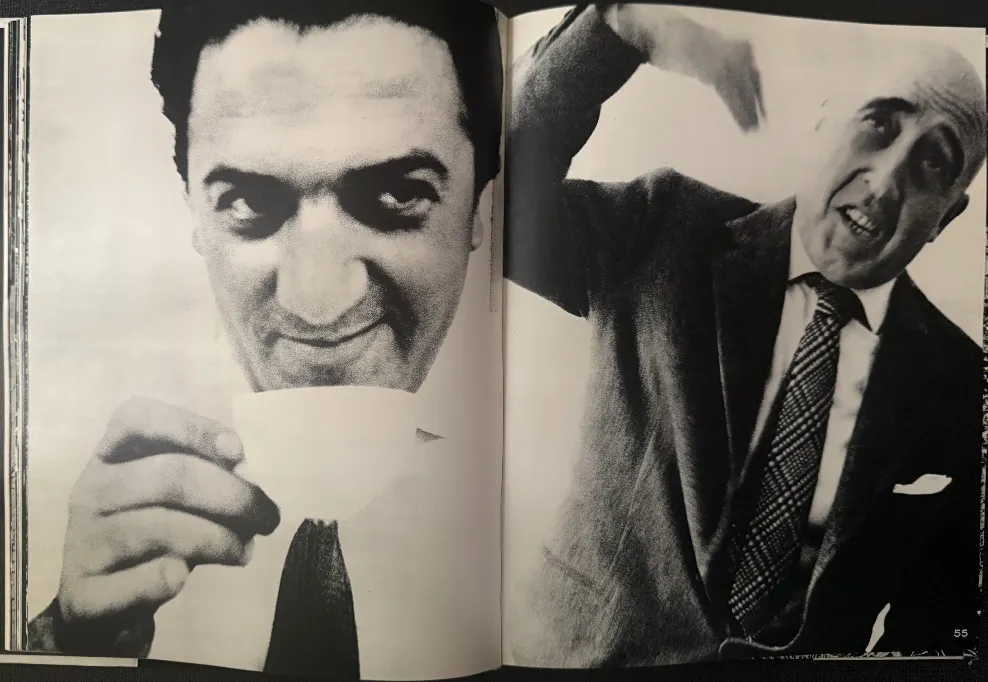
In 1956, Italian director Federico Fellini invited Klein to Rome to serve as an assistant director on his film Nights of Cabiria. When production on the film was unexpectedly delayed, Klein spent weeks exploring the streets, neighborhoods, and outskirts of the city with a camera in hand. He was frequently guided by local cultural luminaries, including Fellini, writer Alberto Moravia, and poet/filmmaker Pier Paolo Pasolini.
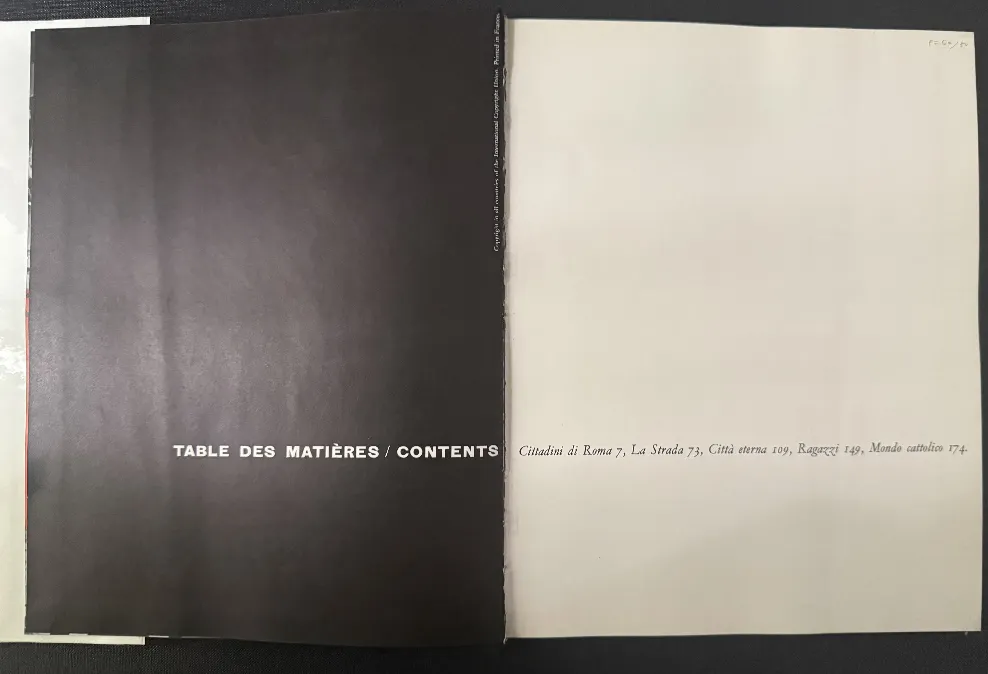
Unlike the confrontational, claustrophobic energy of his New York work, Klein found Roman subjects willing and eager to interact with his lens. The book presents a dynamic, raw visual diary of post-war Rome across five thematic chapters:
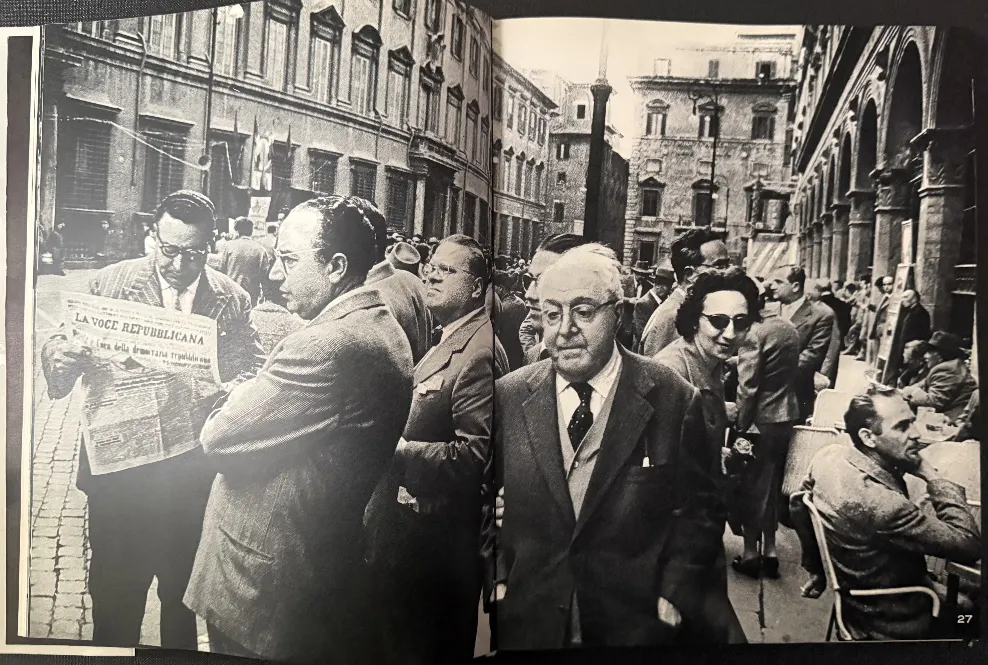
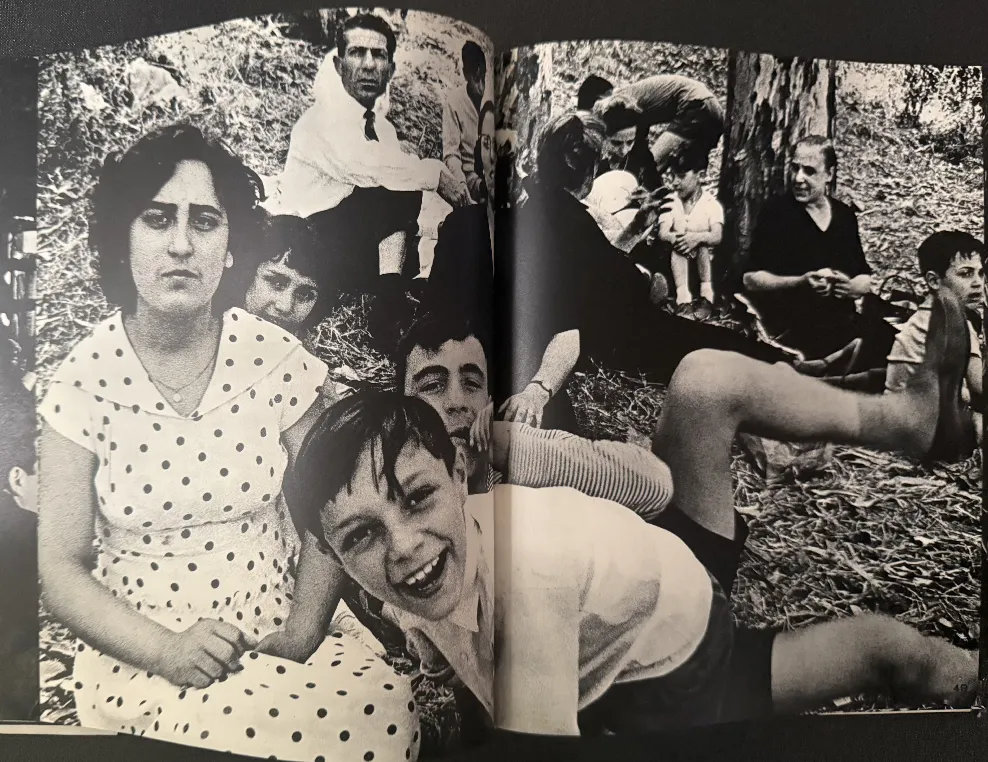
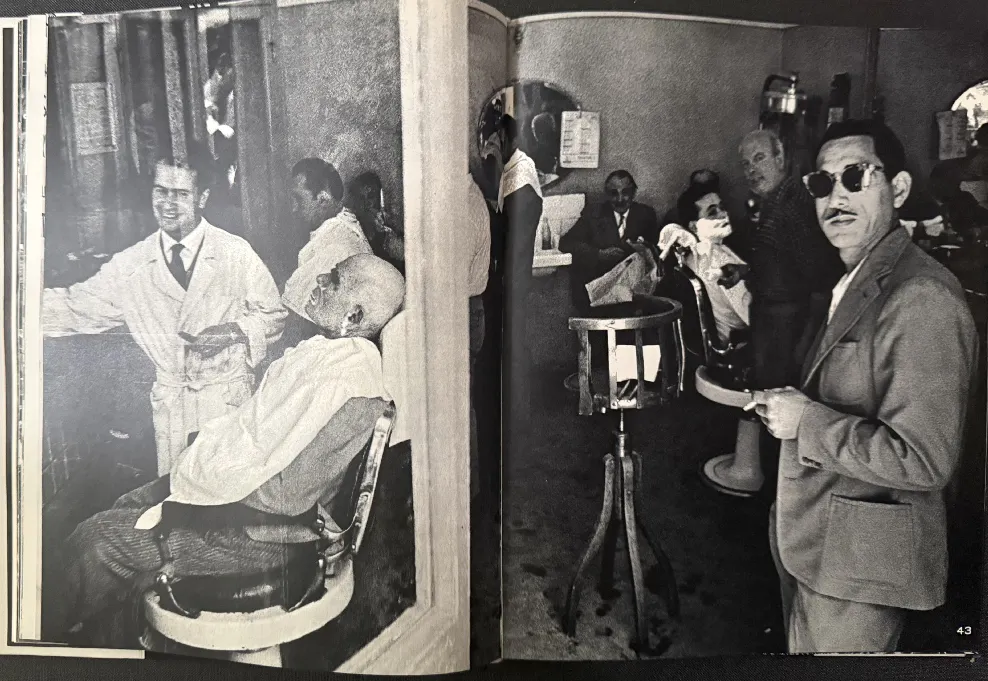
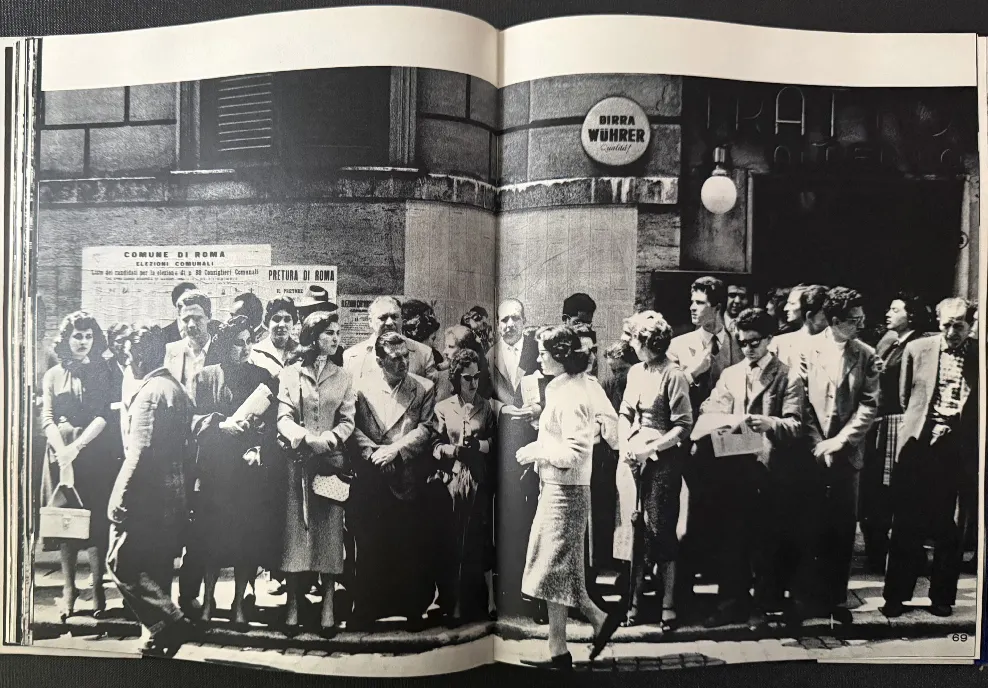
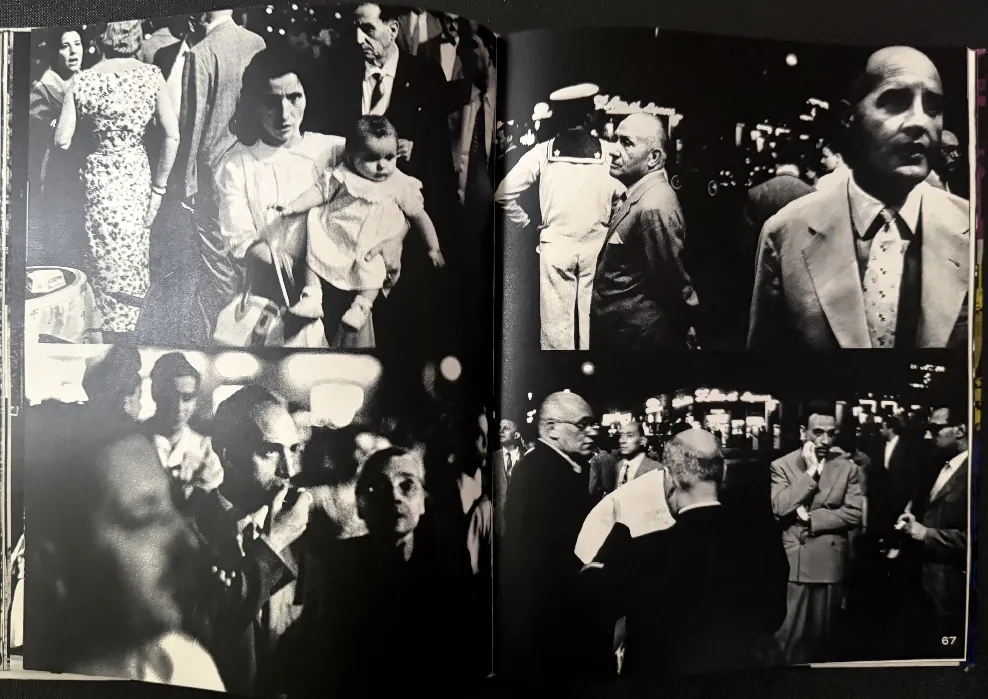
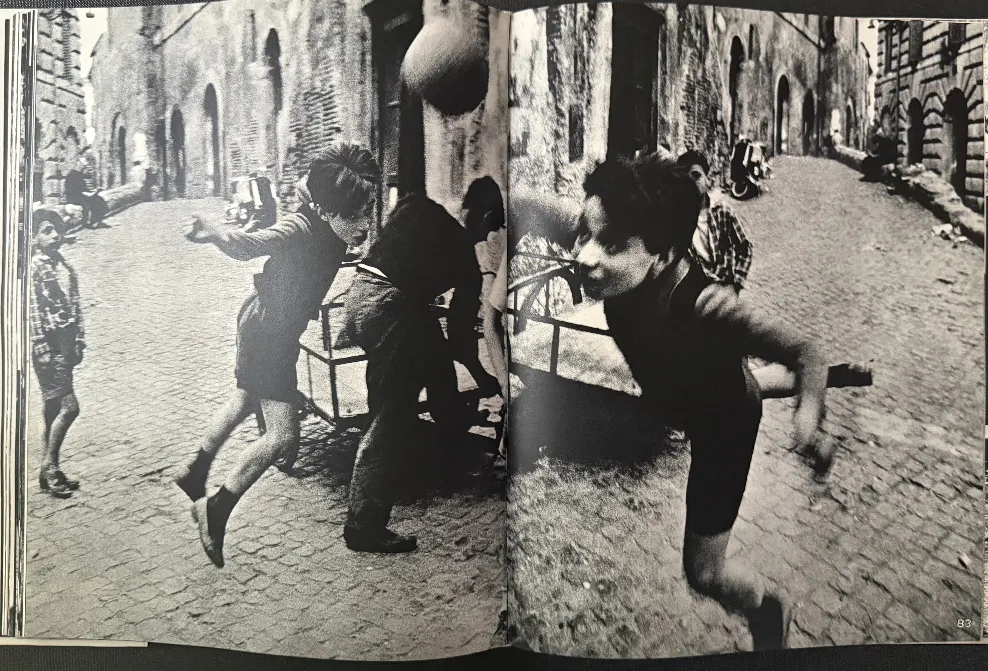
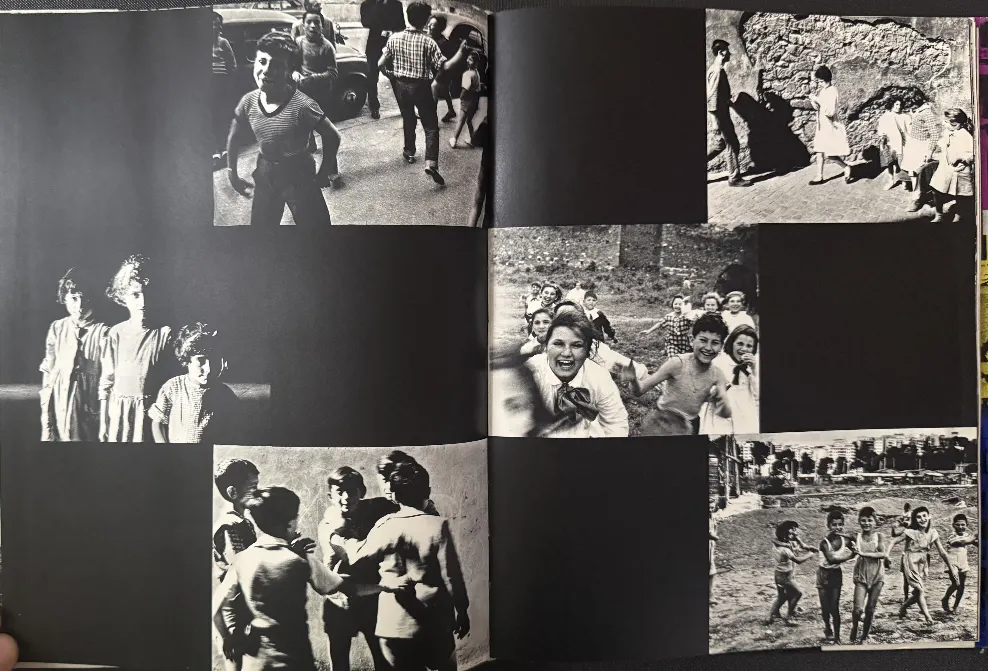
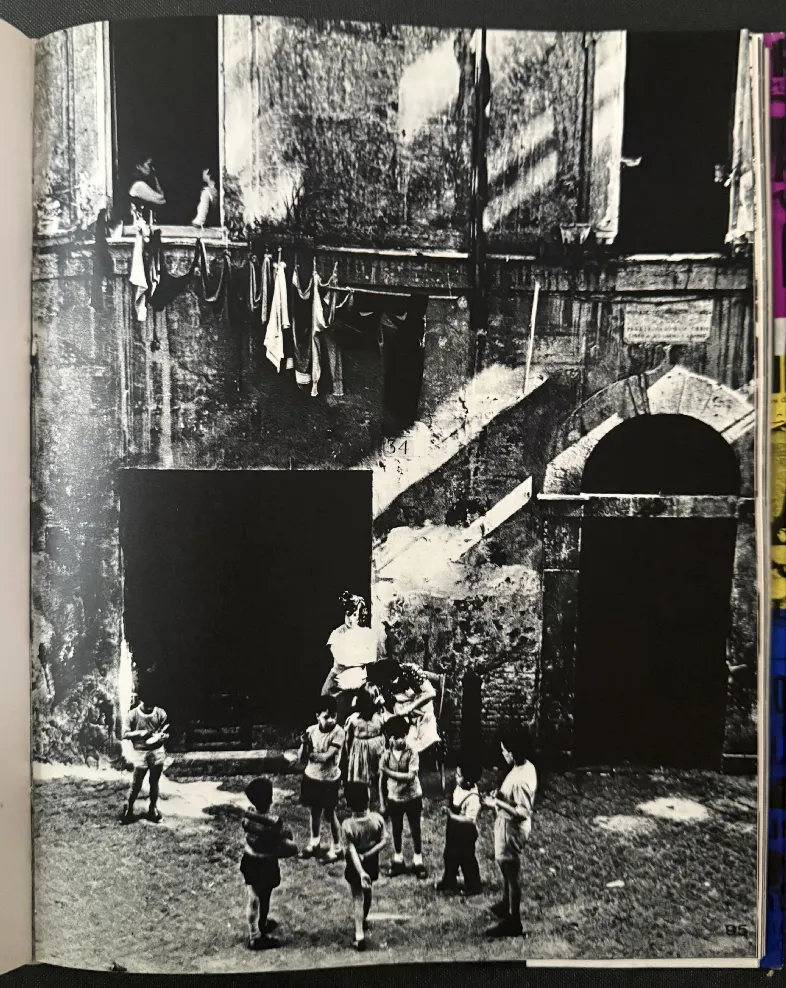
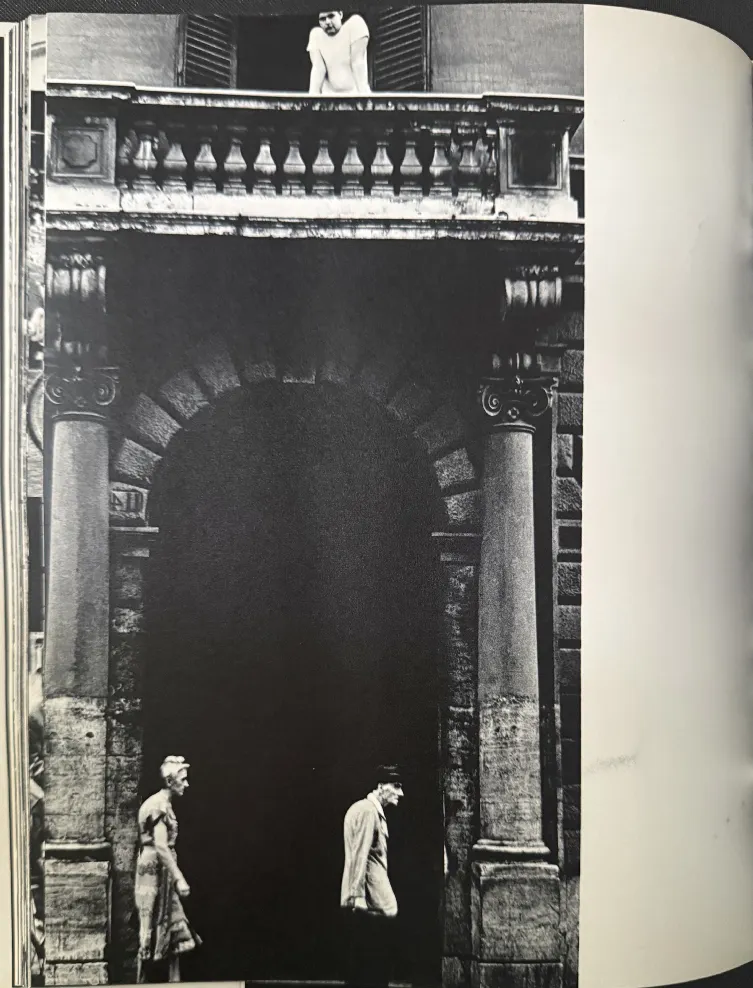
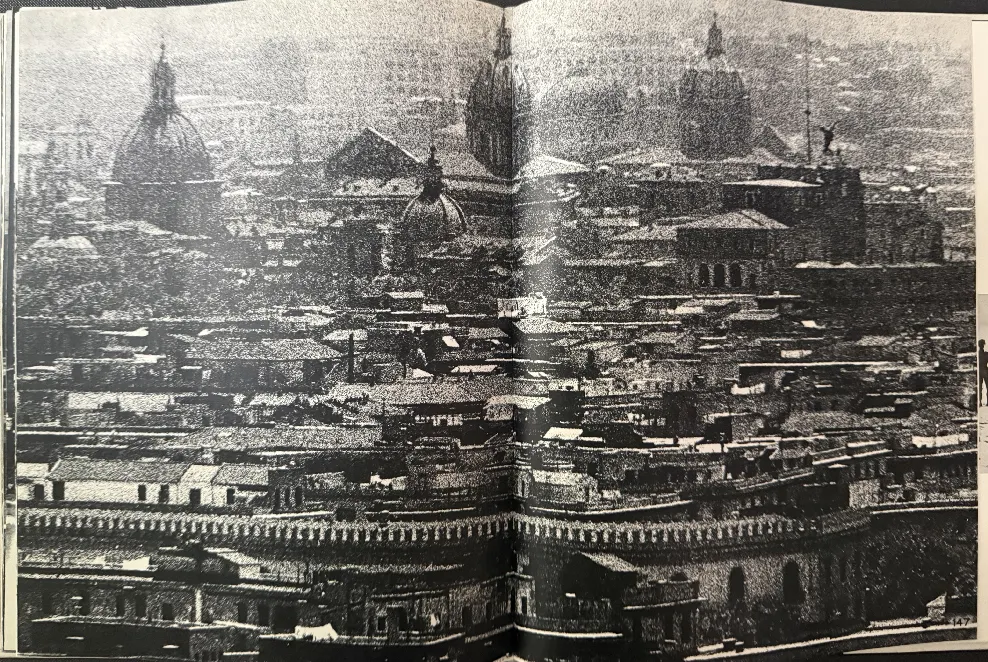
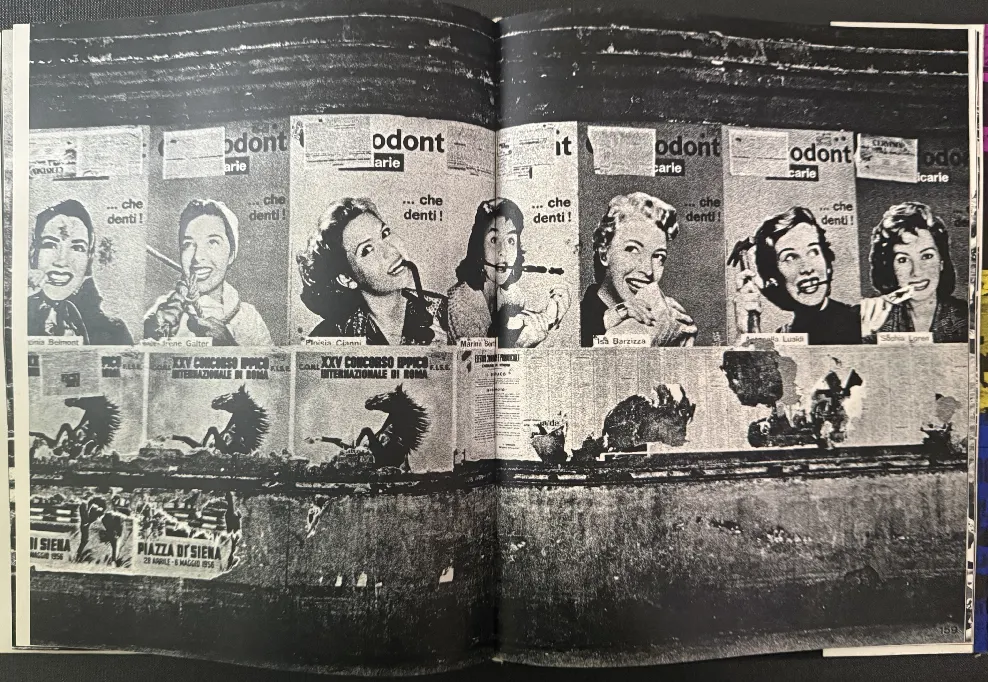
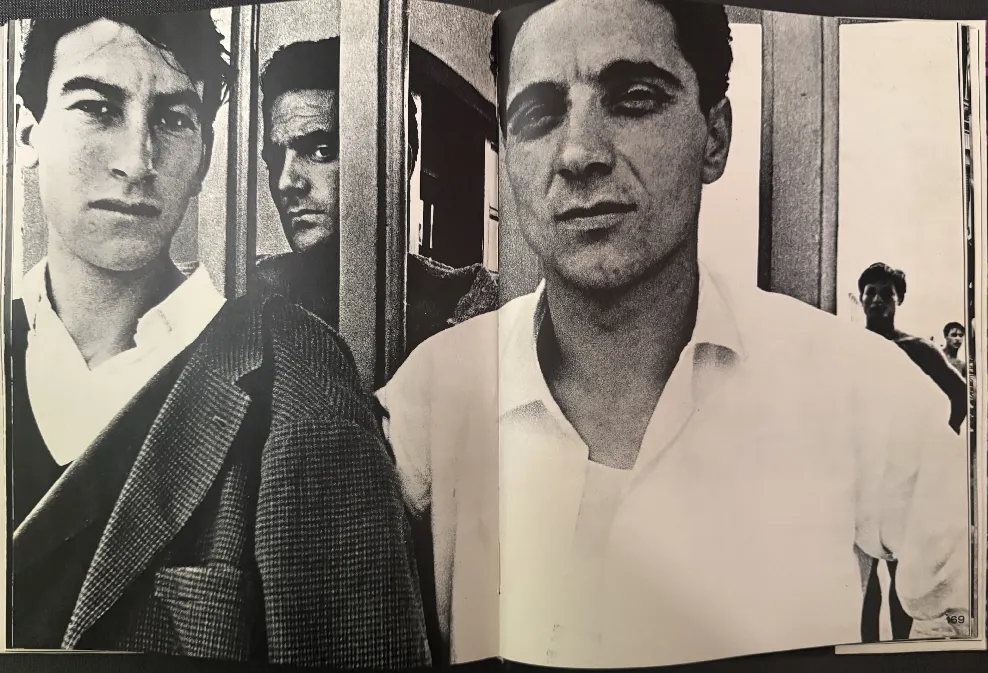
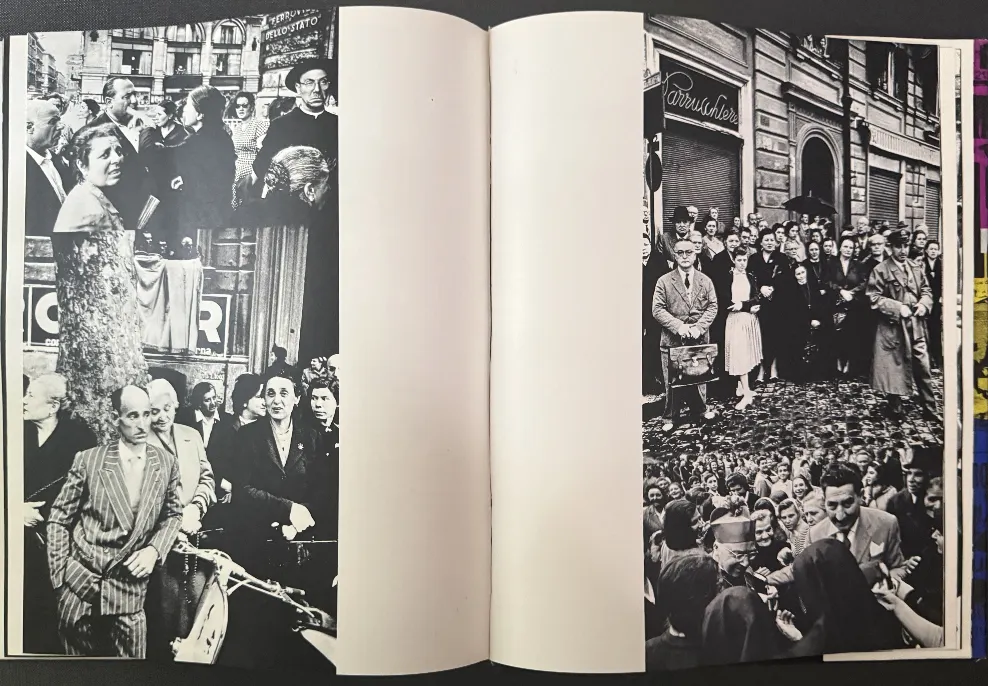
Klein bypassed typical tourist sights to document daily life, from children playing in working-class suburbs and priests on motorbikes to stylish Romans on streets and beaches, alongside a few high-fashion photographs shot on location for Vogue.
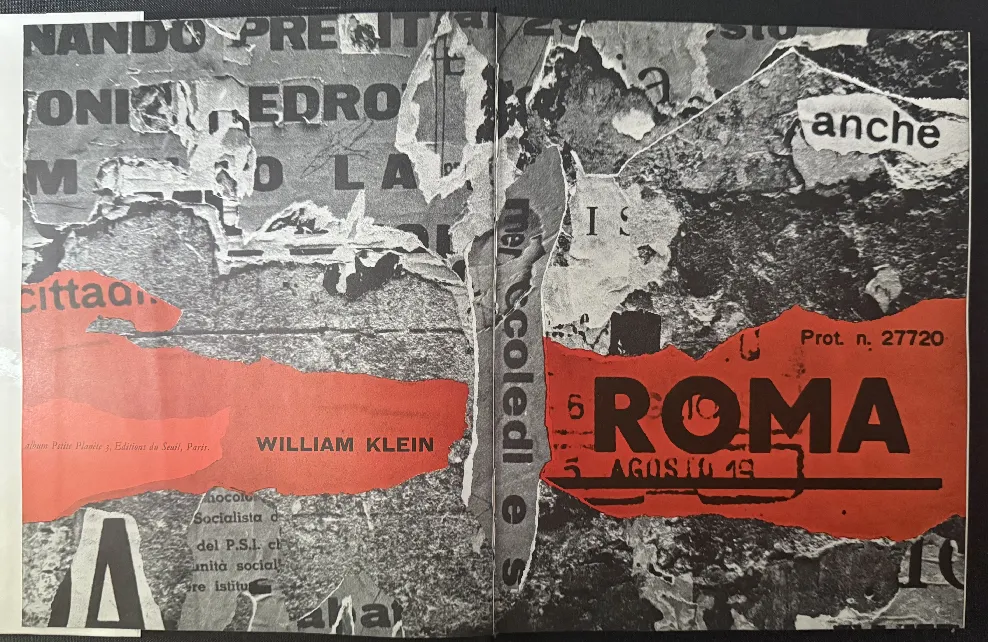
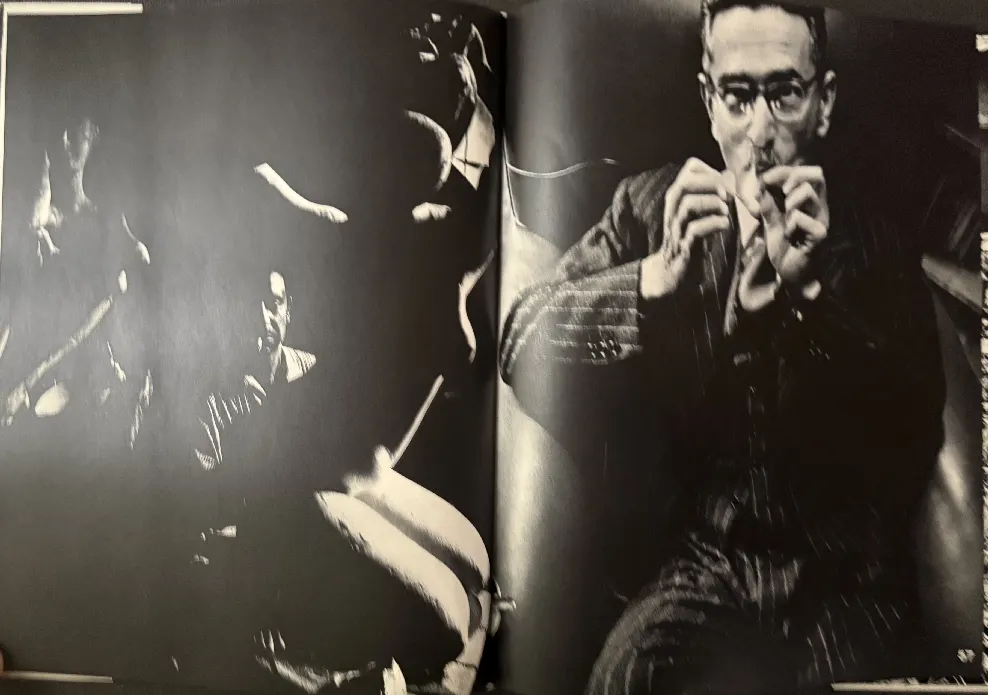
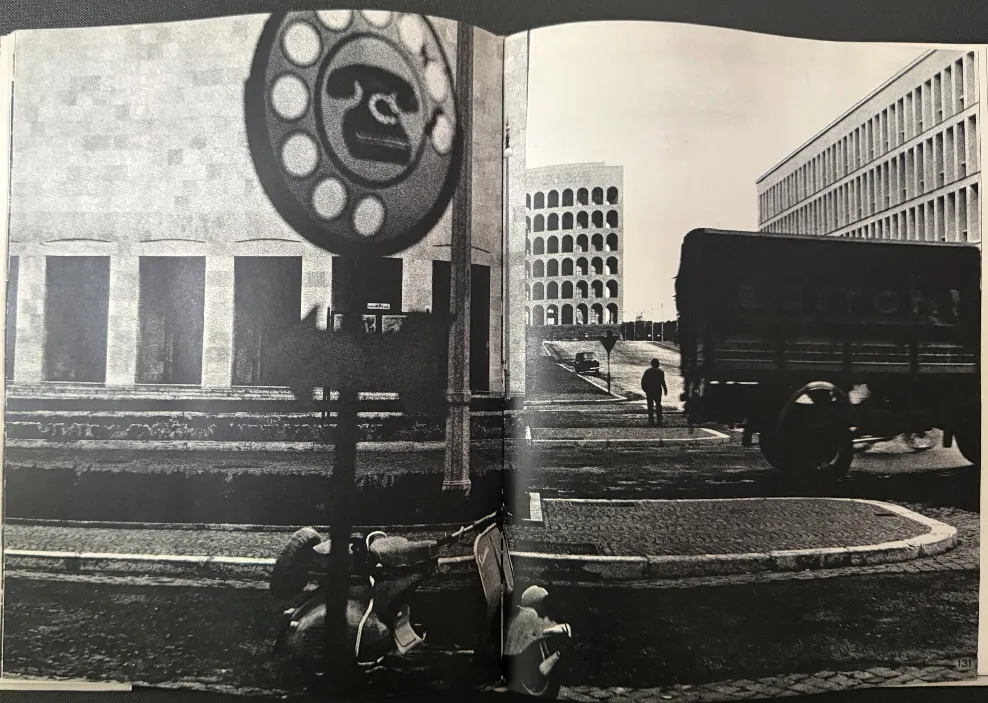
Printed in rich heliogravure, the book pairs high-contrast, wide-angle photography with extended captions, street ephemera, and literary excerpts from writers like Stendhal, Mark Twain, and Henry James. Fellini famously remarked of the project: "Rome is a movie, and Klein did it." Today, the 1959 first edition remains a cornerstone of post-war street photography and modern photobook design.
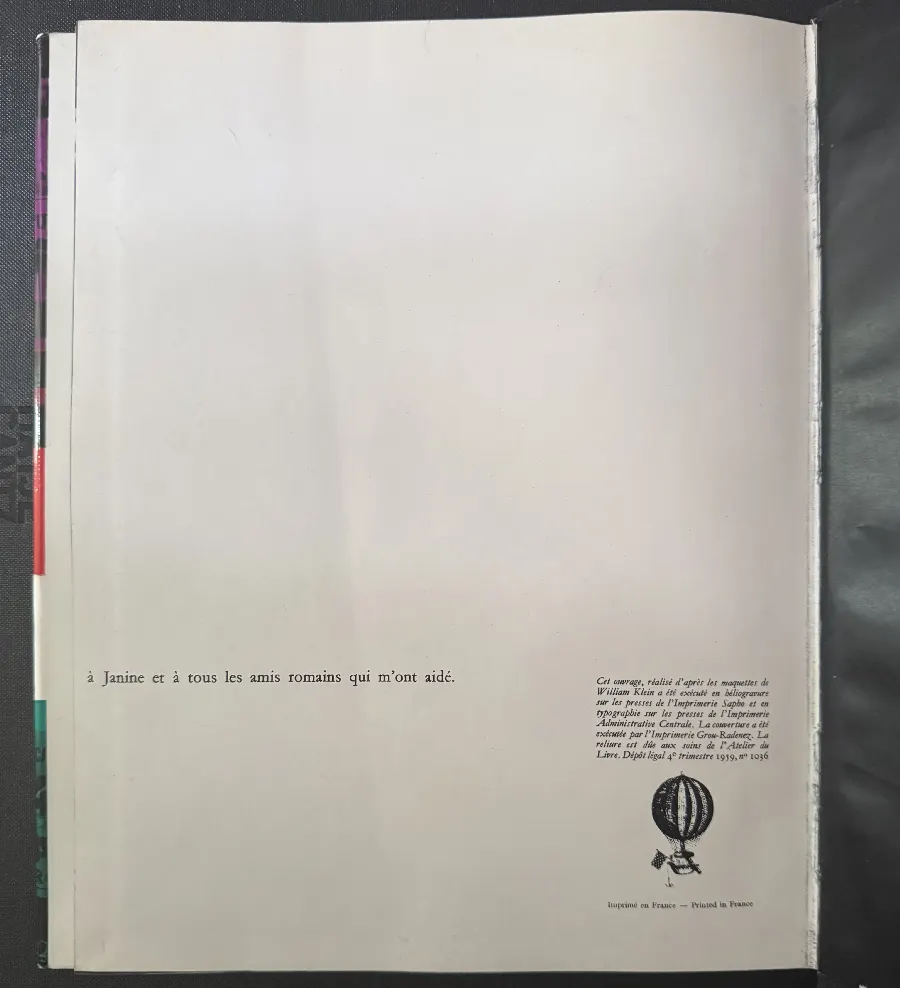
The copy included in Bushwick-sur-Seine is the French edition by Le Seuil. It is considered to be the true first edition, as Klein lived in Paris and worked directly with le Seuil for Rome. He had forged a close relationship with Le Seuil who had also championed his previous book about New York (1956), when American publishers famously rejected it for being too chaotic and unconventional.
The book was published in Italian on the same year and released in English by Viking Press at the end of 1959. However, the three versions were all printed in France at the exact same time. They were produced using a high-quality print method called heliogravure (photogravure). Because printing quality photography books was very expensive, the publishers shared the cost. Like for New York (1956), they printed all the photo pages together in France, and then swapped out the text layers for each country's language before binding them.

Rome (1959) by Klein is widely regarded as one of the seminal photobooks of the 20th century. Published by Éditions du Seuil in Paris, it stands as the second volume in Klein's iconic "city series," following his acclaimed Life Is Good & Good for You in New York (1956).
In 1956, Italian director Federico Fellini invited Klein to Rome to serve as an assistant director on his film Nights of Cabiria. When production on the film was unexpectedly delayed, Klein spent weeks exploring the streets, neighborhoods, and outskirts of the city with a camera in hand. He was frequently guided by local cultural luminaries, including Fellini, writer Alberto Moravia, and poet/filmmaker Pier Paolo Pasolini.
Unlike the confrontational, claustrophobic energy of his New York work, Klein found Roman subjects willing and eager to interact with his lens. The book presents a dynamic, raw visual diary of post-war Rome across five thematic chapters:
Klein bypassed typical tourist sights to document daily life, from children playing in working-class suburbs and priests on motorbikes to stylish Romans on streets and beaches, alongside a few high-fashion photographs shot on location for Vogue.
Printed in rich heliogravure, the book pairs high-contrast, wide-angle photography with extended captions, street ephemera, and literary excerpts from writers like Stendhal, Mark Twain, and Henry James. Fellini famously remarked of the project: "Rome is a movie, and Klein did it." Today, the 1959 first edition remains a cornerstone of post-war street photography and modern photobook design.
The copy included in Bushwick-sur-Seine is the French edition by Le Seuil. It is considered to be the true first edition, as Klein lived in Paris and worked directly with le Seuil for Rome. He had forged a close relationship with Le Seuil who had also championed his previous book about New York (1956), when American publishers famously rejected it for being too chaotic and unconventional.
The book was published in Italian on the same year and released in English by Viking Press at the end of 1959. However, the three versions were all printed in France at the exact same time. They were produced using a high-quality print method called heliogravure (photogravure). Because printing quality photography books was very expensive, the publishers shared the cost. Like for New York (1956), they printed all the photo pages together in France, and then swapped out the text layers for each country's language before binding them.